

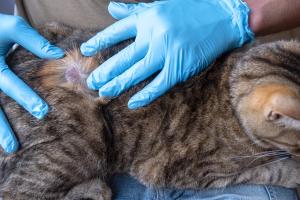








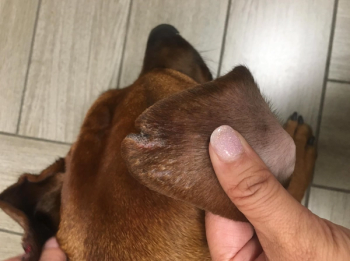
What started as minor hair loss eventually led to ulceration and bleeding. Can you identify what caused this dog’s condition?
What started as minor hair loss eventually led to ulceration and bleeding. Can you identify what caused this dog’s condition?
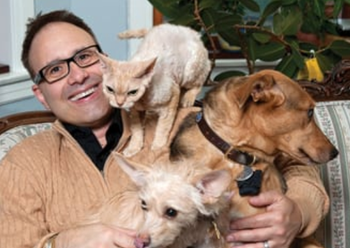
In this Episode 9 of the Vet Blast Podcast, pet expert Steve Dale talks with Dr. Adam Christman about some ground-breaking research and shares a few nuggets about his upcoming Fetch talks.

Rabies is the deadliest zoonotic disease, yet somehow it is also neglected. Learn how two organizations are giving the virus the attention it deserves—even as the world focuses on a certain other virus.
A look at the One Health initiative that is stepping beyond science to generate more treatments more quickly for canine and human cancer.
Four state VMAs have joined the major national veterinary organizations in endorsing the spaying and neutering cats before age 5 months.

In this episode of The Vet Blast Podcast, Dr. Kristin Welch talks about some common mistakes veterinarians make in the emergency setting.

The company has decided to continue their campaign to increase awareness about dermatologic conditions and prompt conversations between veterinary practices and clients.

Practice management software can make managing your veterinary hospital infinitely easier, but choosing the product that’s best for your business is no easy task.

A veterinarian who participated in the 2018-2019 AVMA Fellowship Program considers the implications of gene editing in both food animals and pets.

Practice manager and regular dvm360 contributor Emily Shiver shares 10 questions you should ask at your next job interview.

Check out this week's top headlines.

Compassion-First Pet Hospitals welcomes a large New York practice, furthering its mission of creating long-term partnerships and elevating veterinary medicine.
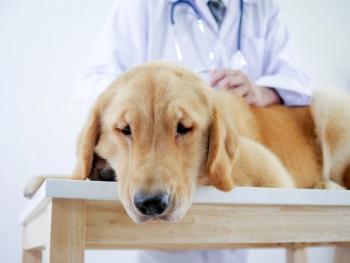
Antech’s novel blood test allows veterinarians to rule in or rule out IBD early and with confidence in dogs suffering from associated clinical signs.

The new drug has been proven safe and effective in relieving pain and inflammation associated with osteoarthritis.

A new study finds an explanation for why it’s so difficult for owners of obese cats to restrict their pet’s diet.

Researchers recently reviewed the published literature about growth of storage mites on commercial dry pet foods.

By tracking age-related progressions in gene methylation patterns of dogs and comparing them with those previously observed in people, researchers have constructed a new “epigenetic clock” for translating dog years to human years.

When a client won’t stop talking for long enough to allow you complete your diagnostic evaluation, sometimes you have to resort to strange measures.
With the completion of this deal, Merck Animal Health now offers products that address all of the most common internal and external parasites affecting dogs.

Kentucky is the 45th US jurisdiction to accept the certification for licensure from the Program for the Assessment of Veterinary Education Equivalence.

BluePearl is investigating the reasons behind a 70% increase in parvovirus cases seen in its hospitals in recent months.

A veterinary student shares some of the challenges he faced with virtual learning and social isolation during the pandemic.
Data about Paycheck Protection Program use among practices, advice for borrowers, and a look at what’s ahead.

Check out this week's top headlines.

In this episode of The Vet Blast Podcast, married communication experts Drs. Carolyn Shadle and John Meyer share why empathy is so important in veterinary medicine and offer a sneak peek at some of their upcoming Fetch talks.
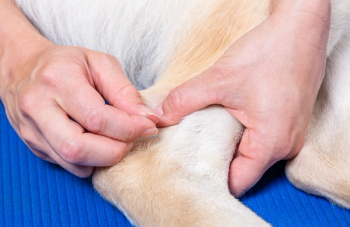
Osteoarthritis is a painful, debilitating condition that affects countless animals. Here’s a look at alternative treatments being used in veterinary practices across the country.
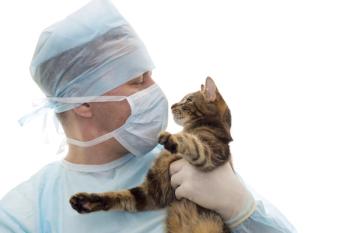
A third-year veterinary student shares the upside to starting clinical rotations during COVID-19.

We welcome you to apply for our new veterinary student ambassador program. One student will be selected from each AVMA-accredited school.

For most businesses, implementing change is fraught with challenges. That’s why it is crucial for veterinary practice leaders to be able to answer the staff question, “What’s in it for me?”

As pandemic restrictions ease should veterinary practices get to choose whether they stop or continue curbside care?
