

Review this list of items to include in puppy and kitten kits. Then select the handouts and giveaways that target your practice's education mission and goals.
Review this list of items to include in puppy and kitten kits. Then select the handouts and giveaways that target your practice's education mission and goals.

To keep the team eggs-ited at Cloverleaf Animal Hospital in Westfield Center, Ohio, Linda Randall, DVM, AVBP, and Susan Harr, the practice manager, host an annual indoor spring egg hunt at their one-doctor practice.
Use this survey to learn how satisfied clients are with your practice.

Q Should I receive compensation or bonuses for the dental procedures I'm specially trained to perform?
Form asking employees to acknowledge that they understand the hospital manual and their at-will status

Sick of the communication gaps and the infighting about policy changes that often occur between front and back office team members? Crystal Steen, a receptionist at Pet Care Vet in Virginia Beach, Va., suggests electing area liaisons.

Q. How can I get the most out of my practice's open house?

My own illness gave me a glimpse into the tough road to recovery the patients at our clinic face every day-and how my care can make a difference.

We rehired a team member after she had a baby and she's implemented a nursing regimen at work. At lunch, she nurses in her car with her undergarments visible or on the side lawn of the practice parking lot. Then she pumps-in our doctor's office. The rest of the staff is uncomfortable, and we would like to encourage discretion while still supporting her decision to nurse her child. How do I approach this employee?
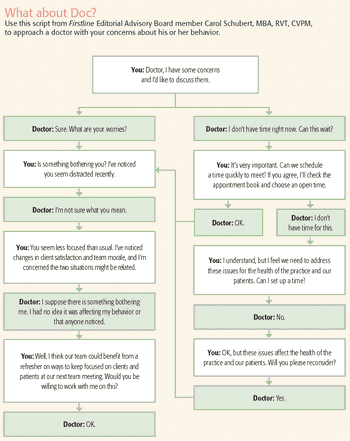
Use these targeted tactics to chisel away at team members' bad behavior and heigh-ho poor performance right out of your practice.

An effective e-mail program gives your practice a high-tech image, says author Ralph Laurie.
On an ordinary day a few months ago, I watched a cartoon with my toddler about seeds of discontent.

Q When I discuss client education topics, I feel like clients are tuning me out. How can I make them listen?

Our receptionists often forget to give clients their pets' medications before they leave our practice. I created a hanging prescription filing system to simplify the process, but that hasn't resolved the problem. I've approached my managers about the issue, but they don't seem concerned. What should I do?

They're the situations you dread.

Pet owners are clearly learning about nutrition. But where are they getting their information? Brian Conrad, practice manager at Meadow Hills Veterinary Center in Kennewick, Wash., worries that it's not from you.
The team at Concord Veterinary Center in Springville, NY, expected an uneventful monthly practice staff meeting, but Debbie Kaczmarski, LVT, the hospital manager, and Craig Wiede, DVM, the practice's owner, had another plan.

Send your team home on time and impress clients by replacing old-fashioned callbacks with e-mails and text messages.
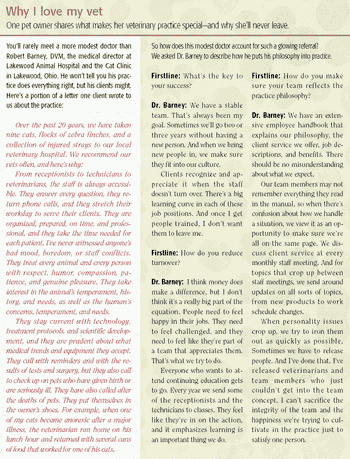
Six pet owners tell their stories about why they left veterinary practices. Learn from their experiences--then use these tips and tools to avoid critical client care mistakes.
Grab clients' attention and encourage compliance by using descriptive terminology, suggests Sharon DeNayer, a Firstline Editorial Advisory Board member and the practice manager at Windsor Veterinary Clinic in Windsor, Colo.
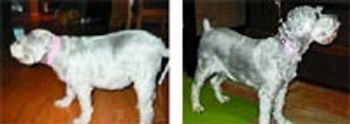
What's an over-the-hill pooch to do when her winsome curves have disappeared beneath layers of fat? Winnie, a 10-year-old Schnoodle, jumped on the underwater treadmill and exercised her way to fame in the Big Dog/Big Loser Weight Loss Competition, a contest launched by Anne Chauvet, DVM, Dipl.
Reducing, recycling, and reusing plastic packaging is a regular habit at Peachtree Hills Animal Hospital in Atlanta, Ga.

Older clients may need a little extra care and attention to ensure a happy veterinary experience. Here's what you can do to help them help their pets.

I work at a large practice, and our team members get along well and even socialize outside of work. There's one hitch: One team member practices poor personal hygiene. Periodically, she emits a strong body odor for days at a time. Her team leader approached her when the problem first surfaced, and she improved temporarily. How can we approach her again without embarrassing her--and ourselves?
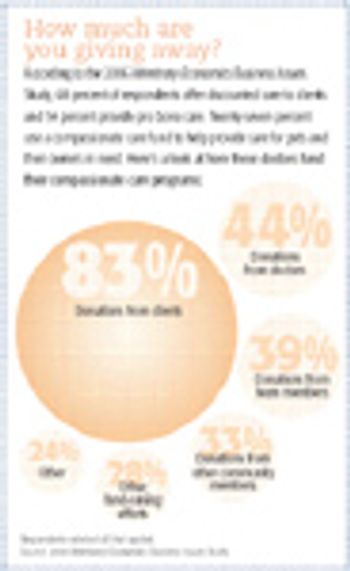
They want help, and you want to give it. Learn how to launch a compassionate care fund and generate money for your pets and clients in need.
A feline lifestyle summary will help you tailor your message to fit each cat's needs.
A canine lifestyle summary will help you tailor your message to fit each dog's needs.
Read this policy, then write your own so team members know when their personal pets are welcome in your practice.
A confidentiality pledge reminds your team about the importance of keeping confidential information private.
Document clients' consent for euthanasia with a form.