





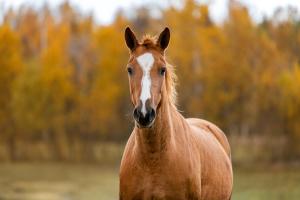


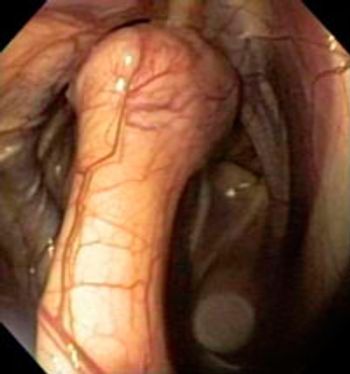
Correct answer for Equine Image Quiz: Neurologic deficits and vestibular dysfunction in a palamino
Correct answer for Equine Image Quiz: Neurologic deficits and vestibular dysfunction in a palamino

A young, adult basset hound presents to you for evaluation of chronic recurrent ear pruritus and a strong "musty" odor. Which of these diagnostic tests would be most useful initially? This is Answer E from the quiz.
Ames, Iowa - Laboratories Hipra, a Spanish animal-health company focused primarily on research and marketing of food-animal vaccines, plans to build its first North American headquarters in Ames, Iowa.
A handy tip for clients who bring in samples.
Dr. Miller examines how the trend toward specialization is affecting veterinary practice.

Veterinary internist Dr. Jennifer Garcia answers this reader query.

Acute toxicosis with this antineoplastic drug can result in life-threatening signs.

Readers voice their own thoughts on the debate.
Mrs. Haywire is dead set against having one of those identification chips inserted in her dog's neck.
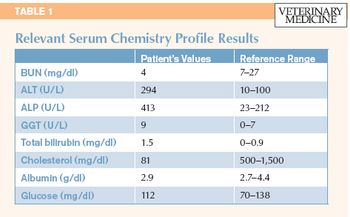
The outcome in this dog was not good, illustrating the necessity of identifying this disorder early.
Emergencies related to cardiac disease are common, and can be difficult to differentiate from non cardiac diseases with similar clinical signs. The emergency clinician must be able to differentiate between cardiac and non-cardiac diseases using subtle clues obtained from a brief physical examination, and an understanding of common cardiac conditions.
Left displaced abomasum (LDA) is a common gastrointestinal disorder of lactating dairy cattle. Left displaced abomasum, right displaced abomasum (RDA), and abomasal volvulus (AV) are common abdominal diseases of lactating dairy cows characterized by varying degrees of abomasal distension and displacement.
Aspirin (acetylsalicylic acid, ASA) is the salicylate ester of acetic acid and is a weak acid derived from phenol. It is available as tablets and capsules (65, 81, 325, and 500 mg), powders, effervescent tablets and oral liquid preparations.
The capacity to experience pain is considered to have a protective role by eliciting behavioral responses aimed at reducing further tissue damage and enhance wound healing. However, persistent pain syndromes offer no biological advantage and are associated with suffering and distress.
Mention the word hospice and the term alone evokes varying degrees of emotion in people. If this is a service that you have had the opportunity to be involved with personally it can stir up some powerful emotions of loss. And, depending on the circumstances, it can either conjure up peaceful and grateful feelings or a negative and adverse reaction.
For any fracture patient, the decision as to which stabilization system to apply is made by assessing the mechanical, biologic, and clinical factors that influence outcome. There are two mechanisms by which a fracture can be stabilized: (1) internal or external fixation and (2) formation of a biobuttress (biological buttress, callus).
Implementing a prosperous and successful pet hospice care program in a veterinary practice is, unquestionably, beneficial to the terminally ill pet, the caregiver and veterinary staff. Palliation is the component to hospice care that allows the terminally ill pet to function more comfortably.
Milk fat depression is a common finding of veterinarians and nutritionists on dairy farms, especially during the warmer summer months. Troubleshooting cases of milk fat depression can be challenging as often there are a number of causes that are contributing to the problem.
Providing properly balanced and successful dairy rations can be a challenging job. One must track a large number of nutrients and make sure that they present in adequate levels yet not in excess where they can lead to reduced performance or animal health.
The potential for several economically important infectious diseases of cattle to be vertically transmitted from dam to offspring is of understandable concern to veterinarians and producers alike.
FIP – nothing's ever simple....It is a multifactoral disease involving virus factors, host factors, and environmental factors. The virus of FIP is feline coronavirus (FCoV) – interestingly, it is required but not sufficient for FIP. Coronaviruses have a large RNA genome.
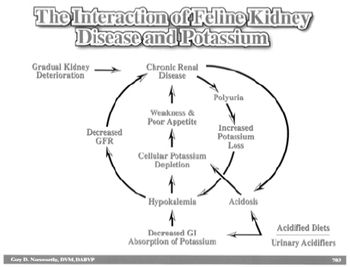
The use of ACEi for renal disease is controversial because we do not have convincing data that they are either protective or detrimental to the kidneys.
Antimicrobial efficacy in cattle can be evaluated through clinical studies including a negative control group. To be included here, the study must have specified that the subjects were randomized, the evaluators were masked to treatment, and that statistical analysis was applied.
We have a positive cryptococcus on this cat 7-20-10. Chem normal except glob 6.8 and alb 2.1., wbc 27,820. Primarily granulocytes, dec lynphycytes. Rbc 7,420 mild dehydration. Faint positive leukemia neg fiv.
Estrous synchronization is the manipulation of the reproductive cycle so that cows can be bred in a predefined interval. Typically, estrous synchronization has been used to facilitate artificially insemination (AI) by decreasing labor to detect estrus and to schedule breeding to specific days.
You should consider three major processes when evaluating cells from an enlarged lymph node: 1) Reactive lymph node 2) Lymphadenitis 3) Neoplasia- lymphoma or metastatic.
Transfusion products are commercially available through various commercial vendors, or practitioners can utilize staff or client owned pets as blood donors. Because of the continued increases in demand and repeated shortages, having an internal source is important.
Veterinarians have been a privilege to use and prescribe FDA approved drugs in an extra label manner and to compound drugs to meet the specific health care needs of the diverse patients.
Coagulation abnormalities are commonly encountered in critical illness. Traditionally, clinically relevant coagulation disorders have consisted mostly of bleeding associated with advanced stages of disseminated intravascular coagulation or toxin ingestion.
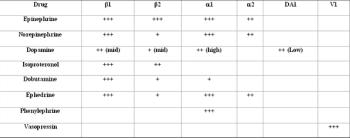
In order to understand and approach hypotensive patients, one must first understand blood pressure. Although not a true measure of perfusion, blood pressure is one of the most non-invasive means the veterinary field has of measuring whether or not the tissues are getting enough blood and ultimately enough oxygen.
