











New leadership moves, recognition, and achievement.
New leadership moves, recognition, and achievement.
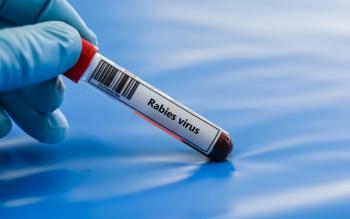
While human rabies cases remain rare, reported exposures have gone up. A longtime public health microbiologist explains what's driving the increase and how veterinarians can help clients respond.

Continuing Education on-demand anytime, anywhere, plus some upcoming live opportunities.

A pair of littermates with long limbs, lens luxation, and aortic root dilation carried a variant in FBN1, the same gene that causes the disorder in humans.

A small, spotted cat from Bolivia's cloud forests, first kept as a pet by someone who thought it was a house cat, has been confirmed as a species new to science.
We all get the same 24 hours, whether you are a new graduate drowning in student debt, a technician working a double, or Ariana Grande on tour.
The British Association of Veterinary Ophthalmologists says more than 200 cases of sudden bilateral keratoconjunctivitis sicca have been reported, including dogs that did not eat the company’s food, and is urging veterinarians to report cases as the investigation continues.
A new online hub offers quick tips, client handouts, and practical guides to help veterinary teams both make clinic visits easier on cats and get more in for routine care.

Despite growth in enrollment, fewer than 5% of US dogs and cats are insured, while rising veterinary costs are increasingly affecting treatment decisions and access to recommended care.
A survey of more than 26,000 adults in 14 countries found that many people are open to adopting a pet but hold back because of what they don't know about the animal's past.

A pain management protocol is only as good as the conversation behind it.

Mindy Cannon, MBA, explains what 4CYTE is, how it is dosed, and where veterinary practices can find it, in this episode of The Vet Blast Podcast, presented by dvm360.

Christopher Lee, DVM, MPH, DACVPM, DACVM (Parasitology), explains Toxoplasma gondii facts, including why most indoor cats rarely shed, as well as pregnancy-safe litter tips for cat health.

The latest updates relating to animal care establishments and platforms.
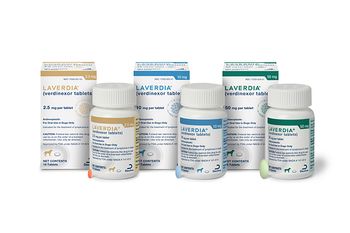
Verdinexor tablets are now available for dogs with lymphoma after receiving full FDA approval earlier this year, offering an at-home treatment option given twice weekly and showing a longer time to disease progression than the control in a field study.
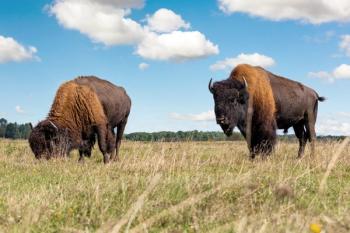
The first survey of parasite control on bison ranches shows most herds are dewormed on a schedule, with little testing to see whether they need it. Researchers say the habit could make resistance harder to manage.

Preclinical testing at The Ohio State University found Telomir-Zn inhibited the growth of canine and human osteosarcoma cell lines, prompting the company to explore a possible in vivo study in dogs with naturally occurring tumors.
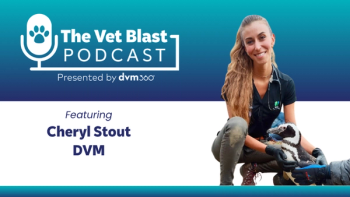
Cheryl Stout, DVM, discusses her path from aspiring conservationist to residency-trained zoo veterinarian, her conservation goals, and her educational work on social media.

Caroline Cox, LSW, MSW, and Erika Krick, VMD, DACVIM (Oncology), discuss the role of veterinary social workers in supporting clients, communicating with veterinary teams, and helping practices address the human side of veterinary care in this Q&A from an interview at the 2026 Fetch National Harbor Veterinary Conference.
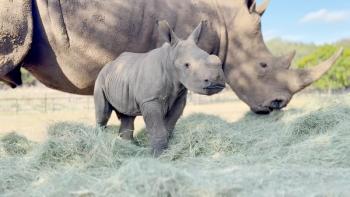
After more than 20 years of work toward its first rhino birth, the Texas ranch has now welcomed 3 calves in 3 years.

Two notable pet-industry acquisitions closed in September. One bringing AI-powered clinical documentation into IDEXX's software ecosystem, the other marking the first acquisition for fresh-food brand The Farmer's Dog.
New leadership moves, recognition, and achievement.
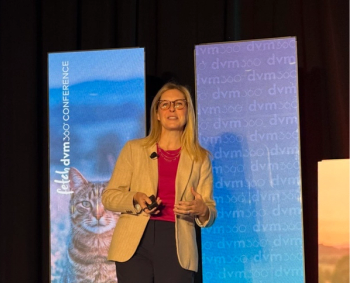
In a keynote address at the 2026 Fetch National Harbor Veterinary Conference, Jessica Pritchard, VMD, MS, DACVIM (SAIM), shared research showing that many owners decline vaccines because they do not think their pet needs them, and discussed ways veterinary teams can address those concerns.

Alyssa Mages, BS, CVT, FVTE, outlines key considerations for veterinary technicians during triage, from rapid patient assessment and prioritization to client communication and team coordination, in this interview from the 2026 Fetch National Harbor Veterinary Conference.

In a session at the 2026 Fetch National Harbor Veterinary Conference, Nathanael Oster, VMD, MBA, walked attendees through the biology, diagnosis, and treatment of the flea tapeworm in dogs and cats, including why cats are affected more often than dogs.

SNAP-P is a proposed high-impact program that would provide at least $4.4 billion in benefits to low-income pet owners at marginal cost to federal and state governments.
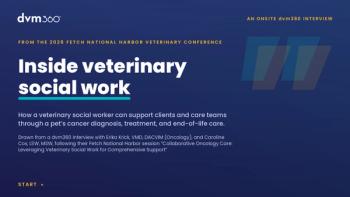
In a slideshow drawn from an on-site dvm360 interview at the 2026 Fetch National Harbor Veterinary Conference, a veterinary oncologist and a veterinary social worker walk through how the role supports owners and staff across a pet's cancer diagnosis, treatment, and end-of-life care.

Here are this week's headlines

The five-year Big Bet for Pets initiative targets what the foundation calls a care gap affecting 50 million dogs and cats in the US, opening two new grant programs for nonprofit veterinary clinics.

A UC Davis study is investigating why Labrador retrievers develop copper-associated hepatopathy and whether blood-based tools could help identify the disease before serious liver damage occurs.