A conversation on how adjusting body positioning and building physical strength can help veterinary professionals manage the physical demands of patient care and reduce injury risk.
These examples for saying no can help veterinary professionals set clear boundaries, decline requests without over-explaining, and avoid reopening the conversation.
The word "no" is two letters and one syllable, and yet it may be the hardest thing to say in a veterinary practice. That is the premise of a recent "rapid rounds" episode on
Edwards, a former practice owner and now an International Coaching Federation (ICF)-certified leadership coach, frames the segment as the close of a series on why veterinary professionals so often say yes when they do not mean it.
Her criteria for an effective “no,” Edwards explains, consist of the following:
Warmth is allowed, Edwards explains, noting that warmth does not weaken a “no,” but over-explaining and defending it can. Any of the scripts below can be softened to "no, thank you" or paired with "thank you for thinking of me," depending on what the moment calls for.
The simplest form, with nothing attached: no clauses, no reason, no softener. Edwards noted it works on the first ask or the fifteenth.
This one frames the refusal around what works and what does not, which removes the personal charge and keeps things neutral.
Here the answer is still no, but it comes with something in its place, whether a different person, resource, location, or a smaller version of what was asked. Edwards was careful to add that no one owes an alternative, and a clean no is always enough.
This script is for when a no lands on someone else, and the goal is to acknowledge the impact without changing the answer or apologizing for it.
The one that closes the door, whether the ask has come once or ten times. Edwards said no warmth is required here. Say it clearly and mean it.
Edwards closes by encouraging listeners to pick the script that fits and say it out loud, even if only to themselves, on the logic that practicing a no makes it easier to reach for in the moment. The segment follows 3 earlier episodes in the series: "
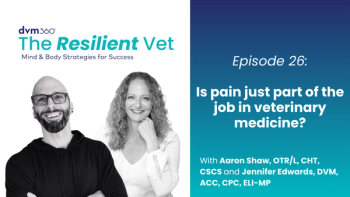
Co-host Aaron Shaw, OTR/L, CHT, CSCS, an occupational therapist and strength and conditioning specialist who works with veterinary teams through Project VetSpan, rounds out the episode.
Listen to the full episode