










Sea You at Fetch Long Beach

Business


All series


All Business

As different as associates' experiences are, they generally enter practice with four concerns. Dr. Philip VanVranken, the managing partner at Dickman Road Veterinary Clinic, a seven-doctor practice in Battle Creek, Mich., offers his insight from 30 years of experience and provides some quick mentoring. Here are his answers to four common questions.

i1-145964-1384783579653.jpg

Think your practice could benefit from some expert help? A consultant may be the way to go. But it's not enough to just hire help. You must know what you want to accomplish, pick the best-qualified consultant to help, and act on his or her advice.

i1-142397-1384783177212.jpg

Our long-time office manager isn't keeping up with our growing practice. She did an excellent job for almost 10 years, but during the past few years, she's lost the practice money because she can't manage the increased patient and billing load. How should my partners and I approach her? How much severance should we offer her?

i9_t-141733-1384782879088.gif

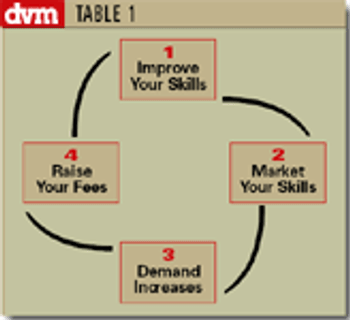
I know that an associate veterinarian who's juggling a hectic schedule, a crazy personal life, and pressure-packed workdays can easily get lost in the minutia of the moment. Before you realize it, weeks, months, and even years can float by. At the same time, critical decisions?about your career, your cash flow, and your potential?can get pushed to the back burner, or worse, never even considered.

Matching associates and practices is an ongoing challenge. How do you find an associate? What can you do to make your job offer attractive? What steps can you take to nurture an associate along his or her career path? How can you retain a long-term associate or potential owner?

Everyone loves free stuff?and practices often receive free scrubs, totes, pet food, and more. But how do you make sure you distribute the bounty fairly? "We hold a yearly raffle and give the year's accumulation of gifts as prizes," says Beth Montoya, office manager at Pembroke Veterinary Clinic in Virginia Beach, Va.

i1-141729-1384782902937.jpg

Worried that your employees aren't working effectively? Try a tip from Ethics4Everyone, by Eric Harvey and Scott Airitam (Performance Systems Corp., 2002).

i1-141725-1384782919244.jpg

Despite the fun of the holidays, the season leaves many people stressed out instead of refreshed and ready for the year ahead. With these tips from Vitality magazine, you can relax and enjoy 2005.

i4-152907-1384780934525.gif

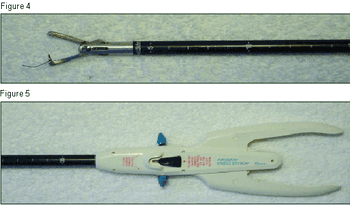
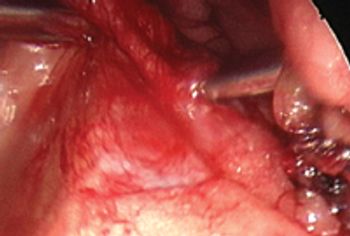
Minimally invasive surgery is a rapidly developing discipline in veterinary medicine, thanks to its widespread use in human medicine. During the past 20 years, veterinarians have watched a temporally similar development with arthroscopic surgery. While minimally invasive surgery has many advantages over traditional open surgery—including reduced postoperative pain, reduced recovery times, and improved operative results—there is a caveat: It requires specialized training and considerable experience. In this article, I'll focus on one particular minimally invasive technique—intracorporeal suturing.

i1-134176-1384782516916.jpg

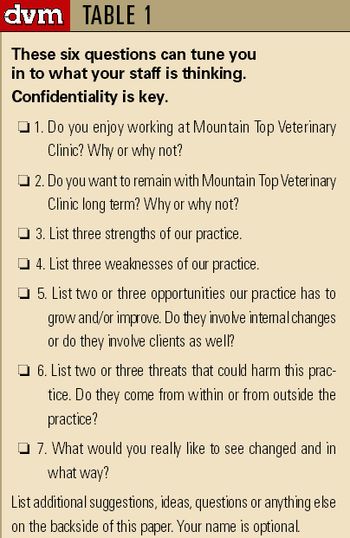
What does your staff think of your practice? Are staffers proud of their work? Do they think you offer good services and that you provide value? Do they enjoy working for you? Do they want a career with you, or are you just a temporary paycheck? What do they see as your strengths and weaknesses, opportunities and threats? Will the answers from lay staff differ from those of associates?

i9_t-134052-1384782932000.gif

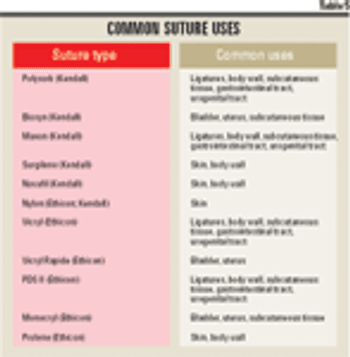
We live in a time when polymer chemists work magic with different suture materials to give them specific properties that benefit surgeons. Today's sutures absorb within a consistent time frame every time veterinarians use them, possess specific handling characteristics, demonstrate good knot security, and cause minimal tissue inflammation.