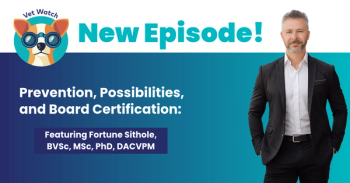
A diplomate of the American College of Veterinary Preventive Medicine shares how board certification bridged the gap between epidemiology theory and real-world practice.
A veterinary culture diagnostic aims to do for workplace culture what a CBC does for a patient: show what’s working, what needs attention, and for whom.
Veterinary teams are surveyed often, but are those surveys reaching the heart of what keeps people engaged? On this episode of the Vet Blast Podcast, host Adam Christman, DVM, MBA, chief veterinary officer of dvm360, sits down with Pam Hale, DVM, MBA, JM, veterinary leader and relief veterinarian; Mark Albrecht, DVM, co-founder of Eudaimonia Consulting; and Matt Albrecht, PhD, co-founder of Eudaimonia Consulting and cultural anthropologist, to discuss a diagnostic approach to culture and how it can give every team member a voice.
Below is a partial transcript, edited lightly for clarity.
Adam Christman, DVM, MBA: Dr. Hale, we say “you can buy the building, the equipment, and the employment contracts, but you can't buy the culture.” What is it that doesn't transfer?
Pam Hale, DVM, MBA, JM: I think we forget that culture is local. Especially if you're talking about that aggregator that's coming in to buy the practice, and then they want to lead and manage that practice from afar or from just spot visits. Think of how that hospital was before that owner—Dr. Joe, Dr. Martin, Dr. Dorothy—they were running that practice for 20 or 30 years, and they were there and built that culture.
So, what we're seeing is sometimes after a practice changes hands, even to maybe another private veterinarian, that culture doesn't always translate. That positive culture that led them to the success they have, that caused them to be coveted and then purchased by a practice.
So, we have to remember that culture is local, and we sometimes have to start building that again when there are new owners.
Christman: What does that mean for you, Dr. Mark? I mean, you've been a practice owner for many years, and you've seen equipment change, employees change. But what is it about culture that that doesn't necessarily transfer on over?
Mark Albrecht, DVM: I've kind of been on both the giving and the receiving end of it, because I bought a practice, and we had a tremendous amount of employee turnover. Maybe intentional, maybe not. I was kind of flying by the seat of my pants. I didn’t really know what I was doing. And then I actually sold a practice and watched a lot of the staff that I had hired leave over time. And so, the building didn't change, the client list didn't change, the equipment didn't change. Nothing of that changed. What changed is probably the culture and probably the environment that people chose to work in.
That's been this amorphous problem that my son spoke up about at one point. I was like, "Wow, we need to get you involved in this because you've got some insights that I, as a veterinary surgeon, don't have. Our profession needs that kind of insight."
Related:
Want to hear the rest of the conversation? You can listen above or wherever you listen to podcasts.