

Clients need to know if stable hospitalized patients will be unattended at night.
Clients need to know if stable hospitalized patients will be unattended at night.

Is your practice easy to do business with? How can you achieve this goal? Here are some ideas.

Are your personal stories getting in the way of good medicine?
In calming an irate client, remember your tone and goal. Keep your tone normal when talking to the client and your body relaxed. Always remember that your goal should be to listen to their needs and try to meet them when appropriate.
Print this multi-page PDF to educate clients about ideal pet weights, pets' caloric needs, and the caloric content of common treats

A lot of practitioners get outflanked by the increasing nemesis of competition.
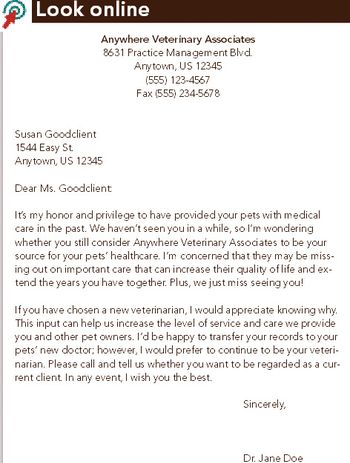
Renew those old relationships with a well-crafted letter to inactive clients.

If a client shows up with a stray but doesn't want it scanned for a microchip, am I legally required or legally forbidden to scan the pet or contact the chip registrant?

Dental care is an everyday endeavor.
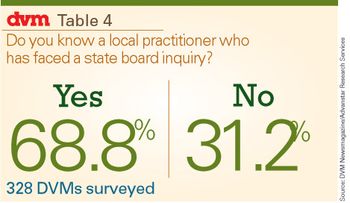
National Report - When a medical case goes bad, consumers are more likely to complain to state boards than in years past, veterinarians report.
Donna was 30 minutes late but finally made it into the exam room with her new puppy, Rudy.
Schaumburg, Ill. - 9/15/07 - Recent reports and studies linking microchip identification implants, commonly used in dogs and cats, to cancer in dogs and laboratory animals need to be researched further, says the American Veterinary Medical Association in a statement released this week.

We talk all the time about first impressions. You doctors may never get a chance to make a first impression if your team suffers a misstep with a potential client along the way.
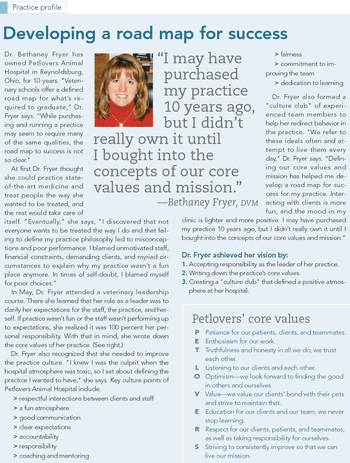
See how Well-Managed Practices turn their core values into financial success.
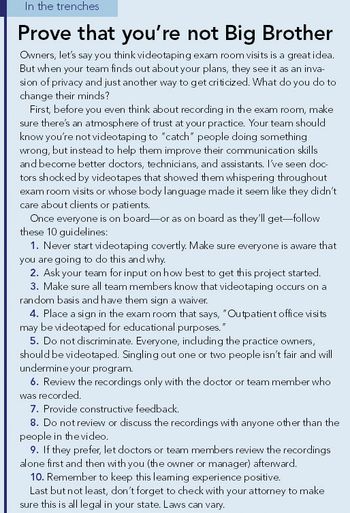
Videotaping in the exam room may make everyone nervous at first. But strong communication skills get clients on board with the best care. And this tool can help.
Send follow-up cards after pets' passing.
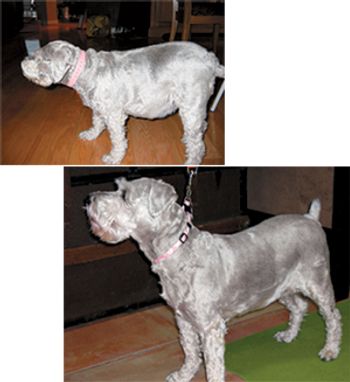
In this weight loss competition, being a big loser is a good thing.

Owning a pet is a lifelong journey. Help set clients' direction by offering strong care recommendations on nine critical topics.
Play a game to remember pet and client names.
Changing guidelines, research findings, and product choices can create a muddle of confusion. Sort through it and offer clients the best protection for their pets.

A trip to the optometrist's office reminded this veterinarian that clients are willing to pay for quality care-especially if it prevents hassles in the long run.
Get your facts straight with ethically clear and ethically ambiguous situations.
Veterinary behaviorist Dr. Melissa Bain has basic knowledge you can share on pet training with new or newly exasperated owners.
Dr. Jay Stewart, owner of Aumsville Animal Clinic in Aumsville, Ore., and a CAPC member, offers these tips to help your clients bridge the gap between awareness and action.
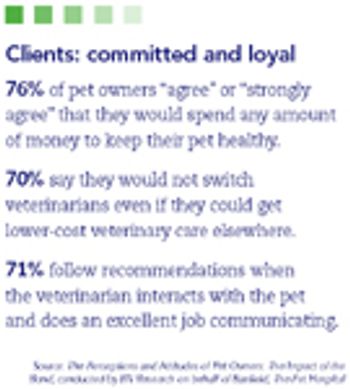
Page 100-104
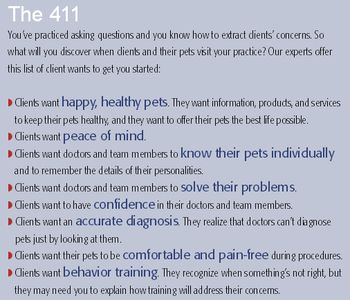
Unfortunately, you can't read clients' minds and predict the information, products, and services they want. But you can take a good guess through a revolutionary process called listening.
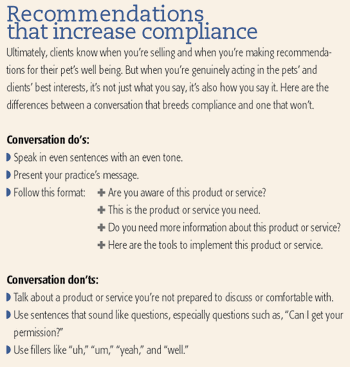
"No. Here's why a strong recommendation for the care you believe in is the best marketing tool you possess."
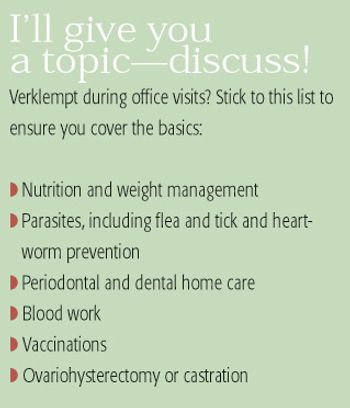
Are you informal about informing, easygoing about educating, casual about coaching clients about their animals? See how more structure benefits your practice, pet owners, and patients.
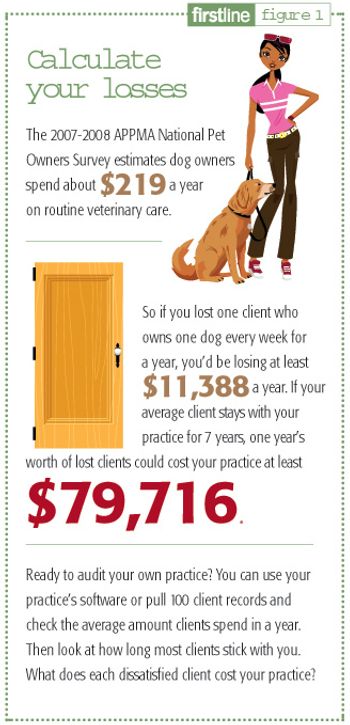
It's probably more than you think. For example, a typical dog owner spends $219 a year on routine veterinary care, while a cat owner spends $175, according to the 2007-2008 APPMA National Pet Owners Survey (see Figure 1).
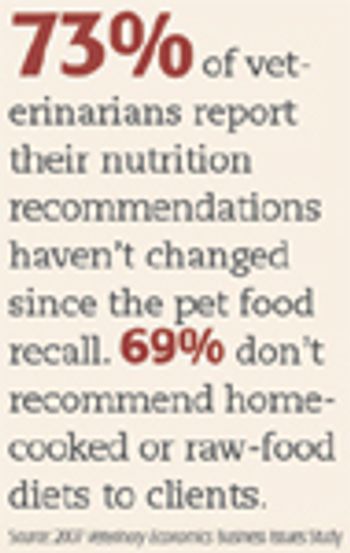
Months into the pet food recall, the veterinary world is out of sorts, with some dry and wet food varieties still off the shelves. But amid the frustrations, there's some good news: The recall has shifted clients' focus from cost to quality of their pets' diets.