
Jeff Adney, BA, president of PermaTek Coatings, talks about the S.M.A.R.T. way to ensure a good quality floor and the key ingredients needed for an installation that will perform for many years.
Jeff Adney, BA, president of PermaTek Coatings, talks about the S.M.A.R.T. way to ensure a good quality floor and the key ingredients needed for an installation that will perform for many years.

Jamie M. Burkitt, DVM, DACVECC, assistant professor of clinical surgical and radiological sciences at the University of California, Davis, says traumas are an area where the use of steroids might be controversial.

Veterinary architect Dan Chapel has squeezed a practice into a Winnebago but ultimately says that the size of your hospital should be driven by what you want to accomplish inside.
Dr. Sarah Wooten is here to help make body condition score easy for your clients to understand.

Bonnie Wright, DVM, DACVAA, CEO of Mistral Vet, says veterinarians should do these 3 things to speed up recovery time when dealing with a trauma case.
Alan Robinson, BVSc, MRCVS, DMS, director of VetDynamics UK Ltd, explains that building resilience is a key skill that current and aspiring veterinarians need to be thinking about.

While we don't yet have data on how many animals are dying as a result of veterinary medical errors every year, Linda Fineman, DVM, DACVIM (Oncology), director of veterinary talent and knowledge strategy at Ethos Veterinary Health, says we can look to human medicine for help.
"NSAIDs really are wonderful things," says specialist Dr. Matthew Brunke.

Pre-anesthesia is extremely important, says Khursheed Mama, DVM, DACVAA, professor of veterinary anesthesiology at Colorado State University, for coming up with an anesthetic plan for a veterinary patient.

Jeffrey Backus, CVT, RVT, VTS (ECC), ER/ICU veterinary technician at Tufts University, explains when to use Kirby's Rule of 20.
There are a lot of new materials that can be used for dog housing, says Greg Taylor, CEO of the Mason Company. But which should you use and which should you steer clear of?

Gregory Lisciandro, DVM, DABVP, DACVECC, CEO of FASTVet.com, co-owner of Hill Country Veterinary Specialists, talks about where both the veterinary and human medical professions are when it comes to using the Global FAST approach.

Frederic Lohr, DVM, MRCVS, global operations officer for Mission Rabies, says even though people in the the United States and Europe don’t often realize it, rabies still has a massive prevalence around the world.
Good communication impacts our business in myriad ways, says Linda Fineman, DVM, DACVIM (Oncology), director of veterinary talent and knowledge strategy at Ethos Veterinary Health.
Alan Robinson, BVSc, MRCVS, DMS, director of VetDynamics UK Ltd, says that beyond self-evaluation and client feedback, your veterinary staff needs to be able to measure how well they are contributing to the business as employees.

To change the way veterinarians examine aggressive cats, says Lisa Radosta, DVM, DACVB, owner of Florida Veterinary Behavior Service, first, veterinarians need to recognize that the aggression is actually fear.
Revisit the status quo and get your practice procedures dialed in.

Some toxins only affect cats, while others only affect dogs, says Laura Stern, DVM, DAVBT, senior toxicologist for the ASPCA Animal Poison Control Center.

Veterinary professionals should all have their own veterinary first aid kit ready to go at a moment's notice.
Lisa Penny, RPh, FSVHP, director of pharmacy at the Cornell University Hospital for Animals, says many veterinarians may not be aware of the new seven-day opioid prescribing law, which affects the way they treat patients.

For veterinary team members, an important step in helping animals lose weight is having pet owners recognize when their animals are overweight.
Sandra Grossman, PhD, owner of PetLoss Partners and Compassionate Practice Consulting, and Joe Dwyer, president of Daniel’s Dream and speaker with JoeDwyerSpeaking.com, give tips for self-care from their session at the 2017 International Veterinary Emergency and Critical Care Symposium held in Nashville, Tennessee.
Luckily, there are several small things you can do to implement Fear Free without having to structurally change the design and layout of your practice.

Narda G. Robinson, DO, DVM, MS, FAAMA, president and CEO of CuraCore Integrative Medicine and Education Centers, says the interest in herbs and supplements is, in fact, very high.
Veterinarians should recognize that treatment now comes in many forms, says Dr. David Dycus.

Laura Muller, LVT, nursing manager at Cherry Hill Animal Hospital in Cherry Hill, New Jersey, goes through some of the Fear Free products you can use in your veterinary practice.

Heidi Lobprise, DVM, DAVDC, veterinary dental specialist at Main Street Veterinary Hospital and Dental Clinic in Flower Mound, Texas, says veterinary teams need to do a combination of things to properly manage disease in senior pets.
Get this right and you will build the bond with these discerning veterinary clients.
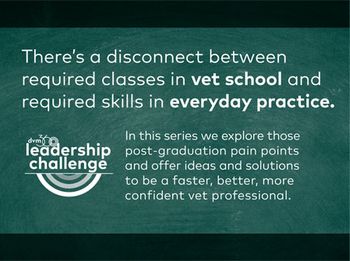
Dealing with co-workers can be as stressful as handling patients, says this vet tech.
Linda Fineman, DVM, DACVIM (Oncology), director of veterinary talent and knowledge strategy at Ethos Veterinary Health, says it's important to understand how to handle difficult conversations with skill.