

Lisa Radosta, DVM, DACVB, owner of Florida Veterinary Behavior Service, says veterinarians should to stick to prescribing only oral behavioral medications.
Lisa Radosta, DVM, DACVB, owner of Florida Veterinary Behavior Service, says veterinarians should to stick to prescribing only oral behavioral medications.

When talking about the special training needed to handle exotic species, Don Harris, DVM, medical director at the Avian & Exotic Animal Medical Center in Miami, Florida, says we need to focus on the word "handling."

At the 2018 VetPartners Annual Meeting, Amanda Landis-Hanna, DVM, senior manager of veterinary outreach for PetSmart Charities, listened to Micheal Dicks, PhD, from the American Veterinary Medical Association, talk about the current veterinary economic model.
Stith Keiser, BA, chief executive officer and director of client experience for Blue Heron Consulting, says there are two different paths that veterinary schools are on.

This veterinary nurse talk about the most important thing for recognizing and treating pain in cats.

Wildlife biologist and DVM says don't feed them, don't adopt them.

MVS Pet Care is a network of house-call veterinarians, explains Jeremy Gransky, DVM, veterinary officer for the company.

The World Small Animal Veterinary Association created its Global Dental Guidelines because of the lack of knowledge in veterinary dentistry, explains these 2 veterinarians.

How has the veterinary profession changed over the last 90 years?

Historically, veterinarians have done a pretty poor job of managing osteoarthritis, says David Dycus, DVM, MS, CCRP, DACVS, orthopedic staff surgeon at Veterinary Orthopedic and Sports Medicine Group in Annapolis, Maryland.

It's important that veterinarians understand the pharmacological effects of herbs.

Nancy Dewitz, director of sales and marketing and technical consultant for Beyond Indigo Pets, talks about why there may be a hesitancy to telemedicine among veterinary practices.

Capnography and interpreting the capnograph has a broad application when used correctly, says Khursheed Mama, DVM, DACVAA, professor of veterinary anesthesiology at Colorado State University.
Eliciting client perspective is one of the most difficult things for veterinarians just starting to learn about communication skills.
To exceed a client's expectations, says Peter Weinstein, DVM, MBA, owner of PAW Consulting and executive director of the Southern California Veterinary Medical Association, you need to first define those expectations.

This veterinarian says a number of factors lead to the spread of rabies in endemic countries.

Julie Reck, DVM, founder and owner of the Veterinary Medical Center of Fort Mill, South Carolina, talks about new and exciting things to be on the lookout for when it comes to Fear Free.

Ineffective leadership negatively affects practice revenue, says Dawn Burdette, executive director of sales, leadership and development at Henry Schein Animal Health.
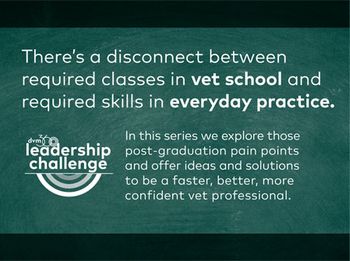
Fetch dvm360 conference educators share the top things they wish veterinary (and veterinary technology) schools should start teaching.

David Bartram, BVetMed, FRCVS, director of outcomes research for Zoetis, talks about the different ways the veterinary profession is changing.

Gregg M. Griffenhagen, DVM, MS, DACVAA, anesthesiologist and clinical instructor at Colorado State University, talks about the biggest misconception with multimodal anesthesia or analgesia.

This grassroots movement is helping the veterinary community when it comes to mental health and wellbeing.

As veterinary board members for Phyto Animal Health, Liz Hughston, MEd., RVT, CVT, VTS (SAIM, ECC), and Stephen F. Cital, RVT, SRA, RLAT, VTS-Lab Animal, are well-versed on the company's expanding line of products.

Amanda Landis-Hanna, DVM, senior manager of veterinary outreach for PetSmart Charities, provides a recap of the 2018 Western Veterinary Conference.
Stacy Pursell, BA, CPC, CERS, founder and CEO of The VET Recruiter, explains the components of a great resume.

Jill Maddison, BVSc, PhD, FACVSc, SFHEA, MRCVS, professor of general practice in clinical sciences and services at the Royal Veterinary College, talks about common examples where prescribing antibiotics is unnecessary.

Millennials are bringing interesting traits into the veterinary hospital, says Heather Romano, SHRM-CP, managing director of human resources and training for iVET360.

Ingrid Johnson, CCBC, a certified cat behavior consultant with Fundamentally Feline, goes through the steps of a cat behavior consultation.
Dawn Burdette, executive director of sales, leadership and development at Henry Schein Animal Health, talks about the qualities of a successful leader in a veterinary practice.
Tracy Dowdy, CVPM, managing director of MRG Consulting and founder of the Relationship Centered Practice Academy, says these four bonds can help create growth and success in your veterinary practice.