Ways veterinary practices can support technician retention through compensation, career development, and workplace approaches tailored to employees’ individual skills and experiences.

Ways veterinary practices can support technician retention through compensation, career development, and workplace approaches tailored to employees’ individual skills and experiences.

Jennifer Miller, DVM, shares what veterinarians and pet owners should know about the human-animal bond.

Marisa Ames, DVM, DACVIM (Cardiology), discusses how the entire veterinary team can help improve adherence to parasite preventives.

Learn how psychobiotic probiotics support pets’ anxiety via the gut‑brain axis, lowering cortisol and boosting serotonin.

Marisa Ames, DVM, DACVIM (Cardiology), discusses some ways that animal care providers can mitigate the spread of parasite infestation while rehoming dogs.

Dottie Brown, DVM, MS, DACVS, discussed a couple of ways that Mars Veterinary Health practices sustainability throughout its network of veterinary clinics and hospitals, in a dvm360 interview.

In this dvm360 interview, Marisa Ames, DVM, DACVIM (Cardiology), discusses ways veterinary teams can help reduce the transmission of parasite infestation.

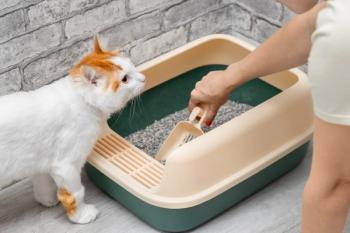
Tiffany Tupler, DVM, CBCC-KA, HABc, explains litter box setup, cleanliness, and when sudden accidents signal illness—not bad behavior.

"Behavior needs to be treated just as if it is a serious medical issue, and not something that is...a secondary thing [to] get to when [you] have time," explains Tiffany Tupler, DVM, CBCC-KA, HAB.

S. Emi Knafo, DVM, DACZM, advises veterinary professionals to be vigilant in spotting transmissible viruses such as avian influenza and rabbit hemorrhagic disease, in a dvm360 interview.

Katherine Quesenberry, DVM, MPH, DABVP (Avian), discusses why lack of food intake is a concern for avian and exotic practitioners, in a dvm360 interview.

Katherine Quesenberry, DVM, MPH, DABVP (Avian), discusses how veterinary professionals can incorporate medical care for exotic species into their everyday practices, in a dvm360 interview.

Katherine Quesenberry, DVM, MPH, DABVP (Avian), shares unique client relationships and patient cases, in a dvm360 interview.

Missed signals and misunderstood communication—not malice—often underlie feline behavior labeled as “spite," explains Tiffany Tupler, DVM, CBCC-KA, HAB.

In this dvm360 interview, Steven Marks, BVSc, MS, MRCVS, DACVIM, discusses scholarship awards and the significance of this funding to underserved areas.

S. Emi Knafo, DVM, DACZM, shares which species many veterinarians should consider using a specialist to handle.

Steven Marks, BVSc, MS, MRCVS, DACVIM, dean of the Harvey S. Peeler Jr. College of Veterinary Medicine, discusses the impact of the inaugural class on Clemson University and South Carolina in a dvm360 interview.

Tiffany Tupler, DVM, CBCC-KA, HAB, explains how breed-related traits shape feline behavior, even when physical limitations affect a cat’s ability to act on natural instincts

Katherine Quesenberry, DVM, MPH, DABVP (Avian), discusses when general practitioners might turn to an expert in avian, reptile and other exotic animals for patient care, in a dvm360 interview.

Katherine Quesenberry, DVM, MPH, DABVP (Avian), discusses which animals have grown in popularity during her career and which have become less common, in a dvm360 interview.

Small choices—from phone communication to sedation protocols—can ease the euthanasia experience for families while helping protect the emotional wellbeing of veterinary teams, explains Mary Gardner, DVM.

Leilani Alvarez, DVM, DACVSMR, CVA, CCRT, head of the Integrative and Rehabilitative Medicine Department at the Schwarzman Animal Medical Center in New York, New York, outlines a systematic 5-step approach—from patient history to diagnostic imaging—to help veterinarians work up forelimb lameness and guide treatment planning.

Leilani Alvarez, DVM, DACVSMR, CVA, CCRT, head of the Integrative and Rehabilitative Medicine Department at the Schwarzman Animal Medical Center in New York, discusses the most exciting advances in treating forelimb lameness.

S. Emi Knafo, DVM, DACZM, discusses trauma cases and how some exotic pets, including turtles, birds and rabbits, can get hurt, in a dvm360 interview.

Collagen-supporting ingredients and antioxidants may help address the broader “joint organ” in dogs with osteoarthritis and soft tissue injuries as part of multimodal management, according to Leilani Alvarez, DVM, DACVSMR, CVA, CCRT.

Naomi Hoyer, DVM, DAVDC, discusses her recent continuing education lectures at the 2026 Veterinary Meeting & Expo and provides guidance for dental practices.

Leilani Alvarez, DVM, DACVSMR, CVA, CCRT, head of the Integrative and Rehabilitative Medicine Department at the Schwarzman Animal Medical Center, describes when NSAIDs work—and when they don’t—in forelimb lameness.

Bonnie D. Wright, DVM, DACVAA, CVMA, CVPP, CCRT, CCRP, addresses how integrative medicine can provide comfort to an animal in pain, in a dvm360 interview.

Christina Gentry, DVM, DACVM, discusses dermatologic signs that a patient is in need of immediate attention, including allergic reactions, in a dvm360 interview.

"Sixty percent of a dog's body weight is on the forelimbs," explains Leilani Alvarez, DVM, DACVSMR, CVA, CCRT, head of the Integrative and Rehabilitative Medicine Department at the Schwarzman Animal Medical Center, in this video.