









Can risk factors for MRSA carriage be identified in veterinary workers, thereby reducing the risk of nosocomial infections in animal patients?
Can risk factors for MRSA carriage be identified in veterinary workers, thereby reducing the risk of nosocomial infections in animal patients?

New findings suggest that the canine microbiome is more similar to the human microbiome than that of either the mouse or pig.
Researchers evaluated the predictive value of the 2 most common trauma scoring systems in veterinary medicine.

Can contact with animals as a child offer immune protection against stress as an adult?

Does early intervention with intensive rehabilitation improve recovery in dogs with spinal cord injury after decompressive surgery?

By enlisting the public’s help, ecologists now have a better understanding of the risk of tickborne disease across the country.
Maryland’s Department of Agriculture is taking advantage of dogs’ keen sense of smell to detect foulbrood in its bee colonies.

A new study evaluated the serum concentrations and adverse effects of once-daily dosing of extended-release levetiracetam in healthy cats.

What do you get when you fill a room with general practitioners and emergency veterinarians? A better understanding of how to communicate with one another.

Due to a shortage of Percorten-V, the FDA is advising veterinarians to use an alternate drug option to treat canine Addison’s disease.

Can the use of essential oils in poultry farm cages and hatcheries mitigate the risk for animal and human infection?

Tanovea-CA1—the first animal drug intended to treat canine lymphoma—has recently received funding to conduct a necessary field study for full approval.

A new study has found that naturally occurring endocannabinoids may have the potential to slow tumor growth and prevent cancer migration in mice with osteosarcoma.

Determining the cause of blood in the urine requires an organized method that includes a careful history, urinalysis, and more.
Veterinary professionals are uniquely positioned to protect both animals and people against infectious diseases, as evidenced by 2 initiatives introduced at the 2018 AVMA Convention.

Because would you trust a straight-up Google search to tell you how to place a nasoesophageal tube in a cat?

The new diet has been shown to reduce body fat and body weight in dogs while improving arthritis scores.

The chewable tablet is now FDA approved for the prevention of Borrelia burgdorferi infections.
Some cases of pyoderma will inevitably require flexibility with regard to a pet owner’s budget and treatment preferences.

A pet poison expert explains the various facts that need to be gathered when presented with a potential poisoning case.

What is metronomic chemotherapy, and how does it differ from traditional chemotherapy?

A One Health expert explains why—and how—physicians and veterinarians need to join forces to improve management of zoonotic diseases in people and animals.

Two recent cases highlight potential risk factors for GDV development in cats.

Veterinarians are reporting a significant increase in the number of patients being treated for marijuana intoxication.

The on-campus research and pathology building will focus on improving the understanding of zoonotic and vector-borne diseases.
According to an FDA alert, dogs developing dilated cardiomyopathy that are not typically prone to the disease have 1 thing in common—they’ve been fed diets containing legumes, lentils, and potatoes as the main ingredients.
Scientists have long been searching for effective methods to prevent debilitating or deadly vector-borne diseases in humans around the world. Now, a new study suggests that veterinary parasiticides may be what they have been looking for all along.
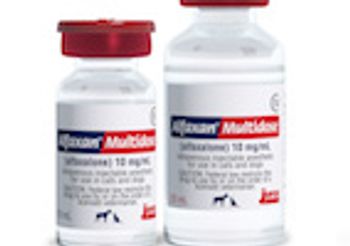
The use of Alfaxan has grown rapidly among US veterinarians due to its wide safety margin. And now, a new product registration has been approved by the FDA to increase the drug’s shelf life.

A veterinary research group at OSU has confirmed the existence of an exotic tick that has been previously reported in New Jersey, Virginia, and West Virginia.

This year’s Award for Scientific Achievement recognizes a professor emeritus of surgery and dentistry for his extensive work.
