








Front-desk quiz: Test your medical knowledge answer 4D
Front-desk quiz: Test your medical knowledge answer 4D
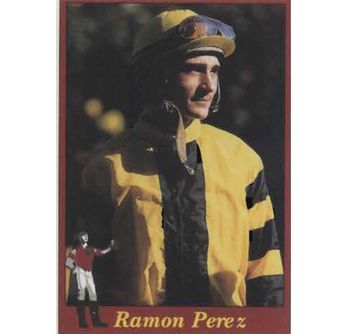
Ramon Perez's long-running love of horses inspired his move from racing at Belmont to becoming an equine practitioner.
Columbia, Mo. -- In an effort to do her part to decrease the number of unwanted horses in the United States, the head of University of Missouri's equine ambulatory section will offer an equine sterilization clinic this fall.
Oklahoma City, Okla. -- A veterinarian beat out a rancher in a runoff primary for a U.S. House of Representatives seat in Ohio's 2nd Congressional District.
Raleigh, N.C. -- Students at North Carolina State University interested in pursuing a DVM can take advantage of a new Veterinary Professions Advising Center (VetPAC) on campus and online.
In addition to serving as school dean, Donald Jasper worked as a professor and an authority on milk quality and livestock disease.
A new mandatory food animal identification program is the subject of public meetings in August.
This edition of the Five covers the Year of the Veterinarian, food-animal antibiotics, veterinarians' most important skill outside of medical know-how, and more.
Gulf of Mexico - The number of birds, sea turtles and mammals injured or killed as a result of the oil spill in the Gulf of Mexico continues to swell, according to a new estimate released by the Unified Area Command in the U.S. Fish and Wildlife Service.

Dr. Robert M. Miller reviews the book I Wanna See a Veterinarian.
Today's veterinary students just don't have the same drive and determination as the Baby Boomers have.
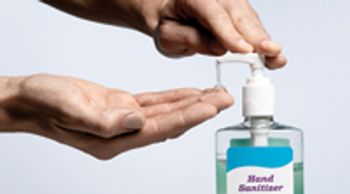
Place hand sanitizer at the check-in area, near pens and other items clients may touch.

Dr. Osborne's journey with Parkinson's disease.
To tell or not to tell, that is one veterinarian's question. See his answer.
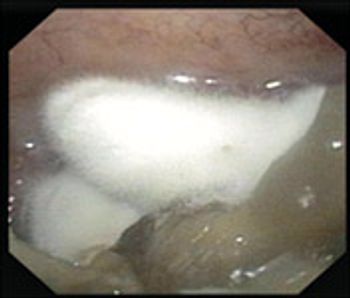
In general, this fungal infection in dogs is either sinonasal or disseminated.
Do: Meet and greet as much as possible. Don't: Wear flip-flops and a sweatshirt; be professional.
Regarding the article "Incidental finding of renal agenesis in a cat," this condition may be a common finding in the Northeast.
Everything we have discussed to this point is actually about establishing a records plan that will allow us to serve the dairy industry of the future using the records that are efficiently gathered so we are not spending all of our time keeping or organizing the records. As our herds get larger, as the number of animals examined at any one time increases, as we are examining groups of diverse animals at one time, and as we struggle to maintain a cow side presence, the organization of the records becomes more critical.
The agricultural community is an extremely small percent of the general population and much of that population lives in densely populated areas of the country. They draw their perceptions of food animal care from their experiences and perceptions about zoos, their own companion animals, and the visual stories presented electronically from opponents of the animal industry.
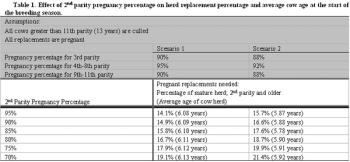
Because one goal of proper heifer development is to improve second parity pregnancy percentage, a beef producer may ask "what is the impact of higher pregnancy percentages during the second breeding season on costs and income?" Table 1 displays the effect of changing pregnancy percentage for first-calf heifers in 5-percentage point increments on the percent of the herd that must be replaced each year and the average age of the herd. In general, given the assumptions in the table, for every 5-percentage point improvement in first-calf heifer pregnancy percentage, the number of replacements needed for the herd decreases by about 1 percentage point and average cow age increases by .01 years.
The Food and Drug Administration Center for Veterinary Medicine (FDA CVM) approves drug labels. The Environmental Protection Agency approves pesticides and products used on premises.
Multiple physiologic mechanisms act in concert to maintain the concentration of ionized calcium in the extracellular fluid (ECF) within a very tightly-regulated range. Hypocalcemia most commonly occurs when the physiologic demand for calcium for fetal bone growth or milk production exceeds the dietary supply of calcium and overwhelms the homeostatic systems aimed at maintaining adequate ionized calcium in the ECF.
Lead-based paints, lead-based gasoline, solder, combustion residues, caulking compounds, improperly glazed pottery, batteries, buck-shots, sewage sludge, some canned commercial dog foods, electronic wastes, etc.
