










Hypoadrenocorticism, or Addison's disease, results from failure of the adrenal glands to secrete glucocorticoids (primarily cortisol) and mineralocorticoids (primarily aldosterone).
Hypoadrenocorticism, or Addison's disease, results from failure of the adrenal glands to secrete glucocorticoids (primarily cortisol) and mineralocorticoids (primarily aldosterone).

Two things you may not know about canine Addison's disease: A history of weight loss or hypoglycemia may precede the typical electrolyte abnormalities, and DOCP can be administered immediately in dogs that may be having an addisonian crisis.
Dr. David Bruyette discusses recent changes in the availability of insulin products.
Dr. David S. Bruyette describes how to handle cats in this situation.
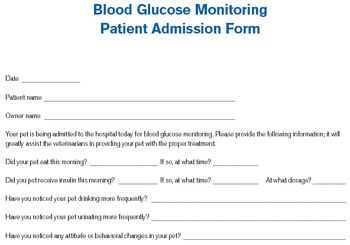
When we admit patients for blood glucose monitoring, we ask clients to fill out this form.
Increased ACTH secretion from the pituitary gland is the most commonly recognized cause of canine hyperadrenocorticism (HAC).
Hyperadrenocorticism is a common and complex clinical condition in the pet ferret.
Information on thyroid function, pituitary pars intermedia dysfunction, and equine metabolic syndrome in horses.
None of the tests for hyperadrenocorticism (HAC) in dogs are perfect.
A 12-year-old female cat was presented for polyphagia. Diagnostic work-up revealed a diagnosis of diabetes mellitus.
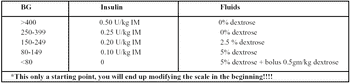
Diabetic ketoacidosis is one of the more common endocrine emergencies seen in veterinary emergency centers throughout the US.
Authors almost always refer to hypothyroidism as a common (if not the most common) endocrine disease in dogs, but there is little evidence to support this claim.
Two recent large studies have looked at possible environmental or dietary factors involved in the pathogenesis of hyperthyroidism.
Polyuria and polydipsia refer to excessive water consumption and urine production respectively. These are common clinical signs in both dogs and cats.
An outline of the pathophysiology, diagnosis, and treatment of hypoadrenocorticism in dogs.
Cushing's syndrome refers to all causes of hyperadrenocorticism.
Hyperadrenocorticism develops most commonly in middle-aged to older cats (mean age = 10.4 years; range 6 - 15 years).
Diabetes mellitus is a common endocrine disorder in dogs and cats. Recent data has shed light on the pathogenesis of the disorder in cats and has highlighted the role of diet and oral hypoglycemic therapy.
In the last few years it is still apparent that the best test to use in the initial approach to the patient with hyperthyroidism is measurement of total T4 concentrations.
A review of the classic signs of hyperthyroidism, the best testing strategies and when to use them, and the advantages and disadvantages of surgical and non-surgical therapies.
Hyperadrenocorticism remains one of the most common endocrine disorders diagnosed in the geriatric dog population.
Diabetes mellitus is a common endocrine disorder in dogs and cats.

In the last few years it is still apparent that the best test to use in the initial approach to the patient with hyperthyroidism is measurement of total T4 (TT4) concentrations.
Cushing's syndrome refers to all causes of hyperadrenocorticism with overproduction of cortisol.
Hyperthyroidism is the most common endocrine disorder in the cat.