











This review will help you better recognize and treat affected patients.
This review will help you better recognize and treat affected patients.

Advances in endocrinology are happening quickly, and four areas in particular merit our attention to ensure we are keeping up-to-date and providing the best care for our patients.

Vetsulin (porcine insulin zinc suspension) is the first FDA-approved veterinary product indicated for the reduction of hypersglycemia and hyperglycemia-associated clinical signs in dogs with diabetes mellutis.
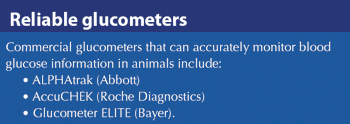
Monitoring the effectiveness of therapy is an important part of managing canine diabetes. The time and effort the veterinarian devotes to client education will imporve the client's ability to accurately relate what is observed at home and to monitor the dog according to the veterinarian's instructions-both of which facilitate the veterinarian's ability to assess the long-term efficacy of treatment.
Articles on managing and treating canine diabetes mellitus.
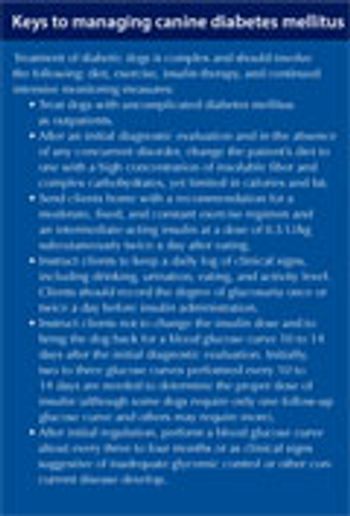
Diabetes mellitus is a complex disease, and managing it is equally complex. Communicating clearly with clients and preparing them for the need to monitor and modify treatment is vital for successfully treating a diabetic dog.
In the case of a chronic disease such as canine diabetes, we have to do an excellent job of handling clients' concerns, or it may be the owners' misperceptions about canine diabetes rather than the diabetes itsels that results in the loss of a patient. David Bruyette, DVM, DACVIM, has developed a trouble-shooting top 10 list to help assure owners of newly diagnosed dogs that it's going to be OK.
The basal T4 concentration is useful in most cases.
Dogs typically develop insulin dependent, or type I, diabetes mellitus.
Insulin was first discovered in 1921 by Frederick Banting and colleagues.
Surgery is performed for dogs with pituitary and adrenal-dependent disease.
Feline hyperthyroidism is a common endocrinopathy of the cat.
Hyperadrenocorticism (HAC) is a common endocrine disease of the dog.
Historically, cats were fed diets higher in insoluble fiber.
The hypothalamus secretes thyrotropin-releasing hormone in response to nervous stimuli.
Hypoadrenocorticism occurs as a result of a deficiency in glucocorticoids and, in some cases, mineralocorticoids.
Understanding hyperadrenocorticism and hyperaldosteronism
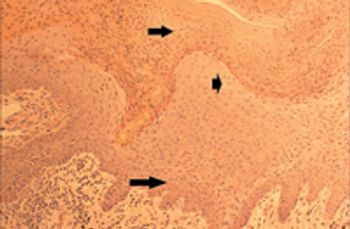
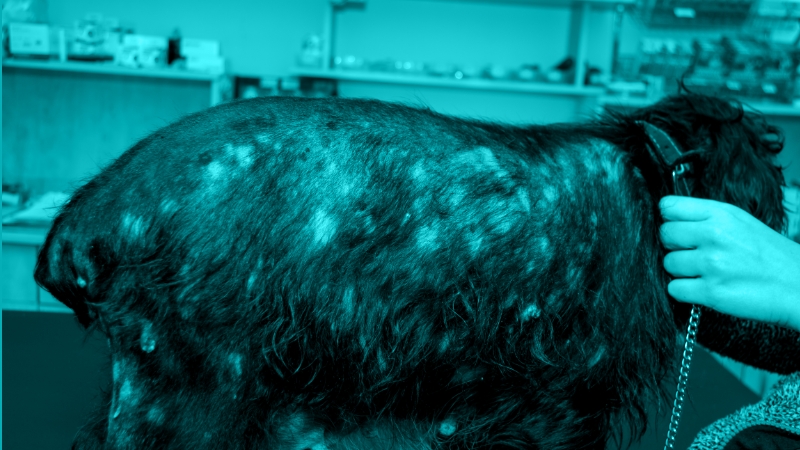
An 8-year-old 46.3-lb (21-kg) female spayed mixed-breed dog was referred to the Purdue University Veterinary Teaching Hospital for evaluation of lethargy, inappetence, weight loss, and alopecia of several months' duration.
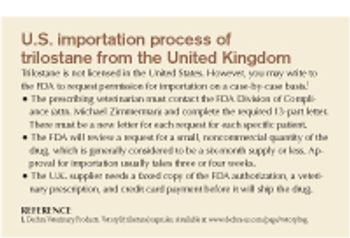
A brief review of the diagnosis and treatment of hyperadrenocorticism and the current knowledge on trilostane, including its therapeutic considerations and possible adverse effects.
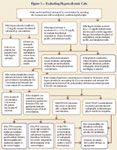
Q: Could you update the diagnosis and management of atypical hyperadrenocorticism?
"The advantage of trilostane seems to be a much higher safety profile than Lysodren with an equal efficacy rate."
The EPA has reported a possible connection between brominated flame retardants commonly found in the home and the recent upsurge in this thyroid disease in cats.
National Report - A potential connection between feline hyperthyroidism (FH) and a flame-retardant chemical found in common household products, house dust and some food items may exist, concludes a recent Environmental Protection Agency (EPA) study.
Dr. Bruyette discusses which thyroid function tests to use to diagnose hypothyroidism in dogs and hyperthyroidism in cats.
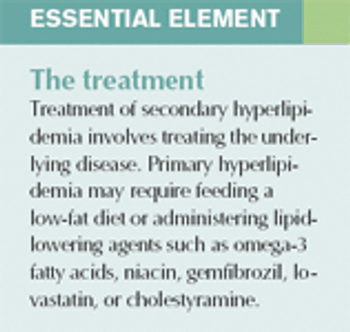
Hyperlipidemia is the increased concentration of triglyceride (hypertriglyceridemia), cholesterol (hypercholesterolemia), or both in the blood.