









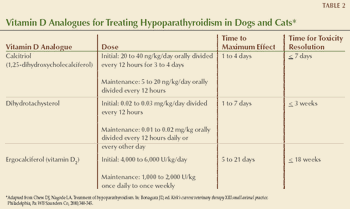
In this article, we review the differential diagnoses in patients with hypocalcemia, the diagnostic testing to investigate clinical signs consistent with hypocalcemia, and the treatment of primary hypoparathyroidism.
In this article, we review the differential diagnoses in patients with hypocalcemia, the diagnostic testing to investigate clinical signs consistent with hypocalcemia, and the treatment of primary hypoparathyroidism.
"Veterinarians need to direct their own profession," says this professor and endocrinologist. "If we do not take responsibility for how veterinary medicine is practiced, we may find out that we are no longer making the decisions."
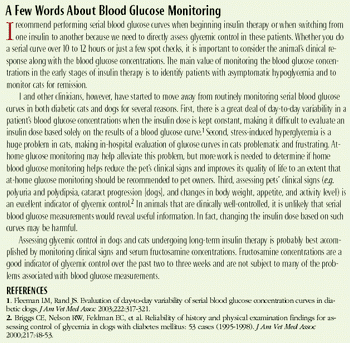
On Dec. 31, 2005, Eli Lilly discontinued four of its insulin products: Humulin L Lente insulin, Humulin U Ultralente insulin, Regular Iletin II pork insulin, and NPH Iletin II pork insulin. Our challenges are to switch patients currently receiving these products to comparable insulin preparations and to change our treatment approach in newly diagnosed diabetes mellitus cases.
Hyperthyroidism can be diagnosed in most cats based on clinical signs consistent with the disease, physical examination findings including a palpable thyroid nodule and an increased serum total T4 concentration.
Veterinarians often overlook the urinary tract when evaluating patients for endocrine diseases.
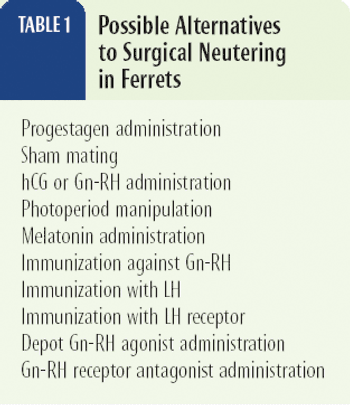
Because evidence points to surgical neutering as an important risk factor for hyperadrenocorticism in ferrets, we reviewed the literature to find current and possible future alternatives to surgically neutering ferrets.

Since it was first documented in 1979, hyperthyroidism has become increasingly more common in cats.
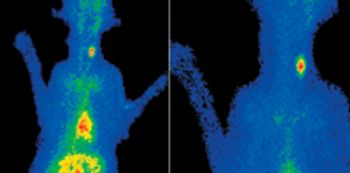
In this article, I describe the most common clinical signs and physical examination findings in hyperthyroid cats. I also review the available diagnostic methods, including their advantages and disadvantages.
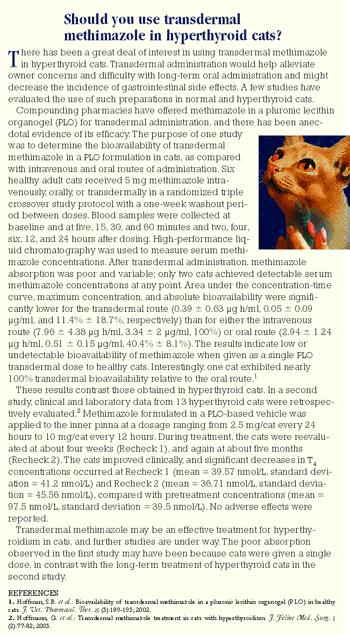
The options for treating feline hyperthyroidism include surgery, medical therapy, and radioiodine therapy.
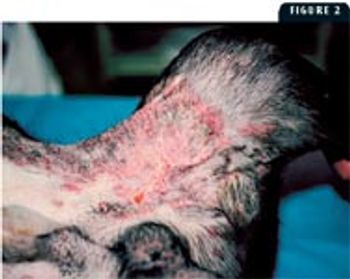
The internal medicine service at the Veterinary Medical Teaching Hospital at the University of Wisconsin School of Veterinary Medicine requested a consultation on a 7-year-old intact male Boston terrier in which pituitary-dependent hyperadrenocorticism had been diagnosed one month earlier.
A 12-year-old, 18.4-lb (8.4-kg) neutered male Lhasa apso was referred to Mississippi State University's Animal Health Center for evaluation of hypercalcemia.
The authors of this study concluded that etodolac therapy should be discontinued before thyroid function testing in dogs.
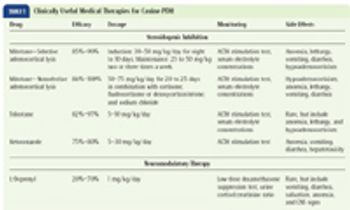
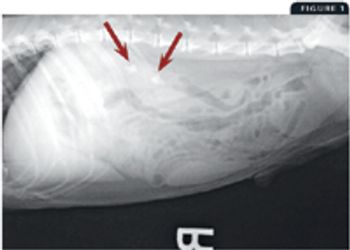
Hyperadrenocortocism is a common endocrinopathy in geriatric dogs.
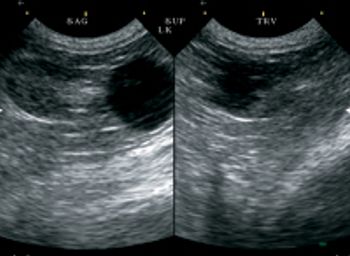
Medical treatment of adrenal disease is usually reserved for ferrets that are poor surgical candidates.

Hypoadrenocorticism, or Addison's disease, in dogs is not a common disease but may be overlooked as a diagnosis.
Several drugs have been reported to alter thyroid function tests in dogs. These include glucocorticoids, potentiated sulfonamides and anticonvulsants, such as phenobarbital. Many other drugs have been reported to affect thyroid function in humans and other species.
Q. How does one interpret the current thyroid function tests in dogs?
Little Falls, N.J.-The Veterinary Referral Center here is successfully treating hyperthyroidism in cats, thanks to new radioiodine therapy capabilities.
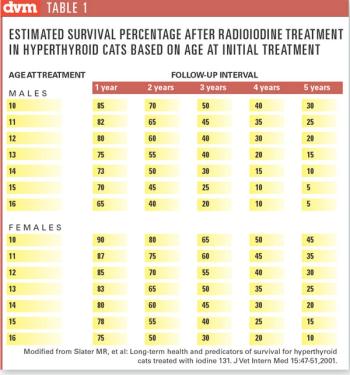
Q: I have been managing several older cats with hyperthyroidism. Please provide some practical updated information about feline hyperthyroidism.