
















The normal liver receives arterial blood from the hepatic artery and venous blood from the portal vein. Regarding arterial blood flow, the celiac artery branches off of the aorta and the hepatic artery branches off of the celiac artery.
The normal liver receives arterial blood from the hepatic artery and venous blood from the portal vein. Regarding arterial blood flow, the celiac artery branches off of the aorta and the hepatic artery branches off of the celiac artery.
Diabetes mellitus (DM) is one of the most common endocrinopathies seen in cats. DM arises from a variety of pathophysiological causes. Causes of DM in cats include islet-specific amyloid deposition, chronic pancreatitis, obesity, infection, other illness, drugs, etc.
Thyroid hormones influence many body systems. Thyroid hormones are involved in the development of the nervous and musculoskeletal systems. Thyroid hormones are also important to normal cardiorespiratory function, other hormones and enzyme systems, and red cell synthesis to name a few.
Insulin has become increasingly important in the treatment of dogs and cats with diabetes mellitus. Almost all dogs are classified with insulin-dependent or type 1 diabetes mellitus. Although up to 60% of cats are non insulin-dependent or type 2 diabetics at the time of diagnosis1, early intervention with exogenous insulin is an important component to achieving remission and preserving the function of insulin-secreting beta cells.
The adrenal gland consists of two distinct regions, the outer cortex and inner medulla. The cortex consists of three distinct layers that produce mineralocorticoids (aldosterone), glucocorticoids and androgens. Collectively these hormones are sometimes referred to as corticosteroids. The medulla produces catecholamines including epinephrine, norepinephrine and dopamine.
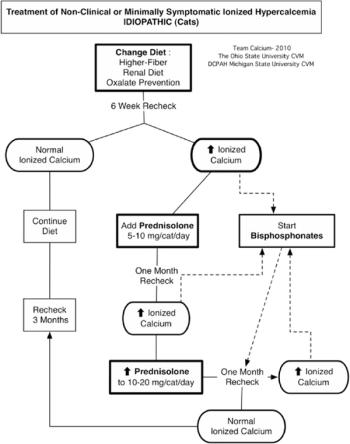
Calcium in circulation occurs in three forms: calcium bound to proteins (approximately 40%), calcium complexed to various anions such as citrate and phosphate (8%), and ionized calcium (iCa, approximately 52%. The latter is the biologically active form of calcium and clinically-relevant hypercalcemia only exists when the ionized fraction of calcium is elevated.
Is the feline diabetic patient every veterinarian's nightmare? Since diabetes mellitus is one of the most common endocrinopathies in cats, it is likely you will face this disease many times in your veterinary career.
Hepatic lipidosis is the most common liver disease in cats in North America. In a retrospective study performed at the University of Minnesota evaluating liver biopsy specimens obtained from cats over a 10-year period, hepatic lipidosis accounted for 50% of all cases.
Pancreatitis is being diagnosed more and more frequently in cats. Cats typically have chronic pancreatitis whereas dogs usually suffer acute disease. The difference in presentation between the species as well as a lack of appropriate diagnostic tools led to pancreatitis in cats being widely underdiagnosed.
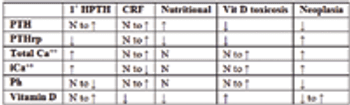
Calcium is involved in many cellular and extracellular processes that include neuromuscular transmission, muscle contraction/tone, hormone secretion, bone homeostasis, coagulation, membrane transport systems, and other cell regulatory pathways. Calcium is measured as ionized (active form, roughly 50%) or total (ionized + albumin bound + anion bound).
While less commonly seen than in their canine counterparts, cats can suffer from an excessive production of cortisol by the adrenal glands. 85% of the cases of feline hyperadrenocorticism are due to a pituitary tumor whereas 15% stem from an adrenal tumor. Progesterone-secreting adrenal tumors have been documented a handful of cats.
Dogs and cats with diabetes can be managed to reduce clinical signs for years after their diabetes diagnosis, but it takes a committed owner to achieve these results.
Even with the advances in diabetic care, diabetes in pets has remained a particular point of interest and discussion among veterinary professionals.

Answers to your questions about diabetes mellitus.

A tip for treating this endocrine disease in cats.
Dr. David Bruyette answers this reader question.

It is unlikely the low-dose prednisone treatment is resulting in the panting the owner is reporting.
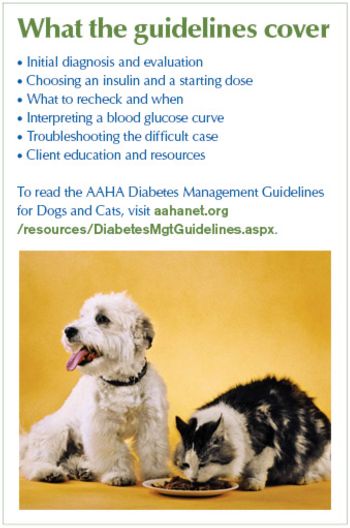
Dr. Audrey Cook explains how the new guidelines were created.
A diagnostic tip for this common endocrine disease.
This study's goal was to determine and compare the likelihood of remission in cats with newly diagnosed diabetes mellitus when treated with glargine insulin, protamine zinc insulin (PZI), or Lente insulin.

What steps would you take to help this dog?
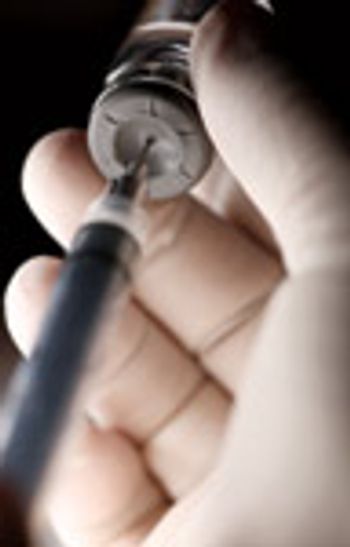
To teach owners of newly diagnosed diabetic pets how to inject insulin, I have them practice with sterile water.

In our April issue as an accompaniment to the article "Identifying the reasons behind difficult-to-control diabetes in dogs" by Dr. Audrey Cook, we asked you if you had questions for Dr. Cook about diabetes. Here is a second installment of her responses.
Trilostane, currently the most used treatment for PDH, is a synthetic steroid analogue. It competitively inhibits the 3-beta hydroxysteroid dehydrogenase enzyme blocking cortisol, aldosterone and sex hormone production.
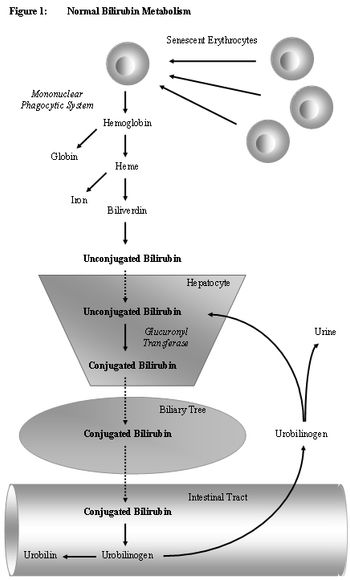
Jaundice (or icterus), broadly defined, refers to the accumulation of excessive amounts of bilirubin in either the circulation or the tissues.