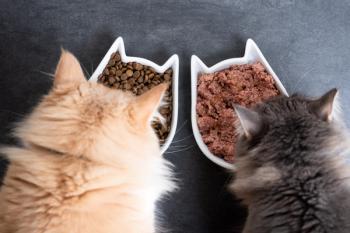
A new analysis detected heavy metals, glyphosate, and plastic-related chemicals in nearly all of the cat foods tested. This slideshow breaks down the findings, what they may mean for cats, and what remains unclear.
Ellen Behrend, VMD, PhD, MS, DACVIM (SAIM), explains which feline patients may benefit from SGLT2 inhibitors, outlines key contraindications, and discusses the evolving conversation around cats with ketones.
Selecting the right feline patients for SGLT2 inhibitor therapy requires careful assessment beyond a diabetes diagnosis alone. At the 2026 AVMA Convention in Anaheim, California, Ellen Behrend, VMD, PhD, MS, DACVIM (SAIM), spoke with dvm360 about selecting appropriate candidates for these medications. In this video, Behrend outlines the clinical factors she considers when choosing cats for SGLT2 inhibitors, reviews situations in which she recommends insulin instead, and discusses the evolving conversation around the use of these medications in cats with ketones.
Below is the transcript, which has been lightly edited for clarity.
dvm360: Which cats should not receive an SGLT2 inhibitor, and when should clinicians consider starting insulin instead?
Ellen Behrend, VMD, PhD, MS, DACVIM (SAIM): Any cat that's not feeling well, not eating well, is sick, absolutely should not have an SGLT2 inhibitor and should be put on insulin instead. The contraindications for using SGLT2 inhibitors are not eating well, acute vomiting or diarrhea, being of a low body weight. There's a big question about whether cats that have ketones can receive an SGLT2 inhibitor. According to the label, they can't, but we are rethinking that in veterinary medicine, and we're giving more leeway to cats that may have some ketones already. Basically, we are looking for a happy diabetic cat that's eating and drinking, urinating like you would expect for a diabetic cat, and has no acute GI [gastrointestinal] signs and is of good body weight or overweight. There's a few other things you need to look at like kidney function, but basically, a happy diabetic cat is probably going to be a good candidate.