











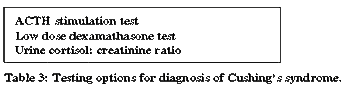
Addison's disease and Cushing's syndrome are opposite sides of the same coin. Both are manifestations of dysfunction of the adrenal glands.
Addison's disease and Cushing's syndrome are opposite sides of the same coin. Both are manifestations of dysfunction of the adrenal glands.
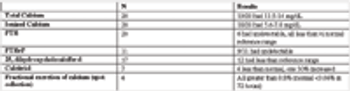
Possible mechanisms of hypercalcemia

Pathogenesis: Insulin-dependent (rare), non-insulin dependent, transient, How do you distinguish, does it matter.
Hypoadrenocorticism is an uncommon endocrinopathy, which may be difficult to recognize due to its varied clinical presentation.
Hyperadrenocorticism: a rare disorder in
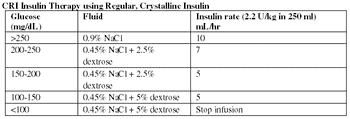
Pathophysiology: Ketone bodies: acetoacetate, beta hydroxybutyrate, acetone
Hypothyroidism is a common endocrine disorder of middle-aged, purebred dogs resulting in decreased production of the thyroid hormones, thyroxine (TT4) and tri-iodothyronine (T3) from the thyroid gland. The majority is believed to be due to acquired primary hypothyroidism.
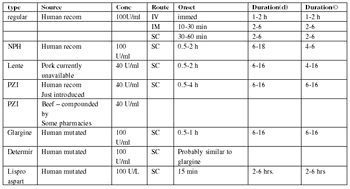
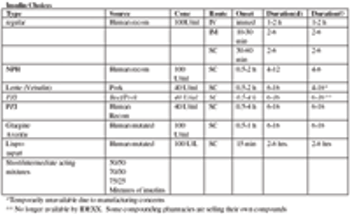
Insulin treatment options for diabetic cats.
Pathogenesis: Insulin-dependent, non-insulin dependent, transient
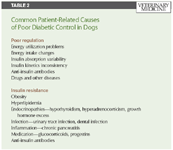
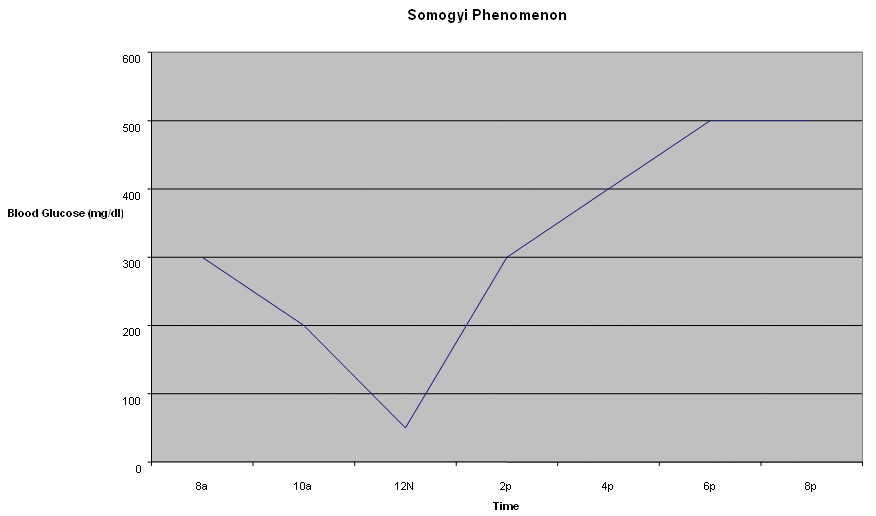
Start insulin therapy?now what?
Clinical signs: polyphagia, polyuria/polydipsia, pyoderma, pot-bellied appearance, urinary tract, and infection
Diseases of the Adrenal Cortex and how to diagnose them
Small animal patients presenting with a primary complaint of hypercalcemia can often be a diagnostic challenge. Typically, the clinical signs are insidious and nonspecific.
When to suspect your diabetic is also Cushinoid
One of the most common endocrine disorders of dogs is hyperadrenocorticism (HAC). Clinical disease results from excess secretion of hormone from the adrenal cortex.
Follow along with this fully interactive case.
Brush up on your clinical skills with this disease overview.
The more you know diabetes mellitus, the better you'll be able to educate your clients and ensure affected pets are receiving proper treatment.
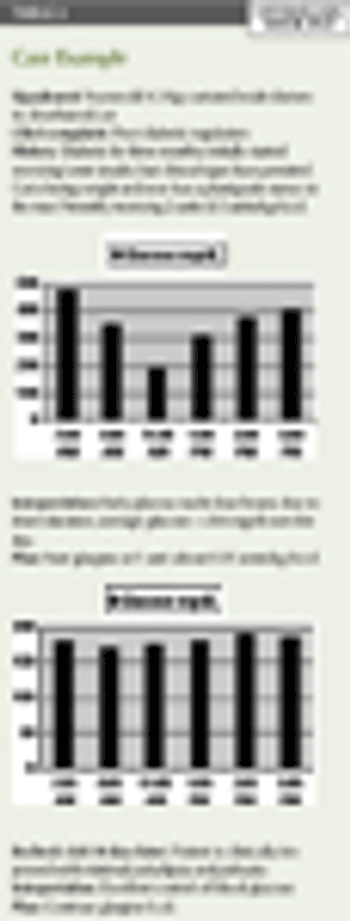
Cats with diabetes can be challenging to monitor and treat because of the complex pathophysiology of the disease and cats' propensity for stress-related hyperglycemia.
As small-animal clinicians know, hyperthyroidism is a common disorder in cats. Treatment often includes management with methimazole, a drug blocking thyroid hormone synthesis.
In the United States there is limited experience with hypophysectomy for pituitary tumors but outside the United States this surgery has been performed with good results.
The classification of diabetes mellitus has changed over the years in both human and veterinary patients.
Insulin has become increasingly important in the treatment of dogs and cats with diabetes mellitus.
This is a common endocrinopathy of the cat. The disease is most common in older cats but occasionally occurs in younger cats.
Hyperadrenocorticism (HAC) is a common endocrine disease of the dog.