










Drs. Wakayama and Bruyette offer a look at treatment options and considerations for feline acromegaly.

Drs. Wakayama and Bruyette offer a look at treatment options and considerations for feline acromegaly.

Drs. Wakayama and Bruyette offer a look at which diagnostic tests are most beneficial in detecting this often underdiagnosed condition.
See what veterinary endocrinologist Dr. David Bruyette recommends as the go-to insulin to treat diabetes mellitus in dogs.
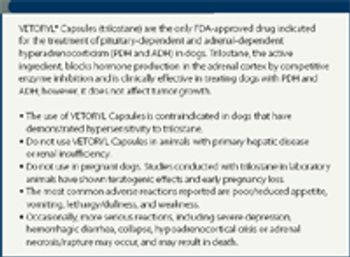
An underestimated financial benefit exists for any practice that produces satisfied clients who have pets with well-controlled diseases that live longer lives.
Mitch was presented to his primary care veterinarian for evaluation of polyuria and polydipsia of six months' duration.

Dr. David Bruyette makes his recommendation on treating this endocrine disease in dogs.

New insulin options are available, so which should you turn to in diabetic dogs?
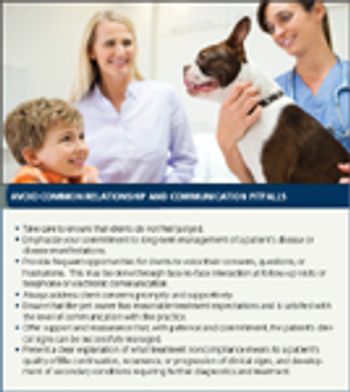
While some patients with advanced conditions do require referral to veterinary specialists, many cases, especially dogs with canine hyperadrenocorticism, are well within the case management capabilities of general practitioners.

Well-trained technicians and other team members can help reinforce veterinarians' messages to clients about signs of illness in pets, the advantages of early disease recognition and treatment, and the importance of follow-up care.
Dr. David Bruyette examines what the studies have to say about this question.
Be supportive of pet owners when they're faced with their cat's diabetes diagnosis. Use these communication techniques to ease the burn of this challenging disease.

When your technicians and other team members are well trained, they can help keep clients informed about signs of illness in their pets so diagnoses can be reached earlier and treatments initiated sooner.
See when you should test for this disease in your patients with neuromuscular signs.
Dr. David Bruyette discusses basal insulin, trilostane, and iodine-restricted diets.
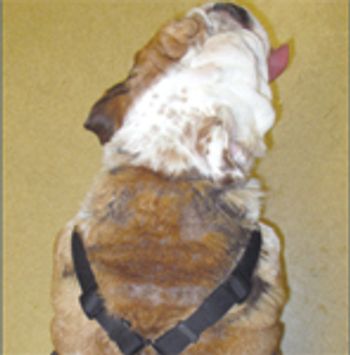
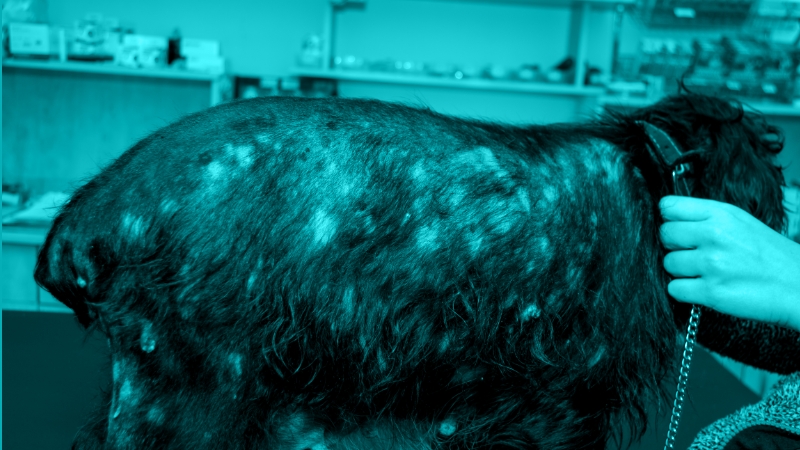
Cushing's syndrome can be challenging to identify because of its variable clinical manifestations in our canine patients. One of the trickier clinical presentations for veterinarians to keep in mind is recurring pyoderma.
Why thyroid management in veterinary medicine requires vigilance to avoid new complications.
Patricia Schenck avoids jail time but incurs more than $10,000 in fines and restitution.

In this case file, the Dechra Veterinary Products Technical Services Team answers five questions they are frequently asked about canine hyperadrenocorticism and VETORYL Capsules.
A recent survey defines and demystifies the clinical signs of this disease in cats.
Princess has a five-year history of pedal pruritus that routinely appears in the summer and fall and responds to topical and oral antibiotic and corticosteroid treatment.
This study sought to determine whether cats with early CKD have elevated PTH concentrations compared with healthy geriatric cats.
Schenck waived her right to a preliminary hearing.
Being aware of the more subtle signs of canine hyperadrenocorticism can be key to early diagnosis and initiation of therapy.
A panel of experts discussed the role of nutritional management of feline hyperthyroidism and answered key questions from attendees of a sponsored symposium held at the 2012 Western Veterinary Conference.

A spectrum of abnormalities-sometimes like "small blips on the radar" should raise your level of suspicion.