

National Report - Only 30 percent of mixed-breed dogs are on monthly flea-and-tick medications, according to a new survey from Mars Veterinary.
National Report - Only 30 percent of mixed-breed dogs are on monthly flea-and-tick medications, according to a new survey from Mars Veterinary.
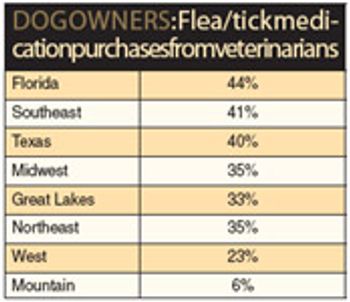
Just 37 percent of dog owners purchase heartworm medication from veterinarians.
As the cost of owning a pet-and running a veterinary practice-rises, more pet owners are turning to insurance to keep their animals healthy.
Talk to your veterinary clients about keeping these medications out of pets' reach to prevent potentially life-threatening effects.
Letting clients know how important they are to you can cement their relationship with your clinic.
In this video interview with dvm360 Content Director Marnette Falley, Dr. Marty Becker talks about one step he thinks he and his colleagues can take to help curb the drop in client visits.
Offer your clients this list of facts to calm their flea allergy woes.
Chapter 4 of a nine-part video series about the Veterinary Care Usage Study by Dr. Karen Felsted, CEO of the National Commission on Veterinary Economic Issues.

'America's Veterinarian' addresses attendees during the CVC in Washington, D.C.

Washington, D.C. -- "I was so nervous, I was sweating like a FEMA director watching the Weather Channel."
Did you know that the #2 search engine in the world didn't exist six years ago? And most people don't even think of it as a search engine! What are we talking about?....YouTube, of course. If you regularly Google your practice's name, you should start doing the same on YouTube! You might just be surprised by what you find.
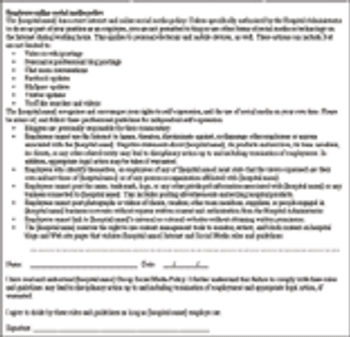
Social media is a quickly changing and ever-evolving area of the Internet that many practices are embracing in order to market more effectively, and to connect and build stronger relationships with their clients.
Before you jump into using all the tools social media has to offer your practice, it's important to take a step back and develop your practice's social media strategy. What is a social media strategy? Like with any marketing strategy, you need to develop a plan for accomplishing the goals you set forth.
In today's world, you and your veterinary team cannot expect to succeed without an Internet presence. The days of NOT having access to the Internet should be long over, in your mind.
Social media has caused a fundamental shift in the way we communicate. When most people think of social media, they think of Facebook...and they should. If Facebook were a country, it would be the third largest country in the world, right behind China and India.
A new study shows that high-pressure scare tactics don't work. A positive approach, however, yields results.
Client care about their pets, so they can become frustrated with your practice. Sometimes that frustration spills over onto paper.
Tame your tweets by avoiding these networking no-no's.
When clients complain that their pets are itchy despite the use of parasite preventives, help them understand the true cause of the symptoms.
How to respond to "Can I buy this elsewhere?"
Pet owners don't know as much as we think they do about taking care of their pets—and their ignorance is jeopardizing your patients' health. Here's what you can do about it.
Topeka, Kan. - It was designed to protect veterinary/client confidentiality, but pushback from the state veterinary board may table a state bill's chances to move forward this year.
If you make clients want to come back, you won't have to worry about the veterinary practice down the road
Tweak your communication and practice protocols for big dividends in client compliance and service.
Trigger Questions are questions or statements that should occur as a trigger result of hearing something else. When dealing with clients, especially new clients, phone shoppers it is important to listen to what the client is telling you and then taking that information to deliver education (triggers) as well as to be alerted to questions (triggers) that you should ask.
Time and time again veterinarians rate high in the most trusted professions. People trust us!
Seeing more senior pets? That's great. But it's important to teach clients to be on the lookout for signs of aging and corresponding behavioral changes.
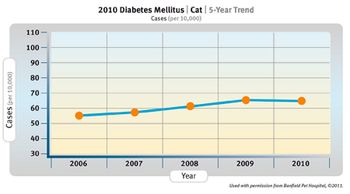
Banfield: Diabetes, cats
Of the pets who end up in shelters, few are reunited with their owners. Here are a few tips for communicating to your clients about the importance of idendification.