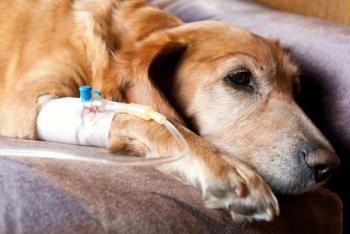
From catheter size and vessel selection to common placement mistakes, Alyssa Mages, BS, CVT, FVTE, shares practical guidance on venipuncture and IV catheter placement for veterinary technicians.
dvm360’s Australian correspondent Phil Tucak updates on research into koalas released back into the wild after hospital treatment; and meet the veterinarian and author whose novels interweave stories about people, wildlife, and domestic animals.
During Australia’s extensive Black Summer bushfires of 2019-2020, veterinarian Adrienne Lavinia, BVSc, BVetBiol, MVS, the veterinary director at Ballarat Wildlife Hospital and an adjunct senior research specialist at Federation University based in Mount Helen, Victoria, was deployed from her then-work as a zoo veterinarian to triage koalas and other wildlife affected by the fires in the region. Since then, she has been involved in a koala research project that is providing critical insights into the postrelease survival, behavior, and habitat use of koalas around the Ballarat area.
“That experience was a turning point for me, and I wanted to do more for the region’s free-ranging koalas. My colleagues and I were motivated to contribute to local koala conservation beyond clinical and rehabilitation work and began collaborating with researchers at Federation University. Our initial plan for a population census and broad health assessment exceeded available funding, so we refocused on a targeted postrelease monitoring project,” Lavinia told dvm360.
“In 2022, the Ballarat Wildlife Hospital was established with an integrated clinical and research mandate, and we began tracking our first postrelease koalas that November. Koalas admitted to the hospital and subsequently treated and cleared for release are fitted with tracking collars during their final prerelease examination,” Lavinia said.
Using movement data from koalas equipped with store-on-board GPS and VHF collars, the project aims to determine whether koalas survive and thrive post release, whether veterinary interventions support successful reintegration, and which landscape features influence survival.
Lavinia and other investigators manually track the koalas in the field and remotely download the GPS data when the collars are within radio frequency range. “These field visits allow for the collection of fecal samples to support ongoing antimicrobial resistance research. For bushfire-affected koalas, we also assess whether they remain in regenerating habitat or relocate to unburnt areas. Road-crossing behavior is also monitored to identify high-risk locations and inform mitigation strategies,” Lavinia said.
“While numerous koala-tracking studies in Victoria have examined translocated populations or individuals affected by blue gum plantation harvesting, few have evaluated outcomes for koalas released from wildlife hospitals. Koala populations around Ballarat are often overlooked in state-wide conservation planning, partly because of perceptions that they represent a noncritical population,” she added.
Lavinia explained that without targeted research studies, surveillance, and long-term understanding, the Ballarat koala population remains at risk. “Broader conservation frameworks such as the Environment Protection and Biodiversity Conservation Act and [International Union for Conservation of Nature and Natural Resources] listings provide essential guidance but may overlook the vulnerability of small, isolated populations to local extinction and range contraction without recognition and targeted management. This research addresses that gap by assessing the health, postrelease movement, habitat use, and survival of both bushfire- and non–bushfire-affected koalas treated at the Ballarat Wildlife Hospital,” Lavinia said.
“By focusing on rehabilitated individuals in this understudied region, the research provides insights into the outcomes of the rescue-treatment-release process and identifies landscape features critical to long-term survival, informing more effective rehabilitation, land management, and conservation strategies.”
Having long been fascinated by the human-animal bond and the connections between people and animals, veterinarian and author Karen Viggers, BVSc (Hons I), PhD, is currently working on her sixth contemporary fiction novel. Each of her books focuses on social or conservation issues, such as the ethics of wildlife rescue and scientific research, end-of-life choices, native forest logging, kangaroo culling, and, more recently, children’s sports.
“My books are human stories threaded with wildlife and domestic animals. In this way, my veterinary work and experiences feed my creative work. I love the whole creative process because it uses a different part of my brain compared [with] my veterinary work. That doesn’t mean writing a book is easy. It’s definitely not. Each book takes from 3 to 4 years, with several drafts and lots of editing. There are many periods of doubt and loss of confidence,” Viggers said exclusively to dvm360.
“But what I’ve learned over the years is to trust my process, even though it’s messy and iterative. The first draft is often wild and joyful. I plunge in and follow tangents and see where the ideas want to go. Then comes the deep work of redrafting and crafting it into something worthwhile, which can take a long time. After that, I have to find the social and gregarious parts of myself to do the publicity. It’s like coming out of a cave. This is why I value my veterinary work. It keeps me in touch with people and the real world.”
The 5 novels that Viggers has had published are The Stranding (2008), The Lightkeeper’s Wife (2011), The Grass Castle (2014), The Orchardist’s Daughter (2019), and Sidelines (2024). She is currently writing the second draft of her sixth novel, which is focused on the human impact on the oceans.
“I’ve had a few personal challenges in the past 2 years, which have slowed my creative process a little. I’ve also traveled to some remarkable places, including Zambia, Uganda, Papua New Guinea, Bhutan, Peru, and Ecuador. This hasn’t helped my time frames with writing either. But I want to go on adventures while I still can. Hiking and wild places are important to me, and feed my work,” Viggers shared.
“As part of my creative journey, I love to support other writers, so I interview other authors at writers’ festivals and on the Secrets from the Green Room podcast that I cohost with another author. At the 2025 Ubud Writers and Readers Festival in Bali, I interviewed several. It was such a thrill to attend an international festival and meet other writers,” she said.
After graduating as a veterinarian in 1987, Viggers initially worked in mixed-animal practice before doing weekend and locum work at Healesville Sanctuary in Victoria to further her interest in wildlife conservation, which she also draws on in her writing. “I met my husband-to-be over a leadbeater’s possum in the veterinary center at Healesville Sanctuary. We then moved to Canberra, and I undertook a PhD [program] in wildlife health and parasite ecology. This helped me to develop research skills and also opened myriad opportunities to assist wildlife biologists in the field,” Viggers said.
“As a result, I have been privileged to have worked with a wide range of native species, including squirrel gliders, potoroos, quolls, bandicoots, pygmy possums, possums, kangaroos, Australian fur seals, diamond pythons, and many others. I have also worked in Antarctica on crabeater seals, Weddell seals, Adélie penguins, and leopard seals. During my career as a wildlife veterinarian, I have also continued to work part-time in small animal practice, which I enjoy to this day.”
Although Viggers has loved writing since she was a child, it wasn’t until later in her life that she had the time and opportunity to pursue her literary interests.
“It wasn’t until after I’d completed my PhD and a post-doc and had 2 children that I decided to try writing a novel. By then, I was in my late thirties and realized that if I didn’t start soon, I would be 80 and still saying I wanted to write. So in between working part-time as a vet and raising 2 small children, I wrote my first novel, The Stranding,” Viggers said.
“It was an interesting process. My PhD thesis had been good training for writing. I learned how to complete a large project, how to edit and be critical of my own writing, and how to accept input from editors. Getting published wasn’t easy. I received a few rejections and started another novel, which became my second published book, The Lightkeeper’s Wife. But it wasn’t until I found an agent that my first novel was published in 2008,” she added.
Viggers is currently completing the final draft of her sixth book, which is focused on the human impact on the oceans. She expects it to be published in the next year.
8 months ago
Flex Forecast: January/February 20269 months ago
Clinical rotations for end-of-life care10 months ago
Q&A: Delivering technician dentistry care10 months ago
Preventing periodontal disease in dogs