









Immune mediated hemolytic anemia (IMHA) can be a common cause of acute lethargy, depression, weakness, and collapse in emergency patients.
Immune mediated hemolytic anemia (IMHA) can be a common cause of acute lethargy, depression, weakness, and collapse in emergency patients.
A physical examination, fecal parasite screen, and vaccine needs assessment should be performed at least yearly for all cats.
Acute and chronic upper respiratory tract disease caused by feline herpesvirus (FHV) and feline calicivirus (FCV) is well known to practitioners.
Despite their marked efficacy in suppressing the immune system, alternatives to glucocorticoids must often be considered when treatment immune-mediated or chronic allergic diseases in dogs and cats.

Diabetes mellitus occurs in both dogs and cats and is the most common endocrine disorder in the emergency setting.
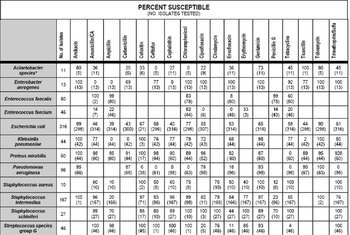
Increasingly, the veterinary practitioner will find that the favorite drug of choice is no longer a viable option.
Anemia is commonly seen in veterinary emergency and critical care medicine.

Critically ill animals are often presented to the veterinarian for emergency medical management.
While elective gonadectomy is one of the most common veterinary surgeries performed in North America, little data exist to suggest the optimal age.
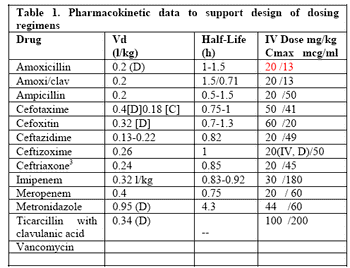
The principles of pharmacology upon which a dosing regimen is based, and the impact of disease in the critical patient were discussed in the companion manuscript entitled "Adjusting Doses" in this same proceedings.
Hypoadrenocorticism, or Addison's disease, results from deficient production of glucocorticoids and/or mineralocorticoids by the adrenal glands.
Pericardial effusion is defined as the accumulation of fluid within the pericardial space.
The emergency clinician is occasionally called upon to treat smoke and burn injuries resulting from house fires or other sources of thermal, chemical, or electrical injury.
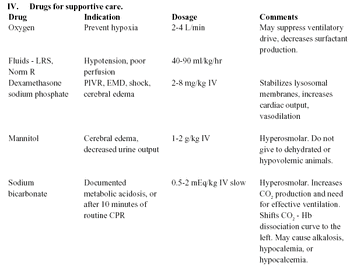
Cardiopulmonary arrest (CPA) is the cessation of functional ventilation and effective circulation.
Two basic types of joint disease afflict people and animals: degenerative joint disease (osteoarthritis) and inflammatory joint disease (e.g., rheumatoid arthritis).
For good reasons, glucocorticoids (GLs) have been the cornerstone of immunosuppressive therapy in humans and animals.
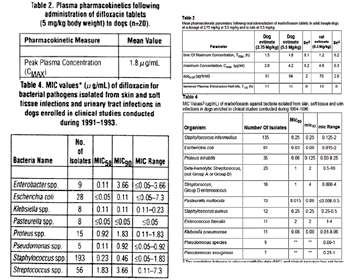
"Even experienced practitioners may not realize that giving a patient antibiotics affects not just that patient, but also their environment, and all the other people that come into contact with that environment."
Most owners lack medical knowledge regarding the birthing process, and as such, they frequently look to the veterinarian to answer questions and to identify potential problems.
Seizures represent an uncontrolled, paroxysmal discharge from the neurons in the brain.
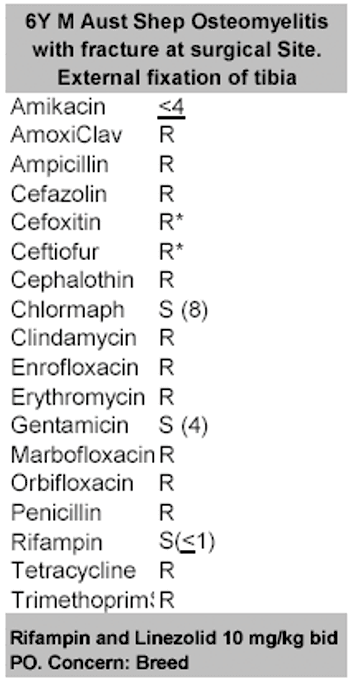
The goal of antimicrobial therapy is to both eliminate bacteruria, but also, to avoid resistance.
Acupuncture is still regarded with skepticism by many veterinarians, or viewed as adjunct therapy rather than a primary therapy.
Why study it? To predict problems by constitutional element, predict progression by same, and control problems via herbs or acupuncture that address the elements.
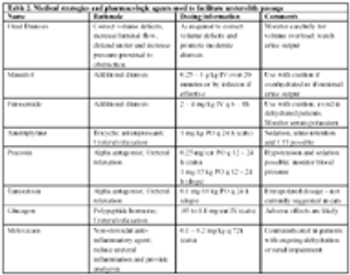
Upper tract uroliths have been relatively rare in cats until the last ten years.
A review of the pathophysiology, clinical presentation, definitive diagnosis, and treatment
Have your clients fill out this consent form for extralabel use of ivermectin to treat demodicosis in dogs.
Every animal that is boarded at our hospital gets what we call a tech exam.
Place all the day's treats in a reusable container every morning.
Pediatric dogs and cats dehydrate quickly with inappetence or illness, and assessing the hydration status of these animals is difficult.
All normal dogs have a small number of Demodex species mites that live in their hair follicles. These mites are not visible to the naked eye. But some dogs develop an overgrowth of these mites, a condition called demodicosis, or demodectic mange.
Veterinary Medicine has found a good home at dvm360.com.
