

'We're all in it together,' says this veterinary specialist.
'We're all in it together,' says this veterinary specialist.

Michael Dicks, MS, PhD, Chief Economic Advisor at VSOP Solutions, Calico explains how private equity companies see a return on investment, and how veterinarians can compete with them.
Mark this in the sad but true news column-as things heat up on a global scale, parasites are thriving.
This VTS sees a positive trend in wages.

Elise Lacher, CPA, co-founder of Strategic Veterinary Consulting Inc., addresses ways that veterinary practice owners can blend business management with medicine.

Doug Knueven, DVM, CVA, CVC, CVCH, owner and medical director of Beaver Animal Clinic in Pennsylvania, discusses the use of acupuncture in combination with other therapies, including Western and Eastern modalities.
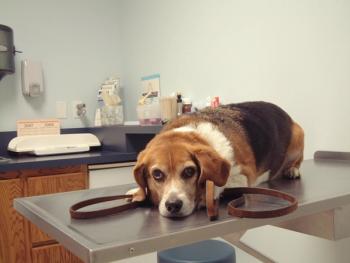
Make the veterinary visit so great for these patients that 'the dog will drag the pet owner through the front door' the next time.

Stop educating clients and tell them a story.

In this clip, Khursheed Mama, DVM, DACVAA, discusses how veterinarians interested in anesthesiology can become involved in the North American Veterinary Anesthesia Society.
Fixed interest rates, extended terms of payment ... uh, maybe we'd better leave this to the expert.

Daniel Mills, BVSc, PhD, FRCVS, DECAWBM, co-author of "Life Skills for Puppies: Laying the Foundation for a Loving, Lasting Relationship" discusses with American Veterinarian how dogs can be taught to behave well, rather than obedient.
This expert sees false hope for many in one offering.
Expert advice on being successful simply by being yourself.

Michael Dicks, MS, PhD, chief economic adviser for VSOP Solutions-Calico, discusses growth opportunities for independent veterinary practices, in this video, filmed at the 2018 NY Vet conference in New York City.
Veterinary expert says if you're studied up, nothing can surprise you.

Have you built up stress and tightness working in the veterinary practice? Stretch out this hard-to-reach spot and push it all away.
If one surface or piece of equipment is slightly out of place, you're going to regret it after the 10,000th time reaching for it. Save wear and tear on every member of your staff by making a point of placement.
If your team members meet certain thresholds, price breaks may need to be reflected in their W-2s.
From "young animals don't feel pain the same as adults" to "my Lab peters out after a short walk," Dr. Robin Downing sets the record straight.
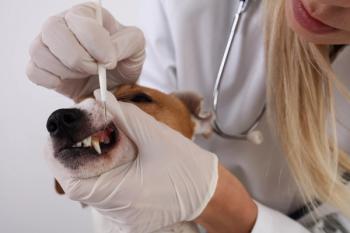
If its true that youre only as good as your tools, its imperative that for the sake of your patients (and your veterinary practices bottom line), you keep your dental instruments at maximum efficiency. Dentistry expert Mary Berg is here to help.

Jennie Tait, AHT, RVT, VTS (Dermatology), for Yu of Guelph Veterinary Dermatology in Ontario, Canada, discusses how veterinarians can assist clients with successfully managing their pets' conditions.
It doesn't take a massive effortor investmentto look at your hospital from cats' perspective.

In this clip, Khursheed Mama, DVM, DACVAA, a professor of anesthesiology at Colorado State University, explains how sedation drugs are not one size fits all for patients.
This specialist says the front desk is the first point of triage when critical cases come in the door.
Whether it's a new build or a remodeling project, this veterinary architect suggests that you focus on a warm, welcoming atmosphere, inside and out.
Assessing veterinary patients doesn't have to mean taking them into a 'scary' exam room.

In this clip, Debra Goff, PharmD, FCCP, infectious disease clinical pharmacist and Associate Professor at The Ohio State University, tells American Veterinarian about One Health, a movement dedicated to bringing together different fields who handle antibiotics to prevent the misuse of these bacteria killing drugs.

Puppies and kittens are gifts that keep on giving (and taking your things and ripping them to shreds). Veterinary behaviorist Dr. Julia Albright provides some points for potential pet-gifters to ponder before placing a new companion under the Christmas tree.
Do you have two minutes? Feel instantly calmer with a simple stretch you can perform right in your veterinary hospital.
It's easy to be convinced of a diagnosis by a single two-dimensional image. Get the whole picture by obtaining additional angles.