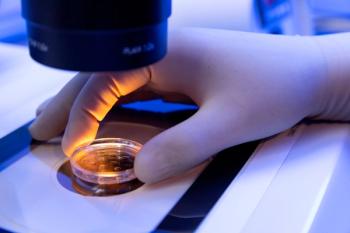
Preclinical testing at The Ohio State University found Telomir-Zn inhibited growth of canine and human osteosarcoma cell lines, prompting the company to explore a possible in-vivo study in dogs with naturally occurring tumors.
Updates about the veterinarian whose passion for wildlife conservation helped secure the supply of a vital antibiotic needed to treat koalas and is now involved with supporting other important wildlife research.
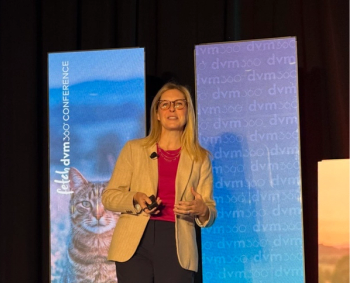
Driven by a passion for wildlife, horses, and making a difference, Finola McConaghy, BVSc, DipVetClinStud, PhD, has made a significant impact on wildlife conservation. Through her technical services role with Ceva Animal Health (Ceva) and her involvement with the Ceva Wildlife Research Fund, an endowment fund dedicated to wildlife health research, she has advocated for koala conservation and other wildlife health initiatives.
“I started work at Nature Vet in 1998 in a role encompassing technical services, research and development, and regulatory affairs. Several years later, that company was acquired by [Ceva]. Since then, my work has involved supporting Ceva’s equine team through investigating new product ideas, conducting internal staff training, presenting research conducted with Ceva products, representing Ceva at veterinary conferences, and assisting with the preparation of registration dossiers and adverse event reporting,” McConaghy told dvm360.
“Back in 2013, Ceva Animal Health stopped the manufacture of chloramphenicol injection due to human health concerns. The following year, some of my wildlife veterinary colleagues contacted me to advise that this antibiotic was the primary and most effective treatment for chlamydia in koalas—a debilitating sexually transmitted disease, which, if left untreated, can dramatically reduce the reproductive capacity of this endangered species.”
McConaghy discussed the issue with Ceva’s management team, resulting in the company agreeing to resume manufacture of the antibiotic, solely to supply around 30 veterinarians, wildlife parks, and veterinary hospitals in Australia on a free-of-charge basis.
“Since then, Ceva has continued producing dedicated batches of the chloramphenicol injection, ensuring ongoing access for koala treatment programs across Australia. As a company specializing in vaccine development and animal disease prevention, Ceva also sought to explore longer-term solutions for koala health,” McConaghy said.
“In parallel, in 2021, Ceva established the Ceva Wildlife Research Fund. This led to discussions with Peter Timms [PhD, MSc, BSc (Hons), FASM], deputy director for the Centre of Bioinnovation and professor of microbiology at the University of the Sunshine Coast, whose team was already conducting vaccine research on koala chlamydia in Australia. The koala chlamydia vaccine project became the fund’s first supported initiative, benefiting from both financial support and technical expertise provided through the contribution of Ceva employees.”
McConaghy explained the Ceva Wildlife Research Fund further.
“As a Ceva employee, this is how I am able to contribute to the Ceva Wildlife Research Fund, while recognizing that the fund and Ceva are 2 separate entities. The knowledge and experience of Ceva’s employees help ensure the successful development and implementation of the projects supported by the fund, including vaccine manufacturing support and assistance with regulatory trials,” McConaghy said.
Since 2023, the Ceva Wildlife Research Fund has also supported a project to develop a viral vector-based oral bait vaccine against Tasmanian devil facial tumor disease led by Andrew Flies, PhD, a professor at the University of Tasmania.
“As Ceva Wildlife Research Fund’s contributor for Australian projects, I help identify opportunities and facilitate collaboration with local research teams. Being based in Australia enables close interactions with project leaders and supports effective coordination throughout the different stages of each initiative,” McConaghy said.
More recently, the Ceva Wildlife Research Fund has led the scientific and logistical aspects of several research projects across multiple global zoos using the Respons Avian Influenza H5 vaccine, an innovative vaccine targeting highly pathogenic avian influenza H5N1, while Ceva provided the vaccines.
These research projects targeted various wild bird species, including penguins, ratites, and birds of prey. In these contexts, McConaghy shared that Ceva’s vaccine, initially designed for domestic and farmed species, demonstrated a good immune response and safety in several wild species studied.
McConaghy explained that Ceva has long been committed to protecting poultry production through the development of innovative vaccination strategies. When avian influenza first emerged in Asia and subsequently spread to the Middle East, the company played an active role in developing solutions to help safeguard poultry production while also addressing the zoonotic implications of this major health threat.
“Avian influenza, sitting at the intersection of wildlife, domestic animals, and human health, is precisely the kind of challenge that One Health was designed to address. For more than 20 years, Ceva has been at the forefront of the fight against avian influenza, combining a One Health approach with pragmatic, field-oriented support for the poultry industry. Ceva developed a vaccine based on an innovative application of a proven, 50-year-old technology—a frozen ‘herpesvirus of turkeys’ vector platform, the same backbone used for Marek disease vaccination,” McConaghy said.
“And a more recent and strategically significant development is Ceva's vaccine, which has been in development since 2020 and entered field trials in France in May 2022. The results, unveiled in May 2023, were scientifically validated in France and demonstrated the vaccine's ability to reduce viral shedding in ducks. France launched its national mandatory duck vaccination campaign in October 2023, the first program of its kind in Europe and the first implemented by a major poultry-exporting country. The results have been remarkable, with a reduction of more than 95% in outbreaks in 2024 compared [with] prevaccination years.”
With an unprecedented surge in wild bird outbreaks of H5 avian influenza in Europe during 2025-2026, particularly among the common crane species, McConaghy explained that this placed an epidemiological risk on poultry farms.
“Yet the vaccination program continued to demonstrate its value, with the number of domestic outbreaks not following the same upward trend as wild bird cases, a divergence that French authorities directly attribute to the vaccination strategy,” McConaghy said.
“If we look at the current H5 situation in Australia, to date, detections in Australia have been limited to a small number of wild birds, and no major epizootic in farmed poultry has been confirmed. This is an important distinction: Australia's biosecurity architecture, its geographic isolation, and its surveillance systems have so far provided a degree of natural protection that most other continents no longer enjoy.”
McConaghy said that Australia has a different risk profile for H5 avian influenza compared with the outbreaks seen in Europe and North America.
“Given that commercial farm outbreaks are not currently the primary concern in Australia, the most immediately relevant application of avian influenza vaccination in the Australian context is arguably wildlife conservation and wild bird population management—precisely the area where Ceva's vaccine technology offers unique capabilities,” McConaghy said.
Throughout her career, McConaghy has been heavily involved with the Australian Veterinary Association. In recent years, she has become an enthusiastic supporter of Vets for Climate Action and the World Veterinary Environmental Alliance, which provides a global platform that coordinates veterinary professionals to collectively address climate change.
“Supporting projects to help preserve unique and iconic Australian wildlife such as the koala and the Tasmanian devil is so rewarding. These projects also allow me to meet with interesting veterinary colleagues who share a passion for wildlife and preserving these unique Australian marsupials. I have been devastated about the impacts of climate change for many years. I believe that climate change is the most dangerous threat to the lives of all humans, animals, the environment, and our planet,” McConaghy said.
“I am helping both Vets for Climate Action and the World Veterinary Environmental Alliance with fundraising efforts, and this has enabled me to turn my climate angst into action and be positive and passionate rather than depressed and disappointed. I am also thrilled that the Ceva Wildlife Research Fund is able to support the response to the recent H5N1 detections in Australia, as this work is so important for the wild bird and poultry populations across Australia—with H5 bird flu also a threat to many mammals, including seals, cats, dogs, cattle, and, of course, humans. In all, my work is keeping me very busy, which gives my very busy mind a wonderful purpose.”