

Technicians
Advertisement
test
Remind doctors of your valuable skill set.
Advertisement
Stop unwrapping your meals. Learn how to eat better to feel better-even when your schedule is swamped.
![H5-[69575920]-{952660}_t-761735-1384167201426.jpg](https://cdn.sanity.io/images/0vv8moc6/dvm360/f2f95bc347569762d2fa6d91621a062b64c44606-126x150.jpg?w=350&fit=crop&auto=format)
Specialty training pays off.
People need to hear information multiple times before they understand your message. Here are nine ways to ensure clients appreciate the importance of fecal exams.
Sandra Grable, CVT, a dermatology technician at the University of Illinois Veterinary Teaching Hospital, shares three common questions clients ask when they discover their pet might have a food allergy and offers advice to help you serve up answers with confidence
Grow your knowledge along with your value to the clinic and patients.
Keep your communication simple and clear, and make the process as easy as possible for the client.
Every veterinary team member can be the person who can turn a client's or co-worker's day around. If there's a problem or a complaint, even if it's not because of you, help to fix it.
Veterinary teams are the first line of defense when pet owners want answers about food allergies.
Proper handling of feline patients makes the clinic a better place.
Top tips for technicians looking to excel and for equine practitioners looking for star staff.
Make the best use of first and last contact with clients and keep the day moving.
Load up the fruits and veggies, break out the smoothie. It's time the win the Battle of the (Belly) Bulge one smoothie at a time.

This issue is full of ways to make 2012 great for you and your veterinary patients.
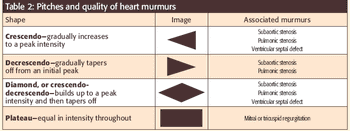
Learn how to identify heart sounds. Evaluate the grade, pitch, and quality of heart murmurs. And alert the veterinarian to a pet's potential heart problem.

On bad days, everybody's got it tough, but I say veterinary receptionists' duties take the prize.

Make your veterinary practice better, one step at a time, by implementing a way to track systems, procedures, and client preferences.
Help hesitant veterinary clients understand the importance of vaccinations.

You can scream and shout, but until you work your communication muscles, you'll never get through to your pet-owning clients.
Dig up the dirt on yourself before your future boss does.
Advertisement
Advertisement
Trending on dvm360
1
Why pet owners decline vaccines: Survey insights and strategies for navigating hesitancy
2
New study takes aim at copper-associated liver disease in Labrador retrievers
3
Veterinary triage for technicians: Assessing urgency, communicating with clients, and coordinating the team
4
Approaching parrot behavior cases: From behavioral history to treatment
5