

Its no secret that cats don't like going to the veterinarian. They've never liked it. Unfortunately, cat owners are giving up the battle and fewer cats than ever before are visiting a veterinarian regularly.
Its no secret that cats don't like going to the veterinarian. They've never liked it. Unfortunately, cat owners are giving up the battle and fewer cats than ever before are visiting a veterinarian regularly.
Most snakes can be easily captured directly out of the carrier or cage they are in. If the snake is aggressive, it may be necessary to use a towel along with leather gloves to safely capture it. In these cases, it is easiest to gently toss the towel over the snake and find the head.
Veterinarians and their team members have been working for years to educate pet owners about the care their pets need in order for them to stay happy and healthy. Undoubtedly we've made some progress, but results from the recently released Bayer Veterinary Care Usage Study indicate we have a long way to go; many pet owners simply don't understand the need for what is generally accepted as routine care.
Cytology of common skin tumors.
It isn't uncommon to find practices that, either formally or informally, offer technician appointments; i.e. patient visits in which certain services are provided to the pet and pet owner by a credentialed veterinary technician instead of by a veterinarian.
Advanced pain management techniques such as local and regional blocks, analgesic constant rate infusions and epidural anesthesia/analgesia can be incorporated into almost any clinical setting. You do not need to work in a specialty referral hospital or academic institution to utilize and effectively perform advanced pain management techniques.
Pain management is more than the latest popular terminology. It is an important part of veterinary dentistry. Many of the procedures performed on animals are painful and it is our duty as technicians to ensure that our patients are as comfortable as possible.
Sedation and anesthesia is something that most of us administer and/or perform in practice on a daily basis. While we as technicians may not make the final decision on what drugs will be administered, we should be educated about the various drugs available and how each of them works alone and in combination with each other.
Exotic small mammals (formally known as pocket pets) are challenging creatures to work with. When working with dogs and cats, it is usually easy to place an intravenous catheter, intubate, provide fluid therapy, hook up an ECG, place a blood pressure cuff, and keep track of the core body temperature.
It is important to be able to identify oral pathology and anomalies. It is equally important to correctly record the pathology on dental charts.
Feline lower urinary tract diseases are characterized by hematuria, pollakiuria, and dysuria, and are common problems encountered in feline practice. It is estimated that they affect over one half million cats in the United States annually.
The exotic small mammal physical examination is performed similarly to other small animals such as dogs and cats. All items that may be needed during the physical examination should be out and within hands reach before you start. Exotic small mammals can become easily stressed so it is essential to keep the "time in hand" to a minimum when necessary.
It is often said that cats are not small dogs. It is equally important to realize that cats have not read the textbooks when it comes to dental problems. Feline dental problems can be very similar and very different from canine dental problems.
What makes up the eye?
In the previous lecture, the importance of being able to identify periodontal indices was discussed as well as the importance of correctly recording that pathology on dental charts.
Cats are great patients because they are less likely to ingest large amounts of bad stuff just because. However, their unique metabolism presents other challenges as it contributes to the toxicities that we do see in cats and changes, often lowering, the toxic dose we can expect. Also, substances that are safe in other species can be deadly in cats.
Dogs and cats are very commonly presented for management of acute or chronic wounds in veterinary practice. The goal of wound management is to accelerate the healing process and not to interfere with it.
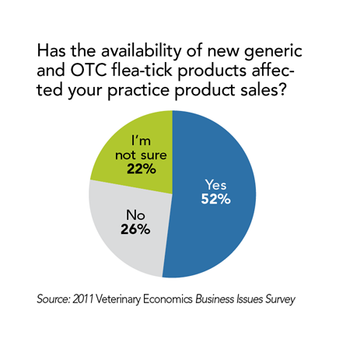
As more generics enter the veterinary market, clients are becoming more savvy about them. What does all this mean for your practice?
New research points to major psychological benefits among pet owners.
A new study shows that leadership is still seen in masculine terms.
As the weather heats up, so does the incidence of heat exhaustion and heat stroke in horses.
Use better e-mail practices to protect yourself and your veterinary practice from criminals trying to snatch personal information.
The Midwest heat wave has spurred the growth of blue-green algae (cyanobacteria) on lakes and ponds. Here's what you need to know.
Avoid trouble for your veterinary practice by ensuring you're playing by Facebook's promotions rules.
Two in-the-trenches managers will provide you and your team with practical solutions for getting it all done-together.
Don't let dental recommendations go in one ear and out the other. Present a unified, consistent front so pet owners will get the message.
Don't have time to make your own checklist? Don't worry-download these samples.

Finding a way to hook up with kindred spirits is positive, regardless of whether the link is clothes, Klingons, or veterinary medicine
Install this cell phone rule to save your sanity.
You can reduce your patients' potential for problems by staying clear of these common pitfalls.