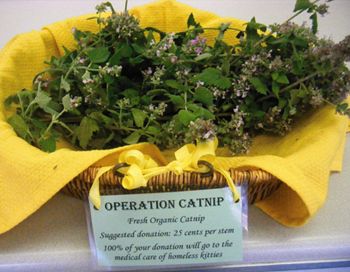












A tip to momentarily distract a cat in order to quickly retrieve an item from its cage.

A tip to momentarily distract a cat in order to quickly retrieve an item from its cage.

In 2005 Eli Lily announced the discontinuation of the majority of animal derived source insulins in addition to the lente and ultralente lines of product. This changed the landscape of veterinary diabetic management. Ultimately, the best insulin for your patient may be the one you are most familiar with; however, general guidelines will help choose the insulin that will give you the best success with your patients.

The premise of this presentation is that feline medicine is good business. The keys to tapping into this market are several: understanding the significance of the feline market in your practice today and its future potential, understanding the psyche of the feline client and recognizing the different psychographic profile of cat vs. dog owners, using preventative medicine, specifically feline total parasite control, as a tool to practice better feline medicine, and, ultimately, realizing an increased feline average per client charge by practicing a higher quality feline medicine.

It has been estimated that at 25 to 33% of cats are either overweight or grossly obese, with the highest rates seen in middle-aged cats. Yet the 2003 AAHA Compliance Study (The Path to High-Quality Care) found that veterinarians are significantly under diagnosing feline obesity. Owners also may not recognize when their cat is overweight, nor be aware of the associated health risks. Obesity should be the easiest disorder to diagnose, but it is also one of the hardest to treat.

The normal feline lower urinary tract has a number of defence mechanisms against infection. These include normal micturition (e.g., frequent and complete voiding), normal anatomy (e.g., length of urethra), uroepithelial mucosal barriers, the antimicrobial properties of normal urine (e.g., high specific gravity and osmolality) and a normal immune system.

Lower respiratory tract disease produces typical clinical signs in cats, including chronic cough and wheeze as well as dyspnea that may have a sudden onset.1 Owners may report an increase in respiratory rate (>30-40 breaths per minute), increased expiratory effort and lethargy. Clinical signs may be mild to severe and may be chronic or intermittent.

The recognition of the development of potentially malignant tumors arising from injection sites became one of the most significant events in veterinary medicine in the 1980's and beyond. So significant, in fact, that it caused an entire profession to re-evaluate the way preventative medicine should be considered from a medical and an economic perspective.

Mycoplasma species have been isolated in our laboratory from cats with URTD (Veir et al 2004) and have been detected at a higher rate in cats with URTD than normal cats by other authors (Bannasch and Foley 2005). However, they are readily detected in the oropharynx and nasal cavity of normal cats as well (Randolph et al 1993, Tan et al 1977).

Lower urinary tract disease in cats was described as early as 1925. Over the years, the terms "feline urologic syndrome" (FUS) and "feline lower urinary tract disease" (FLUTD) have been used to describe the group of clinical signs related to problems voiding. However, these descriptive terms do not identify the underlying etiology.

The cat is considered a resistant, yet susceptible host for Dirofilaria immitis. Worm burdens are much lower in cats than in dogs (average 15 worms in dogs and 1-3 in cats in endemic areas) and about 1/3 of feline infections involve worms of the same sex. Feline heartworm (HW) was first described in the 1920s; awareness has increased greatly since the introduction of Heartgard for cats in 1997 and the associated marketing campaign. Feline HW remains a difficult to diagnose, yet fully preventable disease.

Possible mechanisms of hypercalcemia.

Consequences of chronic kidney disease are many and managing them is the hallmark of improving patient quality and quantity of life. Aside from continuous renal replacement therapy and renal transplants, management of azotemia, acid-base disorders, electrolytes, secondary hyperparathyroidism, nutrition, and hypertension are key.

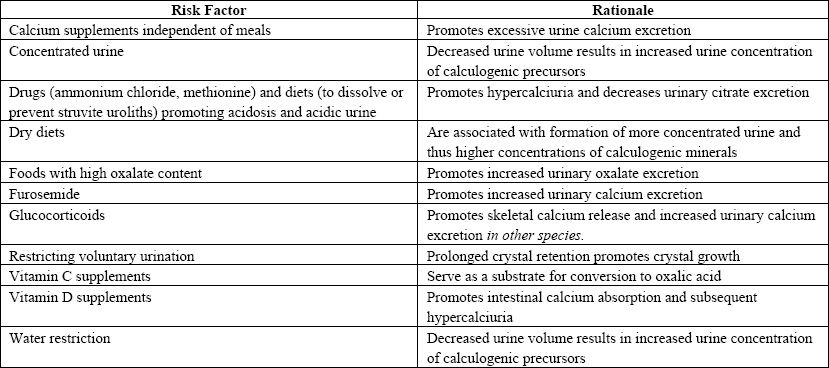
Struvite and calcium oxalate (CaOx) uroliths are the most commonly reported uroliths in cats. In the last 25 years, dramatic change in the prevalence of different urolith types has occurred. Until the mid-1980s, struvite uroliths made up 78% of submissions to the Minnesota Urolith Center (MUC).

Feline idiopathic cystitis (FIC) is a sterile, inflammatory process causing signs of lower urinary tract disease (LUTD). It affects 1.5% of cats presented to primary care veterinarians.21 It is the most common diagnosis for young cats with LUTD (the second most common being urolithiasis).

The lowdown on which species veterinarians and veterinary team members prefer to work with, why-and if it matters.

A panel of veterinary specialists and general practitioners discuss their real-world experiences in providing successful care to diabetic cats.

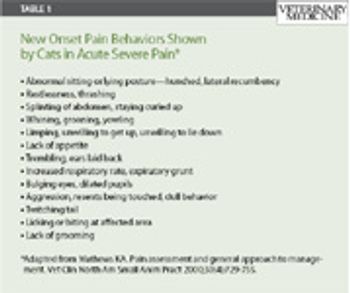
Can you spot the subtle signs of postoperative pain in cats?

Buffalo, N.Y. -- Potential Salmonella contamination has prompted Feline's Pride to expand an existing recall of its raw food with ground bone for cats and kittens.

Before ditching in-house checks, consider the cost savings, quality of services, and the expertise of the payroll company.

Buffalo, N.Y. -- Feline?s Pride has voluntarily recalled its raw food with ground bone for cats and kittens, natural chicken formula, because of possible Salmonella contamination.

Chronic diarrhea is best managed with targeted therapy based on a specific diagnosis.

Oscar bounces back from a leg injury thanks to custom-made implants.

Frightened cats are difficult for clients and you to manage. Here are ways to relax cats and make feline visits less traumatic for all involved.

This is one for the "What were they thinking?" file.

This is one for the "What were they thinking?" file.