




















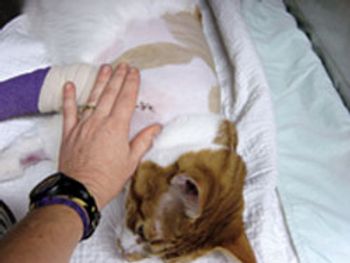
Can you spot the subtle signs of postoperative pain in cats?
Can you spot the subtle signs of postoperative pain in cats?

Buffalo, N.Y. -- Potential Salmonella contamination has prompted Feline's Pride to expand an existing recall of its raw food with ground bone for cats and kittens.
Before ditching in-house checks, consider the cost savings, quality of services, and the expertise of the payroll company.
Buffalo, N.Y. -- Feline?s Pride has voluntarily recalled its raw food with ground bone for cats and kittens, natural chicken formula, because of possible Salmonella contamination.
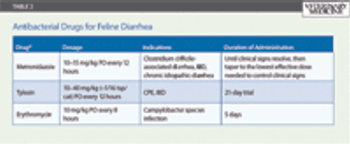
Chronic diarrhea is best managed with targeted therapy based on a specific diagnosis.
Oscar bounces back from a leg injury thanks to custom-made implants.
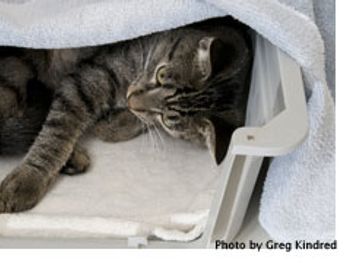
Frightened cats are difficult for clients and you to manage. Here are ways to relax cats and make feline visits less traumatic for all involved.

This is one for the "What were they thinking?" file.
This is one for the "What were they thinking?" file.
Cincinnati, Ohio -- Cats fed a new recalled food are at greater risk for developing signs of thiamine deficiency.
Celebrate Adopt-A-Cat Month by downloading materials to help promote cat adoption and feline health care.
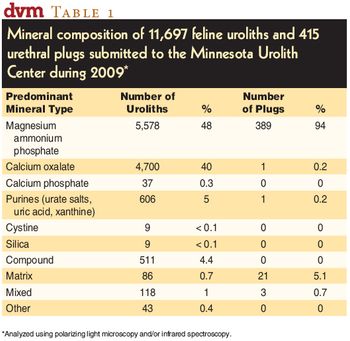
In the last three decades, the composition of uroliths in cats has been variable, while the composition of feline urethral plugs has remained consistent.
Could fear on everyone's part-cats, clients, and team members-be the cause of difficult feline veterinary visits?
East Lansing, Mich. -- Researchers from Michigan State University are testing a new diet they say could help cats dissolve and prevent future bladder stones.
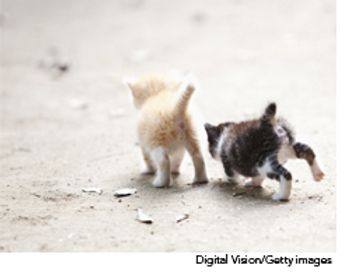
Spring is stray kitten season. Before you act on your instinct to help, go through these steps.
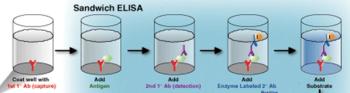
Simplified, there are two arms of the immune response: the innate immune response and the adaptive immune response. Realistically, these two arms are intimately entwined and difficult to separate.
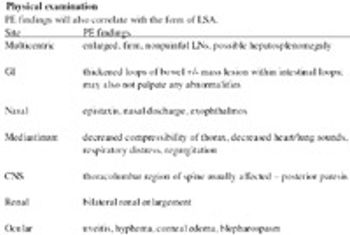
Lymphoma (LSA) is one of the most common feline malignancies, comprising approximately 30% of all reported tumors. While not curable, LSA may respond quite well to therapy and can be a very satisfying neoplasm to treat.

Permethrin, a synthetic type I pyrethroid, is found in many flea and tick shampoos, dips, foggers, spot-ons, and sprays as well as many household and yard insecticide formulations. While permethrins have a relatively wide margin of safety in dogs, cats appear to be more sensitive to the toxicity of some concentrated pyrethroids, particularly permethrin.
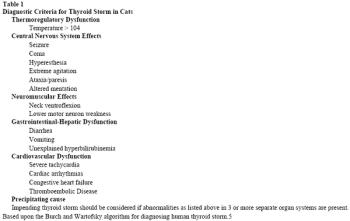
Acute thyrotoxicosis
Similar to dogs, joint disorders of the cat are common. Despite this fact, the reported treatment options for cats with joint disease are limited.
Internal medicine experts weigh in on feline asthma, influenza, bacterial infections, and heartworm.
Pancreatitis: Inflammation of the pancreas
Despite recent technological advances in dialysis and transplantation, conservative medical management remains the most practical and accessible approach to the treatment of chronic renal failure (CRF) for most cat owners and veterinarians.
Cats who cannot breathe are the most fragile patients we treat each day. Cats tend to be more compromised on presentation as they hide their breathing issues better from their owners. It is important to balance diagnostic procedures with therapeutic intervention so that these cats can be quickly stabilized and effectively treated.
The etiologies of acute necrotizing pancreatitis are probably not yet completely recognized. Biliary tract disease, gastrointestinal tract disease, ischemia, pancreatic ductal obstruction, infection, trauma, organophosphate poisoning, and lipodystrophy all have known associations with the development of acute necrotizing pancreatitis in the cat.