From catheter size and vessel selection to common placement mistakes, Alyssa Mages, BS, CVT, FVTE, shares practical guidance on venipuncture and IV catheter placement for veterinary technicians.
Kelly Mann, DVM, MS, MSS, DACVR, highlights canine freeze-dried plasma as one piece of the puzzle in developing better veterinary blood products.
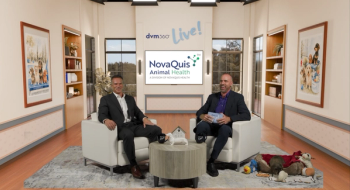
Kelly Mann, DVM, MS, MSS, DACVR, describes canine freeze-dried plasma as one piece of a broader pursuit of shelf-stable whole blood analogs, with translational research benefiting both human and veterinary trauma care. He highlights how advances in plasma lyophilization and novel blood products can inform human patient care while also driving development of new veterinary blood products and therapeutic options.
Related:
Below is a transcript, which has been edited for clarity.
dvm360: What are the strongest areas of overlap between human and veterinary freeze-dried plasma use in trauma care?
Mann: It's a great question. I feel like this is an exciting time because there's a broad range of research going on in this area. The pursuit of a shelf-stable whole blood analog is really where things are going, and I think that's exciting because canine freeze-dried plasma is only…a piece of the puzzle, of what you'd consider a shelf-stable whole blood analog for canines.
What's exciting to me is the new patient therapeutic options that are going to emerge because of new form factors, like lyophilization of plasma, or the novel products themselves in the pursuit of a whole blood analog, [which] are going to spin off into synthetic cell production or even molecular mimetics of different blood components. Translational research efforts definitely work to the benefit of both human and veterinary patient populations in this pursuit. In my work, I seek to support rodent, porcine, and canine trauma research protocols, and that's because each of those informs and advances human patient care, as well as affording us specific veterinary product development and availability for our patient populations.
So that's how I think these puzzle pieces fit together. I'm also excited that, along the route of that research and development, there are multiple opportunities for the development of new veterinary blood products available to our community…. I feel like this is an exciting time because there's a broad range of research going on in this area.
Kelly Mann, DVM, MS, MSS, DACVR, is vice president of veterinary solutions at Mantel Technologies and a retired US Army Veterinary Corps officer whose work focuses on working-dog medicine and veterinary trauma research.