





















An important tip concerning insulin administration by clients.
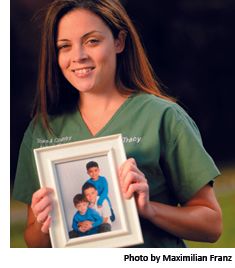
An important tip concerning insulin administration by clients.
An important consideration for feline onychectomies.
Who's falling short when it comes to the care of cats?

Guidelines for feline immunodeficiency virus and feline leukemia virus testing, focusing on kittens.
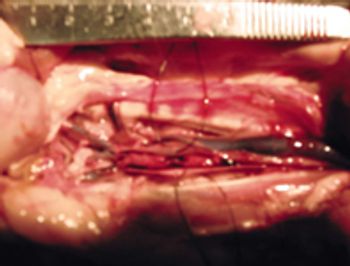
Thromboembolism is a fairly common and potentially devastating complication of heart disease in cats.
Feline bronchopulmonary disease (FBPD), often referred to as "feline asthma" actually encompasses a group of common, but poorly understood, airway diseases. It is estimated that bronchopulmonary disease affects 1% of the general cat population and > 5% of the Siamese breed. Cats of any age can be affected and there is no clear gender predisposition.
Diabetes mellitus (DM) can be defined as a group of metabolic diseases characterized by hyperglycemia, which results from defects in insulin secretion, insulin action, or both. DM can occur because of disease affecting the endocrine pancreas and other endocrinopathies such as acromegaly.
The etiology of this unusual condition in cats is not known.It probably falls into the category of other lymphoproliferative disorders of cats.
Disease of the oral cavity is a common problem, particularly in middle-aged to older cats. Some disorders (e.g. lymphoplasmacytic gingivitis/stomatitis) may begin very early in life in some purebred cats.
Feline herpesvirus1 infection is most noted for causing URI disease and oral ulceration. Latent, persistent infection will occur in about 30% of affected cats. Vaccines do not prevent feline herpesvirus infection nor carriage or intermittent shedding of the virus. Recrudescence of signs or new lesions may occur with stress or concurrent illness.
Cats who cannot breathe are the most fragile patients we treat each day. Cats tend to be more compromised on presentation as they hide their breathing issues better from their owners. It is important to balance diagnostic procedures with therapeutic intervention so that these cats can be quickly stabilized and effectively treated.

Diabetic ketoacidosis (DKA) is one of the most commonly encountered endocrine emergencies in small animal practice. DKA is typically seen in previously undiagnosed diabetics and less commonly occurs in patients that are on inadequate amounts of insulin.
Cats have a different embryological development and anatomy of the pancreas from other species. In cats, unlike other species, the pancreatic duct is the main functional duct; the accessory pancreatic duct usually does not persist. In dogs the pancreatic duct is of minor importance and may be absent.
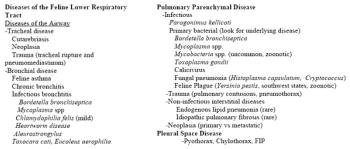
If the cat is presented for labored breathing questions should be directed to assist in differentiating upper from lower respiratory disease as some owners perceive stertorous breathing in a cat with upper respiratory disease as a form of labored breathing. This could be misleading to a clinician.
Diabetes mellitus (DM) is one of the most common endocrinopathies seen in cats. DM arises from a variety of pathophysiological causes. Causes of DM in cats include islet-specific amyloid deposition, chronic pancreatitis, obesity, infection, other illness, drugs, etc.
In the fasted healthy state glycogen stores are used as the primary energy source. When glycogen stores become depleted, which can occur quickly in strict carnivores such as the cat, amino acids are mobilized from lean muscle.
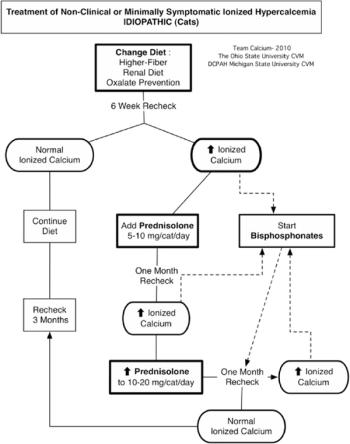
Calcium in circulation occurs in three forms: calcium bound to proteins (approximately 40%), calcium complexed to various anions such as citrate and phosphate (8%), and ionized calcium (iCa, approximately 52%. The latter is the biologically active form of calcium and clinically-relevant hypercalcemia only exists when the ionized fraction of calcium is elevated.
Is the feline diabetic patient every veterinarian's nightmare? Since diabetes mellitus is one of the most common endocrinopathies in cats, it is likely you will face this disease many times in your veterinary career.
Hepatic lipidosis is the most common liver disease in cats in North America. In a retrospective study performed at the University of Minnesota evaluating liver biopsy specimens obtained from cats over a 10-year period, hepatic lipidosis accounted for 50% of all cases.
Pancreatitis is being diagnosed more and more frequently in cats. Cats typically have chronic pancreatitis whereas dogs usually suffer acute disease. The difference in presentation between the species as well as a lack of appropriate diagnostic tools led to pancreatitis in cats being widely underdiagnosed.
The nasal cavity is defined as part of the upper respiratory tract that extends from the nares to the choanae. The choanae is the caudal most part of the nasal cavity that communicates with the nasopharynx.
Megacolon occurs more frequently in cats than dogs and is usually seen in middle-aged to geriatric cats. The ascending, transverse, and descending colon are chronically large in diameter and filled with dry stool. A congenital form of the disease has been seen especially in Manx cats with rectal/anal atresia and a sacral spinal deformity.
While less commonly seen than in their canine counterparts, cats can suffer from an excessive production of cortisol by the adrenal glands. 85% of the cases of feline hyperadrenocorticism are due to a pituitary tumor whereas 15% stem from an adrenal tumor. Progesterone-secreting adrenal tumors have been documented a handful of cats.
The fat feline is a problem all practitioners face. Clients often believe that a fat cat is a healthy and happy cat. They are more likely to bring the cat in for an exam due to poor appetite rather than overeating and obesity concerns.
Infectious diseases can often be insidious in their clinical presentation. Case studies will be used to highlight some interesting infectious diseases that can affect the feline patient.