FORT COLLINS, COLO - 08/02/06 - A $1-million gift to Colorado State University's equine veterinary programs will be evenly split between the university's Gail Holmes Equine Orthopaedic Research Center and the Equine Reproduction Laboratory.

FORT COLLINS, COLO - 08/02/06 - A $1-million gift to Colorado State University's equine veterinary programs will be evenly split between the university's Gail Holmes Equine Orthopaedic Research Center and the Equine Reproduction Laboratory.

In this double-blind, prospective, and randomized clinical trial from France, 60 dogs undergoing orthopedic surgery were treated with either preoperative meloxicam (0.2 mg/kg intravenously) or intraoperative ketoprofen (2 mg/kg intravenously) and assessed for pain for up to 24 hours after surgery.

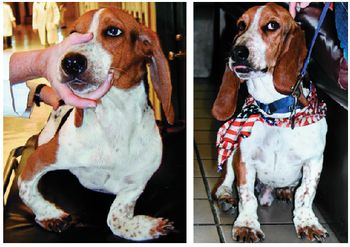
In this prospective clinical trial from Finland, 11 toy breeds with radial fractures were treated with single or stacked biodegradable polylactide plates, metal screws (AO 1.5- to 2-mm diameter mini screws), and lightweight external coaptation.

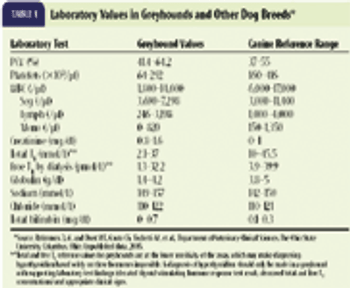
Over thousands of years, greyhounds have been bred and selected for speed. This selective breeding may explain a number of the idiosyncrasies we see in the breed today. Retired racing greyhounds are becoming more common pets and more common patients in veterinary hospitals. It is estimated that about 18,000 greyhounds are placed into homes as pets annually. This article will familiarize practitioners with some idiosyncrasies in greyhounds that can affect their medical care.

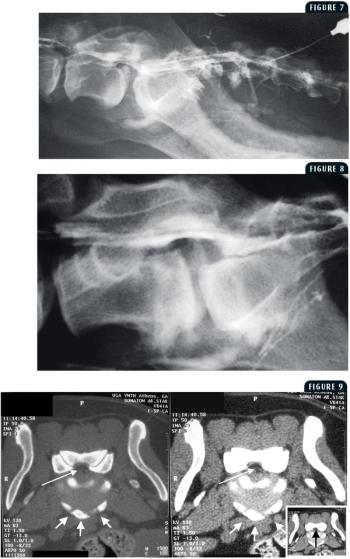
Degenerative lumbosacral stenosis is a common cause of cauda equina syndrome and a relatively frequent neurologic disorder in older dogs. If this condition is recognized early, treatment may help alleviate significant morbidity.

Veterinary medicine is a rapidly evolving field, and nowhere is it more apparent than in the practice of canine orthopedics.

Recent advances in diagnostic visualization and surgical treatments have stimulated an increased emphasis on early clinical recognition of cranial cruciate ligament pathology. This article describes characteristics of normal and pathologic cranial cruciate ligaments and details clinical techniques to help you diagnose cranial cruciate ligament pathology earlier.

After an orthopedic procedure, it is common to have a convalescent period of weeks to months before recovery is attained. Physical rehabilitation may help patients achieve maximum recovery. Physical therapy is also valuable for easing chronic pain in pets.
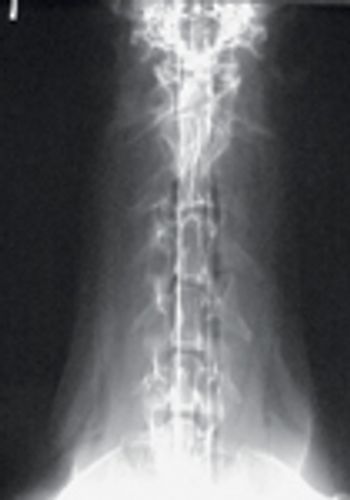
Cranial cruciate ligament pathology is a leading cause of lameness in dogs. Many surgical treatments have been described that aim to restore stifle joint stability and minimize the progression of subsequent osteoarthritis. Most surgical treatments seek to replace the function of the cranial cruciate ligament by substituting autologous tissues or synthetic materials. More recently, the tibial plateau leveling osteotomy (TPLO) procedure has been described, which alters the mechanical forces acting on the stifle, rendering the cranial cruciate ligament unnecessary.
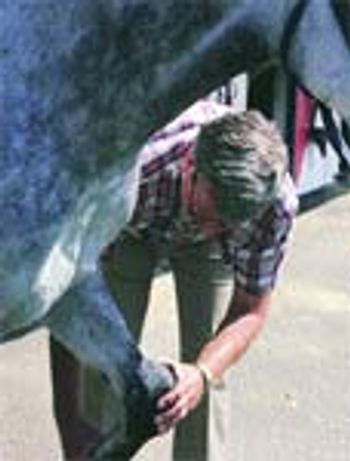
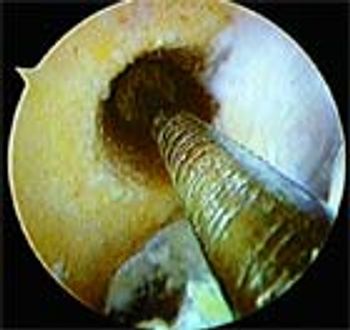
A 65-lb (29.5-kg) 6-year-old spayed female Doberman pinscher was presented for evaluation of a one-month history of progressive left forelimb lameness.

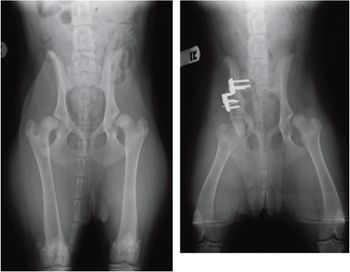
In this experimental study, 48 Labrador retrievers from seven litters with a high prevalence of canine hip dysplasia were examined throughout their lives for a relationship between a radiographic marker and the development of osteoarthritis in the hip joint.

MANHATTAN, KAN.-Kansas State University (KSU) veterinarians performed the first non-cemented total hip replacement on a dog at the university's veterinary medical teaching hospital.

DVM Newsmagazine is proud to present our first issue of DVM Best Practices exclusively for the equine practitioner. This special issue is devoted to equine degenerative joint disease (DJD) and also explores the problems associated with treating the disease with bulk compounded drugs.

Dr. C. W. McIlwraith provides an overview on identifying and treating degenerative joint disease in horses.

Arthroscopy used for diagnosis and treatment is the standard of care in man and the horse. Canine arthroscopy has lagged in use. Reasons for this include technical difficulties, cost and perception on behalf of the veterinarian that open arthrotomies are as good. A Japanese surgeon, Dr. Takgi, is credited with early efforts in diagnostic and surgical arthroscopy.

Glycosaminoglycans have helped veterinarians target therapies toward the underlying pathology of equine joint disease, says Dr. Gary W. White.

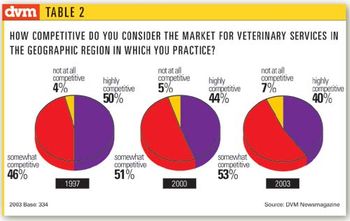
Cleveland-The majority of veterinarians say the most competitive business pressure is coming from Internet sales of veterinary products.

Ames, Iowa-Iowa State University (ISU) lays claim to a first for veterinary medicine.

Fort Lauderdale, Fla.-An Internet/mail-order pet pharmacy, once disciplined for violating pharmacy laws, asks that clients protest to the Federal Trade Commission (FTC) if they cannot obtain their pet's prescription from its veterinarian to purchase drugs online. PetMed Express, Inc., chided by state officials in 1999 after a two-year investigation into company practices, offers an online complaint form for clients whose veterinarians refuse to authorize prescriptions for "non-medical reasons." Veterinarians often are reluctant to write drug prescriptions that enable clients to buy medications from discount pharmaceutical companies instead of from DVM offices-a practice that traditionally reaps profits.