

















Medical management of human athletes is a billion dollar a year industry and there are some aspects that are similar to the equine industry.
Medical management of human athletes is a billion dollar a year industry and there are some aspects that are similar to the equine industry.
Equine infections neurologic diseases are important individual horse disease but can also occur in significant epizootics and outbreaks with substantial economic loss.
The problem oriented approach to liver disease involves identification of liver disease as a differential diagnosis for several problems.
Equine endocrine disease most often occurs in older horses as a result of dysfunction of the pituitary pars intermedia.
Foals between 1 and 6 months of age frequently present with lower airway infection and is the primary cause of disease and death in foals aged between 1 and 6 months of age.
Laminitis is frustrating for veterinarians because current knowledge and understanding of the pathophysiology and progression of the disease are incomplete, limiting efforts to prevent and treat this devastating disease successfully.
Urinary tract disorders occur infrequently in horses but represent significant diagnostic and therapeutic challenges. In this article, we will discuss identification and management of urinary incontinence and bladder dysfunction, urolithiasis, and hematuria.
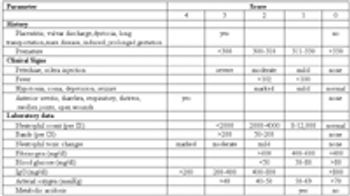
"07 Slow to go" is a 48 hour old Thoroughbred filly that was born to a 15 year old Thoroughbred mare.
As in all species, cardiac examination involves cardiac auscultation for rate, rhythm, heart sounds, and murmurs, palpation of peripheral pulses, and examination of peripheral veins and edema.
In the first of these articles we looked at the wide array of different treatment modalities and therapies available for use in horses suffering from varying types of tendon and ligament injuries, and forms of joint disease. Multiple treatment options are available, from stem cells to platelet-rich plasma to shock-wave therapy to Tildren.
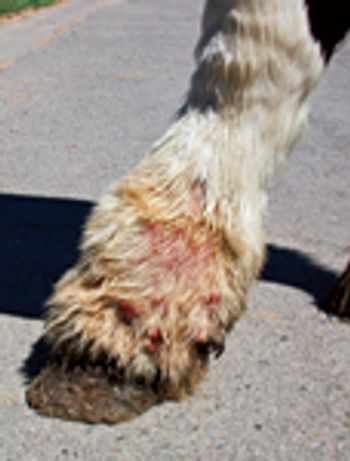
It's a painful, disfiguring disease that may strike horses as early as 2 years of age, then over time cause formation of large nodules that interfere with normal pastern movement, permanent skin ulceration and lameness, eventually leading to the animals' early demise.
National Report -- An outbreak of contagious equine metritis (CEM) that began more than three months ago now involves 711 horses in 46 states, as state and federal veterinary investigators continue to look for the source.
Researchers knew that the equine genome project eventually would lead to monumental discoveries and new methods of diagnosis and treatment of significant benefit to the horse.
Intervet/Schering-Plough Animal Health (ISPAH) is partnering with equine practitioners and UC Davis to improve the strategies veterinarians use to attack equine respiratory issues-identifying diseases before they spread in order to target specific pathogens with tailor-made vaccines and better biosecurity programs.
Minerals, though they make up only a small percentage of the equine diet, are critical - especially for the health of foals.
Sacramento, Calif. -- A California lawmaker is seeking to make cattle tail docking illegal.
Lawrence, Kan. -- A company that does research work on racehorse disorders is planning on moving from New York to Kansas.

National Report - Investigators tracing a wide-ranging outbreak of contagious equine metritis (CEM) made important discoveries and took steps to halt the infectious reproductive disease, but after nearly two months the origin remains elusive and quarantines and testings continue.
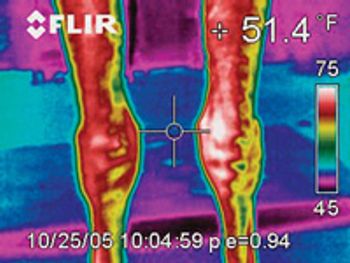
There are many treatment options available to equine practitioners dealing with injuries to tendons and ligaments and an equally large number of drugs, techniques and modalities that can be used to help manage joint problems in the athletic horse.
Washington - It took three veterinarians and a dozen other workers two hours to free a 10-year-old horse at the start of the inauguration parade Jan. 20.
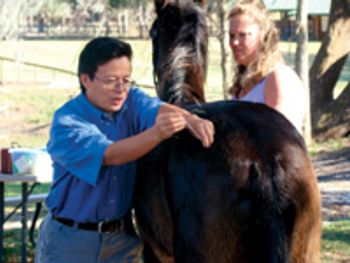
A healing science that dates back thousands of years in another culture has gained acceptance in recent years as a method of diagnosing and treating lameness in horses.
Fort Collins, Colo. -- A blood test that can show whether a horse has minor bone damage long before it develops into more serious problems shows a high success rate in tests and should be coming to the market soon.
Baton Rouge, La. -- A barn at the New Orleans Fair Grounds Race Course was placed under quarantine Dec. 26 after two horses tested positive for the equine herpes virus (EHV-1).
Columbus, Ohio -- For more than 12 years, Dr. James Belknap has lead the way in laminitis research. His work is being rewarded with more work in the form of an $82,000 grant to continue his research on laminitis.
National report -- Four confirmed cases of contagious equine metritis (CEM) in Kentucky last month triggered an investigation that so far involves all but 12 states, according to the USDA's Animal and Plant Health inspection Service (APHIS).