












Compounded drug formulation for use in equine clinical practice has at least two clearly ethical appeals, one contentious issue, and one non ethical practice.
Compounded drug formulation for use in equine clinical practice has at least two clearly ethical appeals, one contentious issue, and one non ethical practice.
The neurological examination should be performed with great care and with age and use differences in mind.
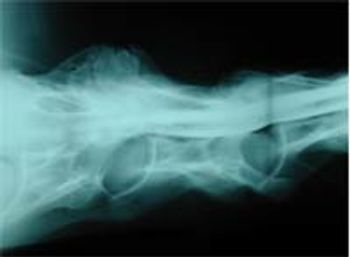
Physical examination of the horses with cervical neck pain indicates reduced to poor cervical flexibility.
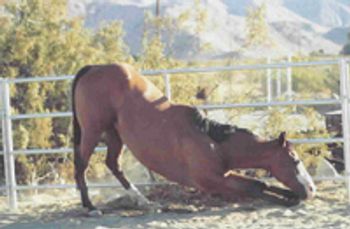
Narcolepsy/cataplexy is extremely rare and breed specific.
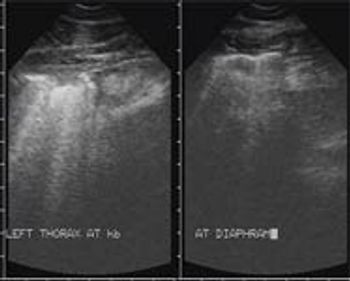
This case represents what clinical impression indicates is the most common form of pleuropneumonia seen in equine practice.
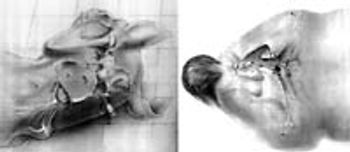
Neurologic gait deficits should be evaluated with basic systems and physiology in mind.
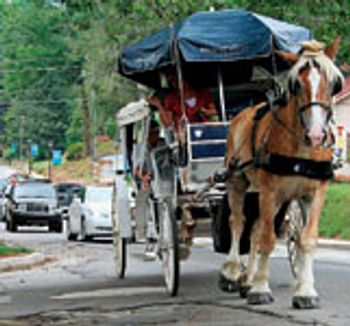
You are on a well-deserved vacation with your family. You thought you were taking a break from horses, but you look around anyway. There it is - a draft horse slowly pulling a loaded wagon full of tourists.
Back problems are a common cause of poor performance in all horses - especially competitive horses, whose jumping ability may be diminished.
Equine recurrent uveitis is an immune-mediated disease characterized by delayed hypersensitivity reactions.
A new list shows upcoming events in equine practice.
Washington -- A summary of the latest research on equine herpesvirus myeloencephalopathy (EHM), based on interviews with 18 veterinarians or state equine program managers who dealt with outbreaks in recent years, is available through the USDA?s Animal and Plant Health Inspections Services' (APHIS) Centers for Epidemiology and Animal Health (CEAH).
Lexington, Ky. -- The Racing Medication and Testing Consortium (RMTC) board of directors approved new national laboratory standards for racehorse drug testing and created an accreditation program for laboratories, along with an independent Equine Quality Assurance Program to provide third-party examination of testing labs.
Raleigh, N.C. -- The American Association of Equine Practitioners (AAEP) is adding a second "Focus" continuing-education session this year, offering two days of lectures and a day of laboratories on equine ophthalmology in October.
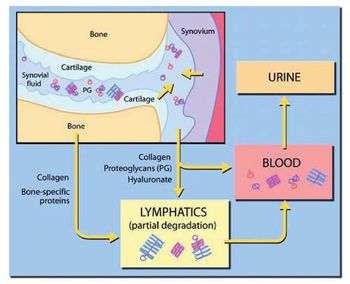
Osteoarthritis is a common problem for the athletic horse and has been estimated to cause 60 percent of lameness cases in the athletic horse.
National Report -- Investigators continue to look for the source of an outbreak that has spread to 48 states.
Furosemide decreases bleeding in racehorses, according to a new study released from the University of Pretoria, Colorado State University (CSU) and the University of Melbourne.
Baton Rouge, La. -- Environmental contaminants at racetracks could possibly skew the results of drug tests in racehorses, according to a researcher at Louisiana State University's School of Veterinary Medicine.
Austin, Texas -- What is reported to be the nation's first case of vesicular stomatitis (VS) for 2009 was detected in a horse in Starr County, one of Texas' southernmost counties.
Horse owners open to reopening of U.S. processing plants, according to survey.
Three new courses are available on The Ohio State University's Web site.
Lakewood, Colo. -- The American College of Veterinary Internal Medicine (ACVIM) released a 12-page consensus statement on equine herpesvirus-1 (EHV-1) as a guide to veterinarians in managing the disease.
Lexington, Ky. -- The Kentucky Horse Council (KHC) is offering incentives for stallion castration in an effort to address the neglected horse issue in the state.
Lexington, Ky. -- A racetrack veterinarian recently suspended for five years for medication violations, including possession of cobra venom, filed suit against the Kentucky Horse Racing Commission to have the suspension overturned, claiming that it was "not supported by substantial evidence, is arbitrary and/or an abuse of discretion."
The best way to prolong the efficacy of deworming programs is to use vaccinations and sound nutrition in conjunction with the right anthelmintics.
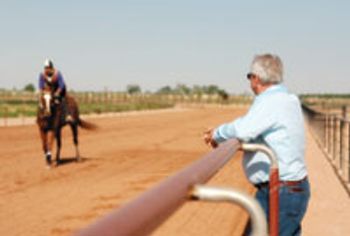
Veterinarian's horse beats 50-1 odds to win this year's Kentucky Derby - then nearly repeats the performance at the Preakness.