












While an uncommon option, odontoplasty can resolve some cases.
While an uncommon option, odontoplasty can resolve some cases.

Which agents are good choices for use in regional nerve blocks?
How to detect patient intolerance to plaque.

What is the overall systemic response to periodontal disease?
There are very few states that allow technicians to legally do dental extractions. The American Veterinary Dental College has a published position statement outlining the dental tasks that can be performed by the veterinary technician.
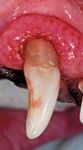
Tooth fracture may affect the crown and/or the root. In most cases tooth fractures are painful to the patient. It is imperative that patients with tooth fractures have a diagnostic workup to assess the stage of the fracture and what treatment options are available.
Emergencies in veterinary dentistry are generally not life threatening. Unfortunately, trauma to the oral cavity and face can cause discomfort and pain with systemic complications if the patient is not able to eat.
As one can see, dentistry can cover a myriad of disciplines and procedures. There are three types of procedures that can be a beneficial addition to the treatment options that are currently available. These additions in some cases may require some training for the veterinarian and equipment investment, but some use supplies readily available in the practice.
Occlusion is a contact between the incising or masticating surfaces of the maxillary and mandibular teeth. Normal occlusion in the dog and cat is also known as a "scissors bite". The mandibular teeth should occlude lingual to the maxillary teeth. The mandibular incisor cusps should rest on the cingulum on the palatal side of the maxillary incisors.
The lower teeth are embedded in the mandible. The mandible is made up of symmetrical bilateral bones. The areas of the mandible are divided into three areas – the symphyseal, the body and the ramus.
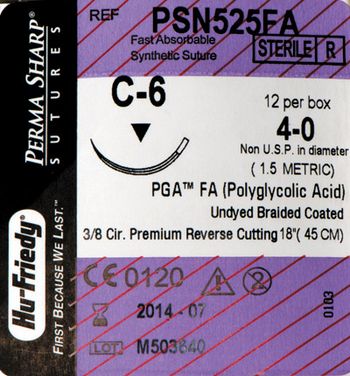
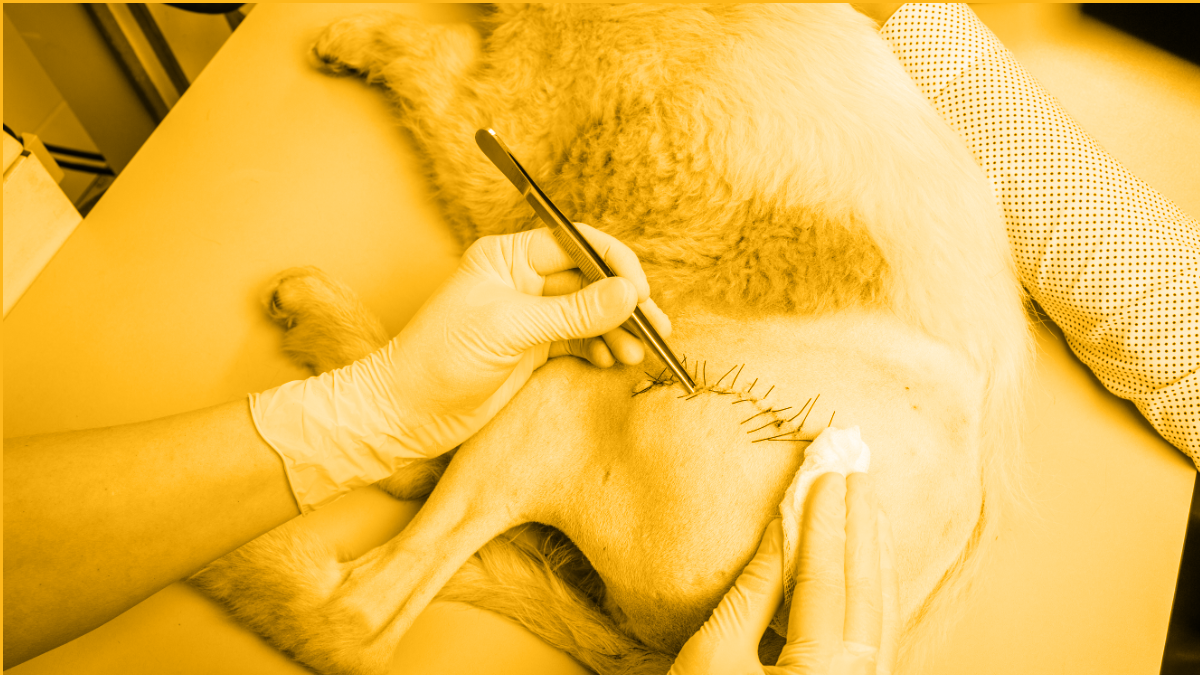
Check out these best practices for choosing dental sutures, needles and suturing methods.
Give clients a sneak peak of your dental procedures.

Dr. Daniel Carmichael helps a reader address this frustrating condition.
A tip to avoid injury from dental scalers.
Surgical endodontics is the treatment of choice where there is a history of recurrent facial swelling, the existence of anatomical or morphological problems, unresolved granulomatous tissue or sequelae remains after conventional endodontic therapy, or problems encountered during conventional endodontic therapy, such as fractured endodontic files or incomplete endodontic fill.
Teeth are extracted for a number of reasons. These include periodontal disease, caries, advanced feline dental resorptive lesions apical abscesses, traumatic malocclusion, tooth root fracture, tooth crown fracture, retained deciduous, teeth, root tips, supernumerary teeth and client preference.
Dentinal pulp occupies the interior cavity of the tooth. It consists of loose connective tissue intercellular substance, vessels, nerves, and fibers.
Periodontal disease begins as an infiltrate subjacent to the epithelium of the gingival margin and rapidly extends throughout the marginal gingiva to affect the connective tissue underlying both the oral and the sulcular epithelium.
Restorative dental problems, although not as involved as those in human dentistry, can be very technique-sensitive and difficult to resolve. The resolution of particular problems is usually dependent upon the choice and imagination or inventiveness of the operator.
There are many techniques currently employed for Mandibular fracture repair. They range from simple tape muzzle placement to various forms of invasive surgical reduction. Surgical reduction techniques include intra oral wire cerclage or ligation, osseous plating, inter medullary pining to extra-oral fixation appliances or combinations thereof.
Although human orthodontics can be traced back to 1000 B.C., veterinary orthodontics has just recently evolved. Attempts to correct malaligned teeth in animals have been attempted principally by owners and breeders of animals since the 19th century and possibly before.
The bisecting angle technique has been the technique of choice for most intraoral radiographic techniques. This is especially true for maxillary exposures. The limited intra oral confines of the maxilla, lower incisors and canine teeth have made this technique the method of choice.
Radiographs produced without distortion are of great use in dentistry and are far easier to interpret than those with superimposed, foreshortened, or elongated images. Whole books have been devoted to this very involved subject, but only the most pertinent points will be broached here.
Pulpal functions are 1) formative, 2) nutritive, 3) sensory, and 4) defensive.
Madison, N.J.-- Pfizer recently announced it will discontinue production of its veterinary periodontal disease vaccine for dogs.