

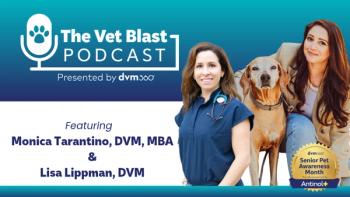
Monica Tarantino, DVM, MBA, and Lisa Lippman, DVM, explain when the senior transition begins and why joint and mobility health should be protected before signs of arthritis appear.
Monica Tarantino, DVM, MBA, and Lisa Lippman, DVM, explain when the senior transition begins and why joint and mobility health should be protected before signs of arthritis appear.
A Washington State University study offers what researchers call the first clinical evidence that refrigerated canine platelets stored for up to 3 weeks can help control or prevent hemorrhage.

Nobivac NXT Rabies, available in 1-year and 3-year formulations, arrives weeks after the CDC warned of a nationwide increase in reported human rabies exposures.

A voluntary, risk-based tiered approach could trim about 2 years from the human food safety residue evaluation for new animal drugs, according to the agency.
Pamela D. Jones, DVM, DACVIM (Oncology), DACVR (Radiation Oncology), explains how the IDEXX Cancer Dx liquid biopsy test detects canine lymphoma, what its sensitivity and specificity mean in practice, and how to interpret a T-cell phenotype result.
Steve Mehler, DVM, DACVS, shares his approach to open wound management and walks host Adam Christman, DVM, MBA, through 3 memorable cases.

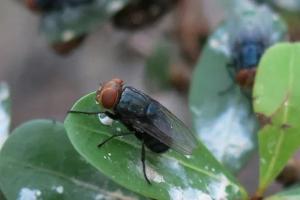
An elk harvested on a Texas game ranch marks the first documented case of the parasite in wildlife in the US, prompting expanded surveillance and a call for hunters and wildlife professionals to report suspicious wounds.
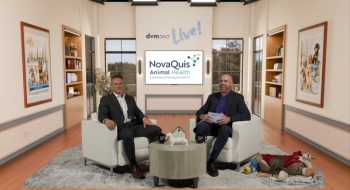
Steve Mehler, DVM, DACVS, joins Adam Christman, DVM, MBA, on dvm360 Live! to explain how ScafiGen works, how to apply it, and how it can support wound care at home.

A veterinary parasitologist explains how tracing larval routes, from skin penetration to nursing, helps clinicians interpret persistent infections, negative fecal results, and anemic puppies.

In the first episode of dvm360’s new podcast, Cliff’s Edge, Pamela D. Jones, DVM, DACVIM (Oncology), DACVR (Radiation Oncology), joins host Craig A. Clifford, DVM, MS, DACVIM (Oncology), to discuss where the IDEXX Cancer Dx test fits in canine lymphoma screening.
Purina and RedRover announced 6 new grant recipients. The program has now awarded nearly 70 grants and created more than 335,000 safe nights for survivors and their pets.

Here are this week’s headlines.
Adam Christman, DVM, MBA, returns as host for season 3, featuring a roundup of recent veterinary news and an appearance by guest Steve Mehler, DVM, DACVS.
Ashlie Saffire, DVM, Diplomate ABVP (Feline), discusses diagnosing and monitoring feline hyperthyroidism and how Felanorm (methimazole) Oral Solution helps caregivers and clinicians manage the disease.

Migraine caps, eye masks, and wraps may carry a hidden neurotoxic risk for dogs.

An open-source, low-cost sensor developed by Colorado State University and US Forest Service researchers pairs air-quality readings with GPS and physiological data to reveal how wildfire smoke affects free-ranging animals.
A new double-scored tablet lets veterinarians dose firocoxib in quarter-tablet increments, extending the NSAID to dogs as small as 7 lb.
Recorded live at Fetch Kansas City, veterinary experts shared evidence-based approaches to wound care—from choosing when to close or let a wound heal by second intention to supporting stalled wounds with appropriate dressings, patientwide care, and 3D extracellular matrix hydrogel.
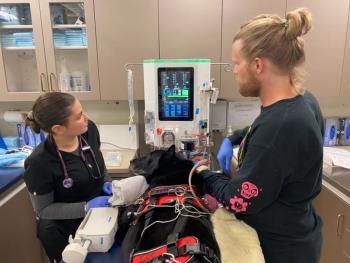
A 7-year-old Belgian Malinois recovered after her veterinary team used the extracorporeal therapy to clear the drug from her bloodstream.

A new study found 83.7% of veterinary professionals now use artificial intelligence, with practices that have a clear strategy, governance, and redesigned workflows reporting the biggest boost in business outcomes.
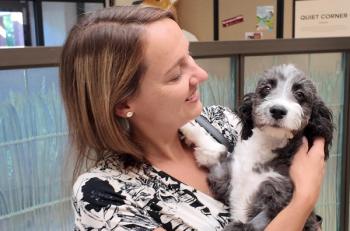
A poodle mix pulled from a hoarding case had a minimally invasive procedure for patent ductus arteriosus at Washington State University. The veterinary pathologist who fostered him then adopted him.

Here are this week's headlines.

Acute diarrhea is a daily reality in general practice—and a stressful one for pet owners.
A technician’s approach to veterinary trauma
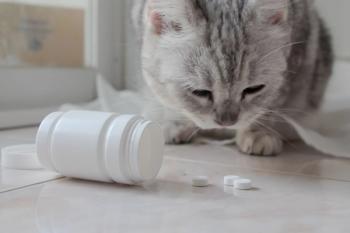
Accidental ingestion, not a drug defect, is behind the increase in calls, according to Pet Poison Helpline.
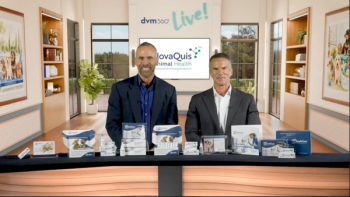
Steve Mehler, DVM, DACVS, explains how ScafiGen, a 3D structural hydrogel, conforms to irregular wounds and makes at-home care easier for owners, with case examples in dogs, cats, and horses.

Continuing Education on-demand anytime, anywhere, plus some upcoming live opportunities.
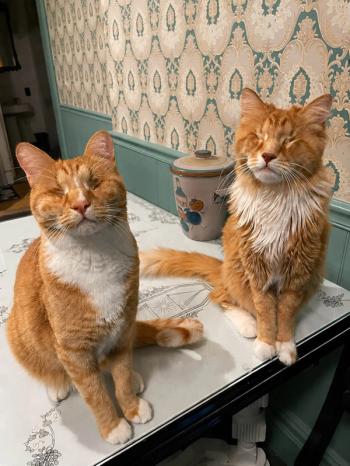
A pair of littermates with long limbs, lens luxation, and aortic root dilation carried a variant in FBN1, the same gene that causes the disorder in humans.

Mindy Cannon, MBA, explains what 4CYTE is, how it is dosed, and where veterinary practices can find it, in this episode of The Vet Blast Podcast, presented by dvm360.
Christopher Lee, DVM, MPH, DACVPM, DACVM (Parasitology), explores the relationship between Toxoplasma gondii and household cats, with practical insights for veterinary professionals discussing exposure and prevention with clients.
Published: June 4th 2026 | Updated: June 11th 2026

Published: November 12th 2025 | Updated: November 18th 2025

Published: November 28th 2024 | Updated: December 2nd 2024

Published: June 14th 2024 | Updated: September 10th 2024

September 25th 2024
