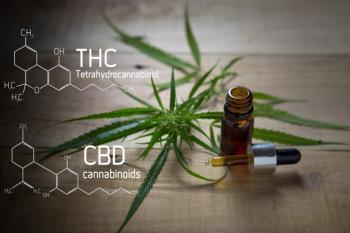
A law that took effect October 1 bars the state veterinary board from taking certain disciplinary actions against veterinarians solely for discussing or recommending cannabis or CBD products for animals.
A new double-scored tablet lets veterinarians dose firocoxib in quarter-tablet increments, extending the NSAID to dogs as small as 7 lb.
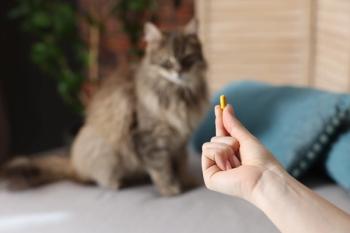
Boehringer Ingelheim has announced the availability of a new Quarterable Snap-Tab design for Previcox (firocoxib) Chewable Tablets following approval from the FDA.¹ The double-scored tablets can be split into quarters, giving veterinarians more flexibility to match dosing to a patient's body weight.
Previcox is a cyclooxygenase-2 (COX-2)–selective nonsteroidal anti-inflammatory drug (NSAID) indicated for the control of pain and inflammation associated with osteoarthritis in dogs and for the control of postoperative pain and inflammation associated with soft-tissue and orthopedic surgery in dogs.1,2
According to the company, the double scoring makes tablets easier to divide and supports more precise, customizable dosing. With the quarterable 57-mg and 227-mg tablets, veterinarians can prescribe lower doses for dogs weighing as little as 7 lb and have more dosing options overall.1 Updated product labeling directs that dosage be calculated in quarter-tablet increments at the recommended 2.27 mg/lb (5.0 mg/kg) once daily and notes that dogs under 7 lb cannot be accurately dosed because of tablet size and scoring.2
"This new tablet design provides a number of benefits to veterinarians and dog owners, with the ability to more easily tailor dosing that can improve outcomes and ultimately enhance quality of life for more dogs," said Russ Drury, DVM, executive director of veterinary professional services at Boehringer Ingelheim, in the release.1
The company also points to improved convenience and cost-effectiveness as benefits of the new design.1
Changes extend to the container as well. Once a tablet has been divided into quarters, the remaining pieces may be kept in the original packaging for up to 1 month, which Boehringer Ingelheim says cuts down on waste.1 Product labeling likewise instructs that split tablets be used within 30 days.2
The Previcox bottle is also switching to an industry-standard round bottle that will be taller than the current version, and the cotton will be removed. According to the company, the redesign reduces material use and supply complexity across the product's full life cycle.1
Several features of the product remain the same, including the formulation; the full-tablet strengths of 57 mg and 227 mg; bottle counts; the push-and-turn opening and closing system; and the child-resistant, senior-friendly design.1
The updates will be introduced gradually through 2026 and 2027, beginning with the 227-mg, 60-count and 57-mg, 60-count presentations.1
Previcox is for oral use in dogs only. Dogs with known hypersensitivity to firocoxib should not receive it. The label recommends a thorough history and physical examination before starting NSAID therapy, along with baseline laboratory testing before and periodically during treatment.2 As with other NSAIDs, firocoxib may be associated with gastrointestinal, renal, and hepatic toxicity, and concurrent use with other anti-inflammatory drugs, such as NSAIDs or corticosteroids, should be avoided.² Doses above the recommended level in puppies younger than 7 months have been associated with serious adverse reactions, including death.2
References