An investigational CBD and THC oral solution for dogs with bone cancer pain is now eligible to pursue an FDA route that could bring it to market before full approval.
A 7-year-old Belgian Malinois recovered after her veterinary team used the extracorporeal therapy to clear the drug from her bloodstream.
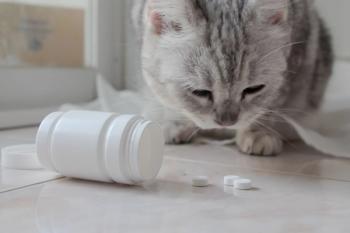
Freya, a 7-year-old Belgian Malinois, made a full recovery after veterinarians at the Texas A&M Small Animal Teaching Hospital (SATH) used hemoperfusion to remove oclacitinib (Apoquel; Zoetis) from her bloodstream following a large accidental ingestion.1 The case comes as Pet Poison Helpline (PPH) reports a growing number of calls about the drug.2
Freya shredded medication bottles left on a countertop and ate about 6 months' worth of the drug, according to her owner, Chris Baron. Baron contacted PPH and was directed to an emergency hospital in Katy, Texas. When that hospital called the helpline, a PPH veterinary toxicologist recommended transferring Freya to the SATH for hemoperfusion, an advanced procedure that can remove certain toxins directly from the bloodstream.1
Several hours had passed by the time Freya arrived at Texas A&M. Because oclacitinib has a short half-life, hemoperfusion is effective only if it removes the drug faster than the body eliminates it on its own.1
"Knowing that the half-life on the drug is so short, if we waited until morning, there would be no reason to even attempt treatment," said Lance Wheeler, DVM, DACVECC, a clinical assistant professor of emergency and critical care, who had just finished a shift when the call came in.1
The team began hemoperfusion approximately 3 hours after Freya arrived. Before that, she underwent an emergency evaluation and diagnostic testing, and the team confirmed blood was available for a possible transfusion before placing a catheter and preparing the system. The SATH had already established a training program for veterinary technicians interested in staffing overnight hemoperfusion cases.1
"Having a team that is trained and ready to come in on call was a large part in this success," Wheeler said.1
Freya's initial physical examination was unremarkable, with normal neurologic status, heart rate, and rhythm. After treatment began, however, she became increasingly lethargic and her heart rate rose. About halfway through, her heart rate normalized, her awareness improved, and she began trying to stand and interact with her surroundings.1
Rather than relying solely on a predetermined treatment duration, the team monitored Freya's clinical signs to decide whether additional toxin removal was necessary. In total, approximately 30 blood volumes were treated over 3.5 hours.1
"There were 4 sets of eyes on the machine and the patient at all times," said Jessica Portela, DVM, a first-year resident who managed the case overnight.1
Wheeler said the PPH referral, which also allowed him to collaborate with the helpline's toxicologist on the treatment plan, signals growing recognition of Texas A&M's hemoperfusion work. "It speaks a lot to their trust in us to be able to send us patients that are in a life-threatening emergency," he said.
Freya went home after several days of hospitalization. Following several weeks of hepatoprotective medication, her follow-up blood work returned to normal, and she has no known lasting effects.1
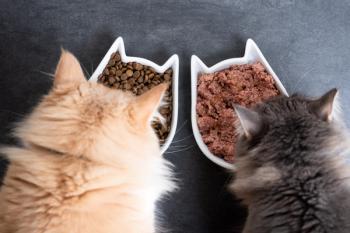
In September 2026, PPH reported an increasing number of oclacitinib calls over the past few years. The helpline noted that the drug is not expected to cause problems at the prescribed dose, but serious effects can occur with large ingestions or when cats eat it. It highlighted a case in which an Indiana cat developed hepatic and renal effects after eating a dog's supply and recovered after 2 days of hospitalization.2
The FDA has flagged the chewable formulation, whose pork-liver flavoring may appeal to dogs and cats. As of April 2, 2026, the agency had received 259 overdose reports in dogs and 64 in cats since the chewable product was approved in June 2023.2 Texas A&M did not specify which formulation Freya ingested.1
When prescribing oclacitinib in multipet households, veterinary teams can remind clients to keep it in its original packaging, store it where pets can't reach it, and contact their veterinarian or an animal poison control center right away if they suspect a pet has eaten it.2
References