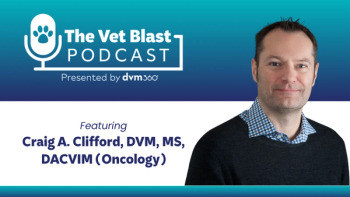
Craig A. Clifford, DVM, MS, DACVIM (Oncology), explains how to recognize feline lymphoma, and covers the newer tools that may help one of oncology's most overlooked patients.

Recorded live at Fetch Kansas City, veterinary experts shared evidence-based approaches to wound care—from choosing when to close or let a wound heal by second intention to supporting stalled wounds with appropriate dressings, patientwide care, and 3D extracellular matrix hydrogel.
This episode is sponsored by NovaQuis Animal Health and approved for 1.0 CE credits.
Wound management in veterinary medicine is rarely a linear process, requiring a dynamic approach that scales with the patient’s needs. This session provides a strategic deep dive into the 4 critical stages of wound repair—inflammatory, debridement, proliferative, and remodeling—offering a structured road map for navigating each biological milestone. Attendees will explore a comprehensive spectrum of care, evaluating evidence-based interventions for cases ranging from simple acute injuries to structurally complex, nonhealing wounds. We will discuss how to identify clinical markers of stagnation and when to transition from traditional protocols to advanced therapeutic modalities to optimize the healing environment.
This session will highlight innovative interventions that manage the wound life cycle from initiation to closure, providing consistent therapeutic integrity in even the most challenging clinical cases. Beyond clinical application, we will address the essential “human factor” of long-term recovery. We will explore emerging protocols specifically designed to ensure that clinical successes are successfully maintained at home through enhanced pet parent adherence. Join us to discover how bridging the gap between innovative clinical strategies and client adherence is redefining the standards of patient outcomes across the full continuum of wound management.
Learning Objectives:
You can head over to dvm360’s Flex platform to obtain your credit.