

Amanda Landis-Hanna, DVM, senior manager of veterinary outreach for PetSmart Charities, says it's important for both general practice veterinarians and shelter veterinarians to teach their veterinary team to be on the lookout for signs of disease.
Amanda Landis-Hanna, DVM, senior manager of veterinary outreach for PetSmart Charities, says it's important for both general practice veterinarians and shelter veterinarians to teach their veterinary team to be on the lookout for signs of disease.
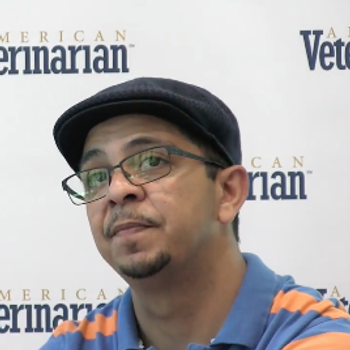
Norberto "Rob" Rosa, associate vice president of operations for New Leash On Life USA, says other programs that foster the same concept as New Leash On Life are gaining popularity because everyone in the program is positively affected by the outcome.

Adam Parascandola, director of animal protection and crisis response for Humane Society International, gives advice on how to introduce new pets to the pets already established in the household.
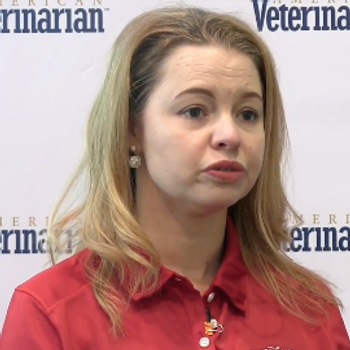
Amanda Landis-Hanna, DVM, senior manager of veterinary outreach for PetSmart Charities, says veterinary students have the desire to give back to the community, and there are several things they can participate in to do just that.

Marissa Martino, CTC, CPDTA-KA, behavior manager for Dumb Friends League in Denver, Colorado, and Andrew Mathias, CBCC-KA, canine care specialist for Multnomah County Animal Services in Troutdale, Oregon, discuss why animal shelters co-house dogs and what they look for when deciding which dog to place where.
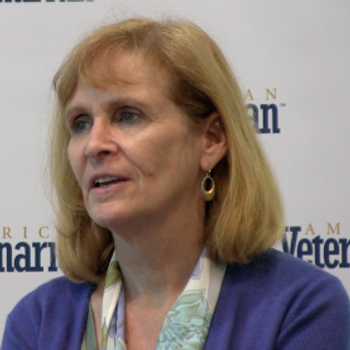
Caryn Ginsberg, MBA, strategic visualyst at Priority Ventures Group in Arlington, Virginia, talks about the different ways impact measurement can work for your veterinary practice.
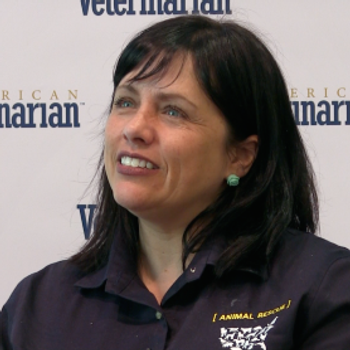
Janette Reever, senior manager of animal crimes for The Humane Society of the United States, explains how she shuts down a "yard" where dog fighting is taking place.

Cynthia Karsten, DVM, outreach veterinarian at the University of California, Davis, and Ann Enright, BVMS, MRCVS, shelter veterinarian at the Cat Protection Society of Victoria in Australia, explain the 2 biggest factors that affect the incidence of feline URI in animal shelters.

Pain + pain = pain squared? Some advice from Dr. Michael Petty on how to get that pain score back to 0.
Amanda Landis-Hanna, DVM, senior manager of veterinary outreach for PetSmart Charities, explains how veterinarians and shelter veterinarians used to compete with each other, but veterinarians need to find ways to collaborate with shelter veterinarians instead.

Audra Farrell, Community Cares supervisor for the San Francisco SPCA, talks about the San Francisco SPCA's Mama from the Streets program—which combines trap-neuter-return for feral mothers with adoption of their kittens.
Janette Reever, senior manager of animal crimes for The Humane Society of the United States, says there really are no demographics for who participates in dog fighting — it's everywhere.
Marissa Martino, CTC, CPDTA-KA, behavior manager for Dumb Friends League in Denver, Colorado, and Andrew Mathias, CBCC-KA, canine care specialist for Multnomah County Animal Services in Troutdale, Oregon, talk about some of the misconceptions dog owners have about dog-to-dog interaction.
Veterinary team members can be inspired, motivated and invigorated by focusing on the right benchmarks. CVC educator and practice management guru Brian Conrad shares some of his faves ...
Adam Parascandola, director of animal protection and crisis response for Humane Society International, talks about the different ways to lessen stress for animals in both the household and in the animal shelter.
Norberto "Rob" Rosa, associate vice president of operations for New Leash On Life USA, explains how they choose dogs to participate in the prisoner program.
Dr. Anthea Schick and her team weren't impressed with sketchy hair and saliva allergy test kits fooling pet owners. So they decided to do something about it.
Red alert: Are you missing warning signs from clients? Live from CVC Virginia Beach, we share trade secrets from CVC educator Brian Conrad's can't-be-missed session.
Amanda Landis-Hanna, DVM, senior manager of veterinary outreach for PetSmart Charities, talks about who she saw attend this year’s Animal Care Expo in Fort Lauderdale, Florida.
Amanda Landis-Hanna, DVM, senior manager of veterinary outreach for PetSmart Charities, talks about her role with PetSmart Charities and how they focus on enhancing relationships between animals and humans.
Do clients roll their eyes when you recommend bathing and antihistamines for tough derm cases?
Wendy Hauser, DVM, assistant vice president of veterinary relations for Crum + Forster Pet Insurance Group, likes to ask current practice owners about how they use pet health insurance in their veterinary hospitals.
Cynthia Karsten, DVM, outreach veterinarian at the University of California, Davis, and Ann Enright, BVMS, MRCVS, shelter veterinarian at the Cat Protection Society of Victoria in Australia, talk about how upper respiratory infection in cats has historically been an issue that all shelters have had to deal with.
Norberto "Rob" Rosa, associate vice president of operations for New Leash On Life USA, gives an overview of what the pets in prison rescue and reentry program is and how it works.
Laura Maloney, MBA, principal at Adisa consulting firm, talks about some of the challenges she sees women face in leadership roles.

Pat Smith, president of the Lyme Disease Association, explains the importance of collaboration between the veterinary and human health care communities to better understand and track Lyme disease throughout the country.
Janette Reever, senior manager of animal crimes for The Humane Society of the United States, talks about her experience investigating dog fighting.
Danielle Bays, community cats program manager for The Humane Society of the United States, says trap-neuter-return is not as controversial as it's made out to be.
CVC educator Caitlin DeWilde, DVM, lays out social media and website needs for the beginner, the journeyman and the advanced veterinary practice manager or owner.
Caryn Ginsberg, MBA, strategic visualyst at Priority Ventures Group in Arlington, Virginia, talks about her experiences bringing impact measurement and methods of tracking it to those in the animal protection field.