


Charlotte Weir, vice president of hospital success and industry relations for the relief veterinary service Roo, will discuss what makes a clinic or hospital's culture at the 2025 Fetch Kansas City conference.
Charlotte Weir, vice president of hospital success and industry relations for the relief veterinary service Roo, will discuss what makes a clinic or hospital's culture at the 2025 Fetch Kansas City conference.
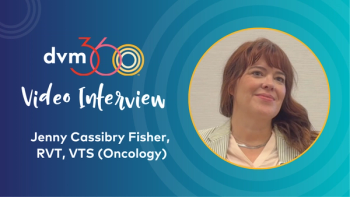
Jenny Cassibry Fisher, RVT, VTS (Oncology), describes one way that patient outcomes can be improved.
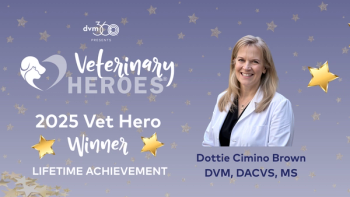
Dottie Cimino Brown, DVM, DACVS, MS, wins the 2025 dvm360 Veterinary Hero Lifetime Achievement Award.
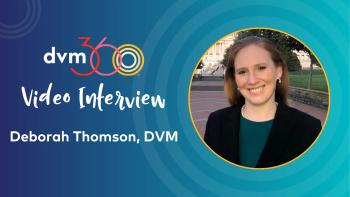
Deborah Thomson, DVM, talks about steps to take in the event of a suspected avian influenza case and highlights 3 risk factors for infection in feline patients.
“It's our responsibility to educate about the risks of bird flu transmission, as well as the preventative measures and the symptoms that people need to look out for,” said Deborah Thomson, DVM.
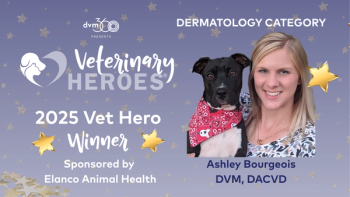
Ashley Bourgeois, DVM, DACVD, wins the 2025 dvm360 Veterinary Hero award in the dermatology category.
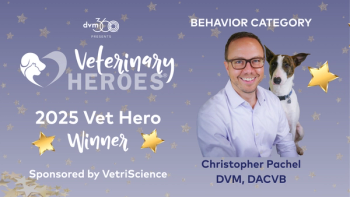
Christopher Pachel, DVM, DACVB, CABC, wins the 2025 dvm360 Veterinary Hero award in the behavior category.
In this Vet Watch Update, our host Dr Christopher Lee shares more on what exactly normalcy bias means, and what it means for potential New World screwworm patients.

Have a suspected myiasis case? Christopher Lee, DVM, MPH, DACVPM, explains what to do, in this Vet Watch update.
Watch the short video to hear Ellen Behrend’s, VMD, PhD, MS, DACVIM (SAIM), answer.
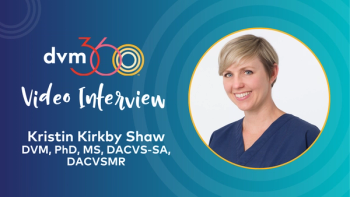
Kristin Kirkby Shaw, DVM, PhD, MS, DACVS-SA, DACVSMR, discusses 2 nutritional modifications that can help manage arthritis in feline patients.
Jenny Cassibry Fisher, RVT, VTS (Oncology), provides insights about one way veterinary teams can serve more patients.
Ellen Behrend, VMD, PhD, MS, DACVIM (SAIM) discusses what is currently known about remission when on SGLT2 inhibitors.
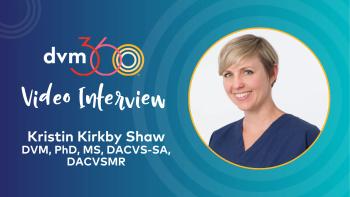
A veterinary rehabilitation specialist delves into how general practitioners can best diagnose arthritis in cats.

An internal medicine specialist explains the answer to this question in an interview with dvm360.
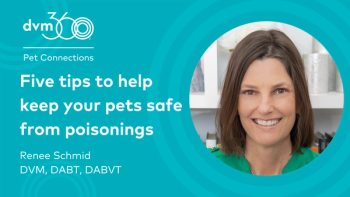
Don’t wait for an emergency. Here are 5 straightforward tips from Pet Poison Helpline’s Renee Schmid, DVM, DABT, DABVT
Jenny Cassibry Fisher, RVT, VTS (Oncology), discusses how skilled technicians and assistants can help provide veterinary health services to more patients.
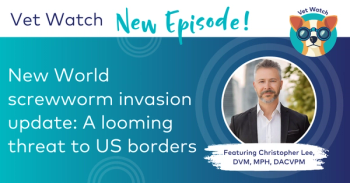
Christopher Lee, DVM, MPH, DACVPM, provides his insights into the fight against New World screwworm—which includes an expanded screwworm production facility—in this Vet Watch update
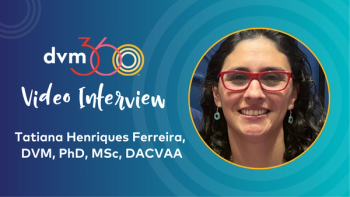
Tatiana Henriques Ferreira, DVM, PhD, MSc, DACVAA, discusses how certain pain management methods affect air and water quality, in a dvm360 interview.
Learn real-world strategies from Jennifer Sheahan, DVM, DACVO, to help master essential eye exams, manage emergencies, and elevate your ophthalmology skills in everyday practice.
“Veterinary technicians are wonderful...patient advocates and I think we sometimes...limit ourselves,” says Tabitha Kucera, RVT, VTS (Behavior), CCBC, KPA-CTP, FFCP, in this interview with dvm360
What is vetflation, and how can it impact your patients, clients, staff, and practice?
What alternative paths exist for veterinary technicians? Tabitha Kucera, RVT, VTS (Behavior), CCBC, KPA-CTP, FFCP, explains in this interview.
Janice O’Brien, DVM, MPH, DACVMP, discusses her research in dog nutrition in this interview with dvm360 at the 2025 ACVIM Forum.

Kyle Bartholomew, DVM, DACVAA, discusses how combining treatment options can lead to improved outcomes.
Jeffrey N. Bryan, DVM, PhD, MS, DACVIM, discusses current methods and the need for advancement in how bone cancer is managed in dogs.
A researcher at the Virginia-Maryland College of Veterinary Medicine talks about her work validating a food frequency questionnaire for use in canine nutrition research
Frederick R. Appelbaum, MD, recognized for advancing marrow transplantation, talks about the impact of canine research on human and veterinary medicine.