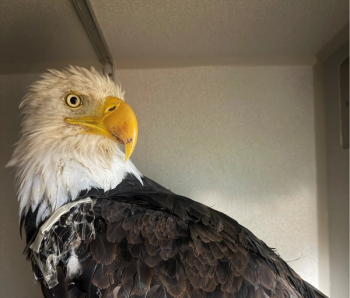
An atypical presentation of the virus led to internal bleeding, anemia, and sepsis in the famous bald eagle whose illness had puzzled her care team for weeks.
Katherine Quesenberry, DVM, MPH, DABVP (Avian), discusses why lack of food intake is a concern for avian and exotic practitioners, in a dvm360 interview.
Katherine Quesenberry, DVM, MPH, DABVP (Avian), chief medical officer, senior veterinarian, specialist in avian medicine and service head of avian and exotic medicine for Schwarzman Animal Medical Center in New York, New York, recently offered her insights on exotic pets in a dvm360 interview. She spoke about conditions that frequently affect exotic companion animals, the types of traumatic injuries veterinarians frequently see with birds, rabbits and reptiles, and her most memorable cases. In this video, she talks about one of the common signs of a potential emergency in pet rabbits, guinea pigs and birds.
RELATED VIDEO:
The following is a transcript of the video:
Katherine Quesenberry, DVM, MPH, DABVP (Avian): Rabbits, of course, the most common thing you see them for is not eating. They stopped eating or not passing fecal pellets. That's a very common emergency presentation, because owners know that rabbits, you know, they poop all the time and they eat all the time, right? So if they go for 12 or certainly 24 hours without doing either of that, then it's perceived as an emergency. That's probably one of the most common presentations for rabbits. For guinea pigs, probably it's more respiratory. They may come in with more respiratory distress [and] again, not eating. Those probably are very common. And certainly there are other things too, but those are very common presentations for birds, again, not eating.
Quesenberry: There are so many different causes, and difference in the species I'm talking about. Like, if you look at a mammal like a dog or cat, they are adapted, right? That's their natural state in the wild, like a coyote may eat one day and not eat the next right? So their system is more adapted to not eating, whereas you think of things like a bird, their metabolism is so fast that if they go for extended period of time with not eating, they can get sick very fast. Same thing for herbivores like rabbits and guinea pigs that are normally out grazing all the time, and if they go for a while with not eating, that causes physiologic changes. So it can be any number of things that causes them not to eat, but not eating, in and of itself, can be a problem after a while that causes its own metabolic problems in these species much quicker than what happens in a dog or a cat.
RELATED VIDEO: