






















Details about Lyme disease for technicians.
Details about Lyme disease for technicians.
Details about cryptosporidiosis for technicians.
Details about the roundworms for technicians.
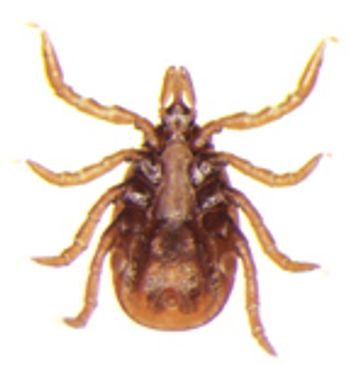
Test your knowledge of ticks and tick-borne diseases with this short quiz.

Heartworm: An emerging disease? It may seem to be an odd title when you consider Dirofilaria immitis was discovered in Italy in 1626, and the first reported case in the United States was in 1847.
Dr. Edward Breitschwerdt provides insight into his bartonellosis research.
In an article recently published in Veterinary Clinics of North America: Small Animal Practice, Drs. Byron Blagburn and Michael Dryden provide a comprehensive overview of flea and tick biology, treatment, and control.
CAPC executive director Dr. Michael Paul addresses questions about heartworm disease in cats.
National Report - Vector-borne diseases have the attention of the nation's parasitologists this year. And they are watching for signs of migration and disease spread.
You can make recommendations to clients, but if you're not tracking your practice's parasite compliance numbers, you could be missing out on thousands in revenue.
Of all known organisms, 61% are zoonotic, and of the emerging pathogens, the vast majority are zoonotic organisms.
Although intestinal parasitism in pet dogs is not uncommon, the relative distribution and frequency of the most common intestinal parasites (Toxocara, Ancylostoma, and Trichuris species) in various geographic regions of the United States have not been extensively studied.
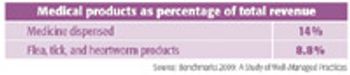
4 tips to improve client compliance on parasite prevention recommendations
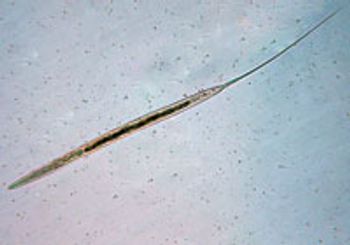
Understanding biology is key to battling the emergence of resistant parasites in horses

The barrage of queries can be head spinning. Keep your responses straight by following this advice.
Many clients don't realize flea, tick, and heartworm prevention continues to be necessary even when the temperature dips. Here are some ideas on how to jump-start an educational conversation.

This on-demand AVMA course by Dr. Toni A. Cotton includes a through discussion of two of the more common parasites that cause clinical disease in camelids, Eimeria macuniensis and Mycoplasma hemolamae. (1 CE credit)
This on-demand AVMA course by Dr. Mark Alley is designed to give a brief overview of the life cycle of nematodes including some of the basic epidemiologically principles associated with parasites and their potential economic impact. (1 CE credit)
The answers, with complete explanations, are provided.
Cellular reminders increase client compliance.
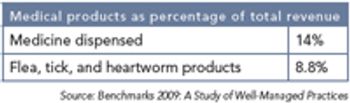
Here are four tips to help if your flea, tick, and heartworm product sales and client compliance don't match up to these Well-Managed Practices.
Although humans make pets out of almost any type of animal, dogs and cats are the only domestic animal that still routinely shares the house with their owners. Thus, it is imperative to know whether or not the parasites carried by these pets are zoonotic.
Fleas have been around a very long time having evolved from their ancestors about 125-150 million years ago.
We are all probably tired of hearing it, yet, transporting our pets around the world is one of the most significant factors in the emergence of diseases in new geographic areas.
Numerous patient-side tests are available to aid in the detection and diagnosis of various parasites and tick-borne pathogens.