































The factors favorable to the agent responsible for cat scratch disease.

The factors favorable to the agent responsible for cat scratch disease.

Giardia, cryptosporidia, and tritrichomonas.

Sandfly vectors (not in US) transmit flagellated parasites into the skin of a host, where it often localizes in the cat. In dogs, there is invariably spread of the parasite throughout the body to most organs, although renal failure is the most common cause of death.

Parasites are minor cause of nasal disease in dogs and cats. However, they should be added to a differential diagnosis list of nasal disease. This review will discuss the biology, diagnosis, disease, and treatment of these parasites, and discuss the differential diagnosis, and the methodology for treating at least one differential diagnosis, that of nasal aspergillosis in dogs and cats.

Tick-borne diseases of dogs and cats causing vasculitis leading to multisystemic dysfunction often characterized by thrombocytopenia and hyperglobulinemia.

Protozoal disease (genus: Babesia) of dogs and cats where merozoites (piroplasms) infect RBCs.

Parasites are major causes of respiratory tract disease in the dog and cat. Recent advances in therapy of these diseases have been made providing the practicing veterinarian with a more rational treatment modality. This review will discuss the biology, diagnosis, disease, and treatment of respiratory parasites (protozoan, nematode, trematode, and arthropods) of the dog and cat emphasizing chemotherapeutics.

Infection occurs when infected feces of a vector (Triatomin?, commonly called kissing or assassin bugs) are deposited in a wound (bite site of vector) or mucous membrane, or when a dog eats an infected vector (shown to occur in opossums and raccoons). Raccoons fed infected meat do not get infected so dogs probably not infected by eating meat from intermediate hosts in which the organism is sequestered in muscle. Transmission by contaminated blood transfusion also occurs.

National report - Discussions are ongoing regarding a consensus statement in the works regarding heartworm efficacy.

Filarial nematode infection of dogs and cats – Dirofilaria immitis – adults (female worms up to 30 cm in length) live in pulmonary arteries causing respiratory, cardiac, and in some cases, renal disease.

Forget vampires. Meet five blood-sucking creatures-veterinary edition. From fleas to lice, be warned: They want to suck clients' and pets' blood!

Do dogs recover from tick paralysis?

Find out how to avoid a sticky mess from sugar flotation solution.

Dr. Joyce Knoll provides her advice for this reader query.

Dr. Kevin Kazacos helps you pinpoint this parasite.

Summer heat, floods could spawn heightened parasitic disease risks in Midwest

Dig deeper when clients decline parasite preventives.

When it comes to purchasing veterinary drugs online, buyer beware, FDA says.

A consensus statement is being crafted to address growing concerns over resistance to heartworm preventives.

Which parasite is bugging this colt?

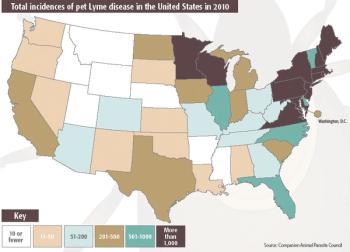
A workshop at the Centers for Disease Control and Prevention brought together specialists in veterinary parasitology and human internal medicine and vector-borne infectious disease to address Lyme borreliosis.

Put on a heartworm-test magic show for clients

A reader writes in concerning a few more wildlife zoonoses practitioners should be aware of.

A comprehensive overview of tick-transmitted infectious diseases. (1 CE credit)

A national overview of parasites and the danger they pose to companion animals. (1 CE credit)