























Bel Air, Md. -- The Companion Animal Parasite Council (CAPC) wants the Environmental Protection Agency (EPA) to take more steps in identifying reasons for an increases in adverse events associated with spot-on flea-and-tick control products.
Bel Air, Md. -- The Companion Animal Parasite Council (CAPC) wants the Environmental Protection Agency (EPA) to take more steps in identifying reasons for an increases in adverse events associated with spot-on flea-and-tick control products.
Gainesville, Fla. -- Disney awarded a $20,000 gift to the University of Florida (UF) veterinary college's Continuing Education Fund in honor of UF Professor Ellis Greiner, a parasitologist who helped establish a partnership between UF and Disney's Animal Kingdom 10 years ago.
Use punch cards to pound parasites
Stop heartworm infection before it starts by giving clients the facts.
The next time a chronically itchy cat comes into your clinic, don't forget to rule out demodectic mange.
Historically, veterinarians have had four options for diagnosing most infectious agents.

Have you ever had one of those days when even the simplest case sends you to your reference library for a diagnostic or treatment review?
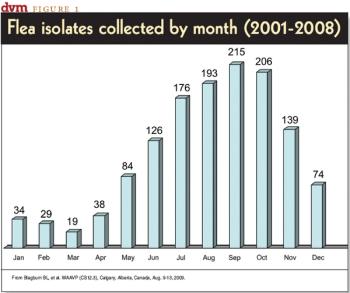
Dr. Byron Blagburn discusses how the control of fleas and flea-induced diseases requires a considerable effort by both pet owners and veterinarians.
The American Heartworm Society's symposium addresses newest threats.
Pet Poison Helpline offers advice to pet owners following the EPA's investigation of spot-on products.
Duluth, Ga. -- Merial and the Food and Drug Administration (FDA) have worked out a new system to ease the shortage of its heartworm treatment Immiticide, the company reports.
The common ticks on dogs and cats in North America are all three host ticks. Accordingly, the larvae, nymphs, and adults of each species must each quest, attach to a host, and feed before leaving the host to molt or deposit eggs in the environment.
Testing for Lyme disease and anaplasmosis often involves detection of antibodies. Antibodies may be detected on a patient-side assay such as the 3Dx/4Dx SNAP tests or using IFA at a reference lab. The SNAP test uses C6 as the target antigen and thus the B. burgdorferi result is very specific.
In many areas of the US, tick populations are dense, and at certain times of the year and when climatic factors are ideal, tick activity may be very high, overwhelming the ability of an acaricide to control ticks on dogs.
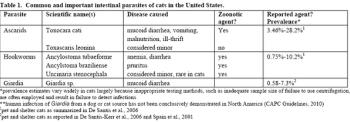
Despite the advent of highly effective, easily administered broad-spectrum parasite control products for cats, infection with intestinal parasites in general, and ascarids (roundworms) in particular, remains a common finding in cats.
Vector-borne diseases have taken on increasing importance in both veterinary and human medicine as new diseases continue to become recognized and established, vector populations spread, and the potential for transmission of infectious diseases between people and pets is increasingly understood.
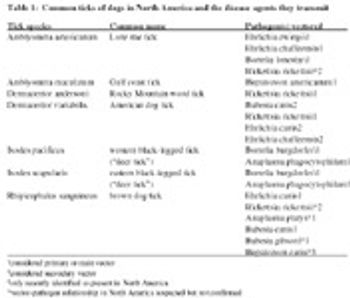
Vector-borne diseases in general, and tick-borne diseases in particular, are increasingly recognized as important in both veterinary medicine and public health. In recent years, new disease agents have been identified in both dogs and people, tick populations have increased in number and extent of geographic distribution, and the potential for transmission of disease agents to people and dogs appears to be increasing.
Las Vegas - New data suggests that nearly half of the states in this country reported 500-plus Lyme positive dogs between 2001 and July 2009.
You know that only a veterinarian should remove ticks from pets. But do your clients know?
After explaining core vaccines, ask questions about the pet's and client's lifestyle.
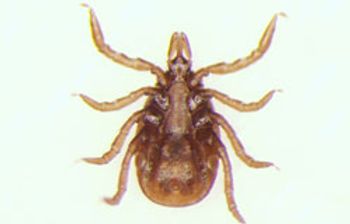
Test your knowledge of these little suckers and the diseases they transmit.
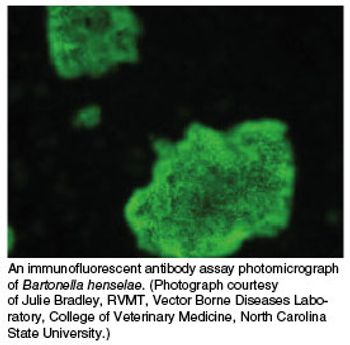
More and more, veterinarians are being asked to answer questions regarding potentially zoonotic diseases. When it comes to bartonellosis, the answers can be particularly tough to formulate because of the disease?s frequently vague or absent clinical signs and the difficulty in identifying and controlling the infection.
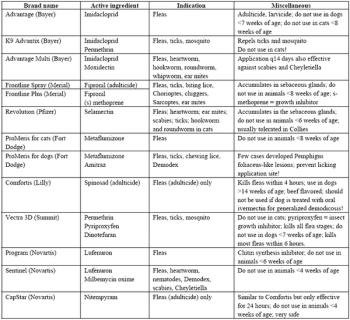
Fleas are still the most common cause for parasite induced pruritic skin problems. Since the nineteen's many different drugs and preventative have been introduced to prevent and to treat flea infestation, and certainly the occurrence of severe widespread infestations have declined.
Schaumburg, Ill. -- The American Veterinary Medical Association (AVMA) is seeking public comment on new two veterinary specialties in animal welfare and parasitology.
Help clients learn about the basics of zoonotic diseases and parasites with these five handouts on toxoplasmosis, hookworms, tapeworms, roundworms, and Lyme disease.