

How much do your veterinary team members know about your practice's finances?
How much do your veterinary team members know about your practice's finances?

To truly know how cows are managed, we need to "hang out" with them, or with their caretakers, for several hours. We need to see how feed is mixed and delivered, how milking is performed and determine how often feed is pushed up.
Different surveys yield different results.
What kind of things will veterinary owners need to do for the development of the business owner's skill set?
Three factors are essential to the practice of quality medicine and surgery.

Setting fees properly is an important task in a veterinary practice; yet many hospitals don't really give much thought to how this should be done.
Just like a yearly pet's physical, your practice should have a look under the hood at least yearly.
The biggest source of missed income originates in the exam room.
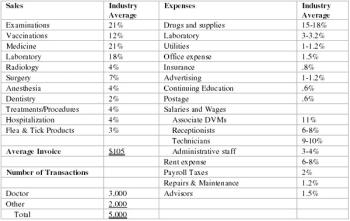
Budgets should an integral part of your overall financial plan.
Perform this simple exercise during your next staff training session: Ask each team member to list the top ten conditions and/or diagnoses your hospital sees on a daily basis.
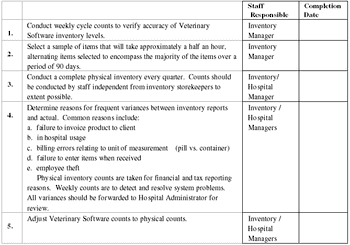
Inventory is one of the most profitable and vulnerable segments of income generated within a veterinary hospital.
When it comes to achieving financial success as practicing veterinarians, we are definitely our own worst enemies.
The veterinary team is a most influential element of practice management ensuring a well run and efficient hospital.
Class IV laser therapy is a profit center that empowers you to provide advanced care and market your practice as a state-of-the-art facility.
Veterinary school and law-school training actually have quite a bit in common. For example, when I finished each, I soon realized just how huge was the volume of practical things I needed to know but did not.
According to a survey by BtoB, the average percentage of the marketing budget spent in 2008 on online marketing will be 33.8 percent, up from 26.5 percent in 2007.
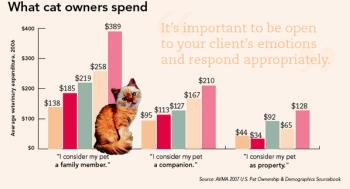
When it comes to veterinary spending, the issue isn't clients' income level but how pets fit into their lives.

Don't be afraid to start planning now.
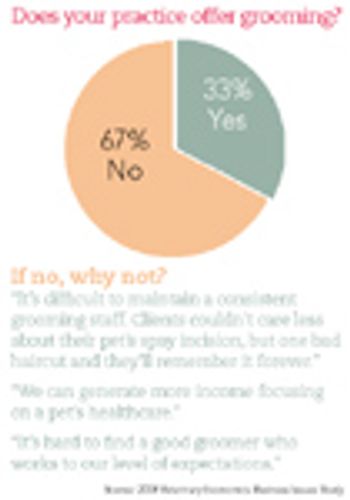
Boarding and retail are important revenue sources for some veterinarians. Others say no.

In a perfect world, boarding and grooming would be a great source of revenue. However, we don't live in the perfect world.
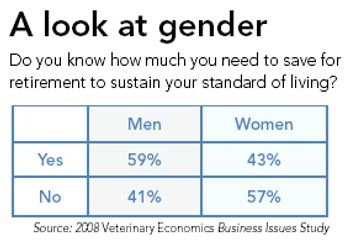
Even if you haven't started yet, you can still set your eyes on the prize.
Be wary of quick-fix marketing strategies. Even the most creative gimmicks often produce few or no results.
Here are 15 marketing tips that will yield results for your veterinary practice.
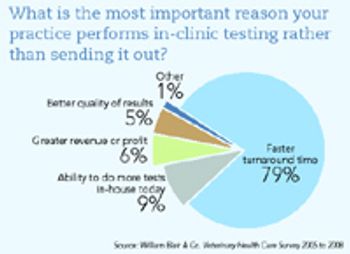
Veterinary diagnostic testing is a growth industry, experts say. Find out how you can better put it to work at your practice.
A surprising number of principals in veterinary practices depend on themselves for their financing needs. With conventional financing increasingly more difficult to obtain, it's now the No. 1 form of financing used by small business owners. It's quick, doesn't require a lot of paper work and often is less expensive than conventional financing.
Keeping up during an economic downturn means focusing on smart business moves and making a few tweaks. What you might let slide in a normal economic climate-capturing all charges and providing great client service-will only be amplified and painfully obvious to you in bad economic times. Here are a few tips to keep in mind.
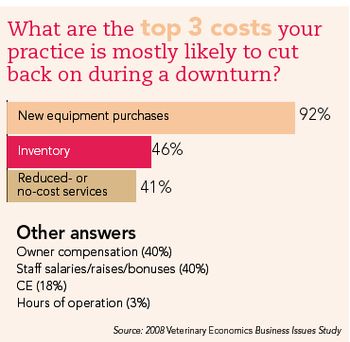
Practitioners in Michigan say their troubles are what the whole profession will see soon.

I invest, I earn a lot as an owner, and I plan to retire at a reasonable age.

Lakewood, Colo. - Associate veterinarians are jumping jobs faster than the average American worker, according to a new study, and salaries that don't keep pace with inflation could be partly to blame.

Here are some tips from Denise Tumblin, CPA, president of Wutchiett Tumblin and Associates in Columbus, Ohio, and a Veterinary Economics Editorial Advisory Board member: