









A Washington Post journalist gets a different perspective on the Pakistani city when searching for her adopted dog, Ahu.
A Washington Post journalist gets a different perspective on the Pakistani city when searching for her adopted dog, Ahu.
Five experts weigh in on whether there is an increasing tick problem in the United States, whether more people are becoming infected with Lyme disease as a result, and what we can do about it.
While performing a routine fecal examination of a sample from a chicken, a technician in Texas identified a new protozoan parasite.
If your clients are taking their pets on vacation this year, you might recommend these pet-friendly destinations.

People and pets can cross-infect each other with this increasingly common superbug.
Domesticated dogs were thought to originate in East Asia, but research in Africa has thrown this theory into question, and the search is on for where dogs were first domesticated.
Researchers at Kansas State University are concentrating their efforts on the H1N1 flu virus in swine, trying to determine its virulence and potential for harm to people as well as develop better diagnostic tests.

An animal's quality of life depends on more than physical parameters--it includes all aspects of an animal's life that matter from the animal's point of view.
Scientists are increasingly finding pockets of animals afflicted with cancer due to the dumping of harmful chemicals into the environment.
The transfusion of blood products to treat acute blood losses, coagulopathies, and severe anemia has become indispensable in the care of critically ill veterinary patients.
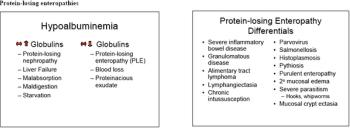
Although the combination of hypoalbuminemia and hypoglobulinemia is "textbook" for a protein-losing enteropathy (PLE), it should be noted that a normal, or even elevated globulin level should never be the only reason to take PLE off a list of differentials that was generated by a history and physical examination.

Life expectancy for cats has risen, on average, to 14-16 years of age.
Before considering pathologic cytology of lymph nodes, it is necessary to define normal lymph node cytology.
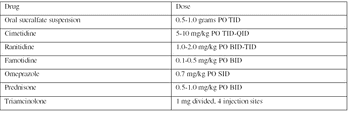
Disorders of the esophagus include inflammation (esophagitis), neuromuscular dysfunction (megaesophagus, dysautonomia), anatomical abnormalities (stricture, herniation), obstruction (foreign bodies, vascular ring anomalies, extraluminal masses), and neoplasia.

In veterinary medicine, cats are too often treated as strange small breed dogs. To those who work with cats every day, the fallacy of this supposition is obvious.

Obese female cats are at greatest risk of developing hepatic lipidosis.
The normal physiologic and pathologic vaginal conditions.
Vomiting is among the most common reasons that dogs and cats are presented for evaluation.
Diarrhea is one of the most common presenting complaints in feline medicine.
Transfusion of blood products is a frequent necessity in small animal practice.

Blood gas analysis provides information about respiratory function and acid/base status.
Hemograms consist of both quantitative data (total cell counts, differential cell counts, red cell indices, etc.) and qualitative data (blood film morphology). Proper interpretation depends on the integration of both.
Accumulations of excessive fluid in the pleural, peritoneal, or pericardial space represent edema of these body cavities.

Many things can impact litter size in the bitch.

Successful management of the critically ill patient requires anticipation-not reaction.
It is important that the clinician formulate a treatment protocol based on a correlation of clinical course, laboratory and gross findings, and histologic findings rather than relying on histologic changes alone.
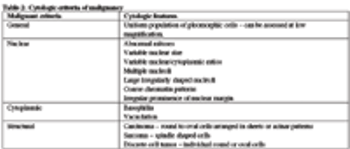
In the last ten years, exfoliative cytology has been gaining popularity as a diagnostic aid in veterinary practice.
Gastric dilatation and volvulus (GDV) is an acute, life-threatening condition which requires immediate medical and surgical intervention.
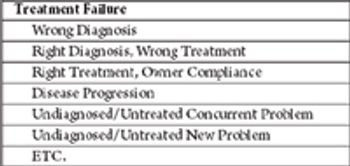
Dysautonomia is a neuropathy of unknown etiology that affects all aspects of the autonomic nervous system.
The circulating white blood cells include the granulocytes, the monocytes, and the lymphocytes.