








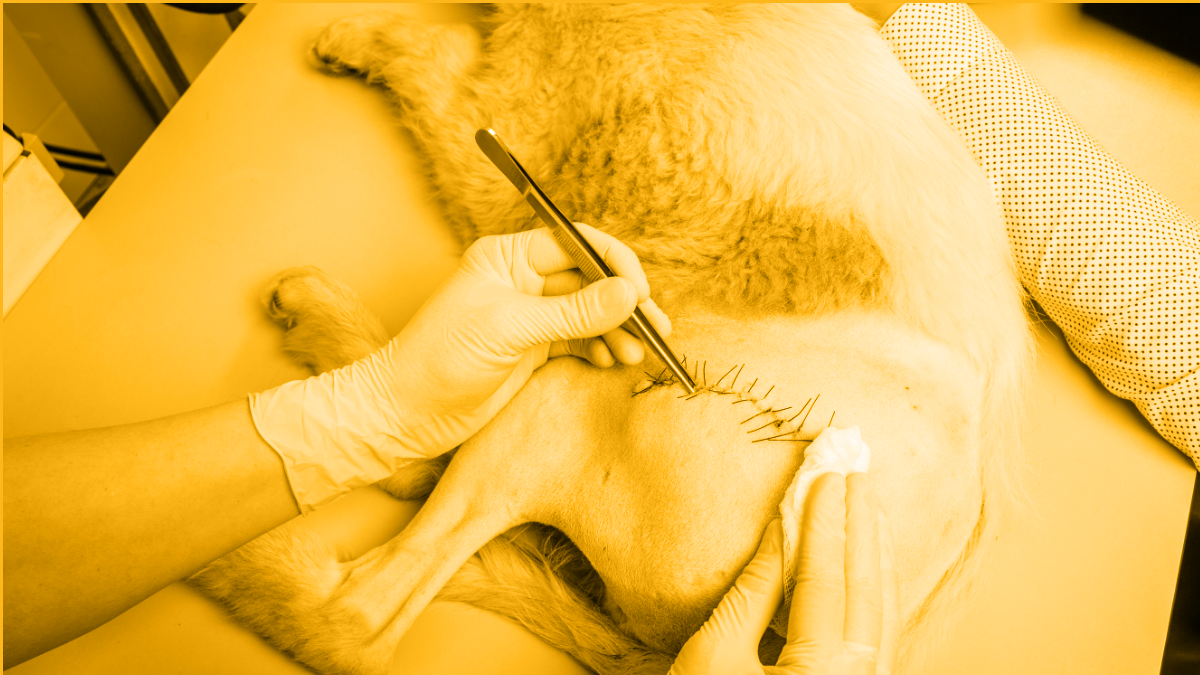


In patients with known or suspected liver disease, obtaining a biopsy sample is often indicated. This article features guidance on when and how to perform a surgical hepatic biopsy.
In patients with known or suspected liver disease, obtaining a biopsy sample is often indicated. This article features guidance on when and how to perform a surgical hepatic biopsy.

Gastrotomy is a routine and relatively safe surgical procedure with several indications, but appropriate technique is vital to preventing complications.

You may be hesitant to perform a full-thickness incisional biopsy to obtain an intestinal tissue sample, but in many cases, this technique is preferred. In this article, we review when incisional biopsy is best and provide a simple step-by-step guide to the procedure to increase your confidence.

Omentalization, the placement of omentum around organs or within cavities to improve vascularization or drainage, has been used in a variety of abdominal, thoracic, oncologic, and reconstructive surgical procedures.

The articles in this symposium provide an overview of indications, techniques, and complications related to a variety of gastrointestinal surgical procedures.

Intestinal anastomosis is an important surgical procedure that connects two sections of the intestines once a diseased portion has been removed. A key concern is to prevent leakage at the anastomosis site and subsequent peritonitis, but this complication can be avoided if the procedure is done correctly and preventive measures are taken.

The primary indication for gastropexy is to prevent the development or recurrence of gastric dilatation-volvulus.

Ever wonder what surgery is like from the pet's perspective? Your clients do.
When stabilizing a cranial cruciate ligament injury, locating the hole drilled in the tibial crest by using the free end of a wire can be frustrating.
When I am presented with a dog to spay or neuter that is a breed predisposed to gastric dilatation-volvulus (GDV), I offer to perform a gastropexy while the patient is anesthetized.

Unlike human medicine where surgery is the exclusive domain of the specialist, general practitioners in veterinary medicine are often called upon to perform a wide variety of surgical procedures.
End-of-the-day surgery releases can bring chaos and confusion to even the most organized veterinary teams. That's why team members at Rock Road Animal Hospital in St. Louis, Mo., developed a system to route clients through the checkout process before they're reunited with their pets.

In this retrospective study from the Animal Medical Center in New York City, the medical records of 18 cats with feline cutaneous hemangiosarcoma were reviewed, and the cats' clinical features and responses to surgery were described.
In this double-blind, prospective, and randomized clinical trial from France, 60 dogs undergoing orthopedic surgery were treated with either preoperative meloxicam (0.2 mg/kg intravenously) or intraoperative ketoprofen (2 mg/kg intravenously) and assessed for pain for up to 24 hours after surgery.
In this retrospective study from two university teaching hospitals, the medical records of 168 dogs with a single portosystemic shunt treated with an ameroid ring constrictor were reviewed to evaluate morbidity and mortality.
In this prospective clinical trial from Finland, 11 toy breeds with radial fractures were treated with single or stacked biodegradable polylactide plates, metal screws (AO 1.5- to 2-mm diameter mini screws), and lightweight external coaptation.
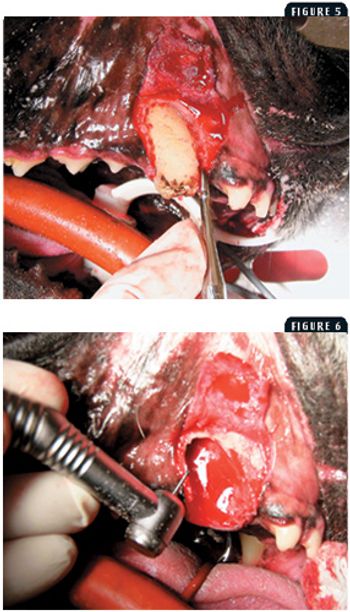
In May, I explained how to perform a nonsurgical extraction on single-rooted teeth including the incisors, first premolars, deciduous canines, and mandibular third molars. A surgical approach is indicated to extract canines, certain large incisors, and multirooted teeth and to retrieve root tips.
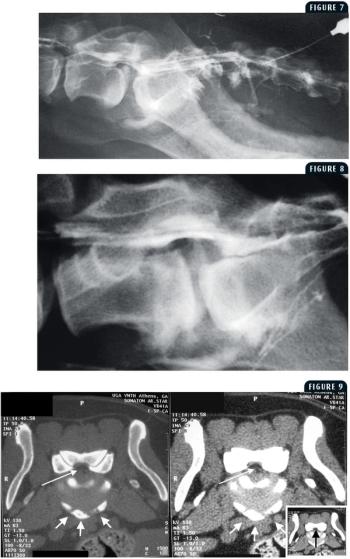
Degenerative lumbosacral stenosis is a common cause of cauda equina syndrome and a relatively frequent neurologic disorder in older dogs. If this condition is recognized early, treatment may help alleviate significant morbidity.

In many cases, wounds that extend under the skin and into muscle will need to be opened further to allow debridement of devitalized fat and muscle.
Veterinary medicine is a rapidly evolving field, and nowhere is it more apparent than in the practice of canine orthopedics.
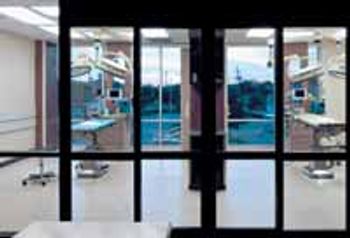
When five specialty practices merged to create the Veterinary Referral Center of North Texas, they chose to keep their autonomy and design their own workspaces.
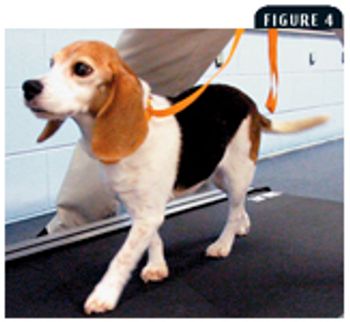
After an orthopedic procedure, it is common to have a convalescent period of weeks to months before recovery is attained. Physical rehabilitation may help patients achieve maximum recovery. Physical therapy is also valuable for easing chronic pain in pets.
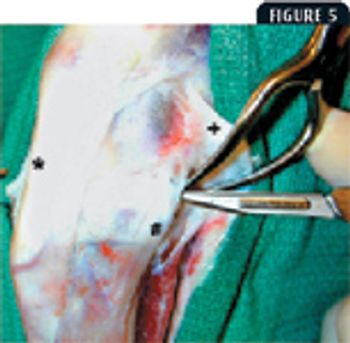
Cranial cruciate ligament pathology is a leading cause of lameness in dogs. Many surgical treatments have been described that aim to restore stifle joint stability and minimize the progression of subsequent osteoarthritis. Most surgical treatments seek to replace the function of the cranial cruciate ligament by substituting autologous tissues or synthetic materials. More recently, the tibial plateau leveling osteotomy (TPLO) procedure has been described, which alters the mechanical forces acting on the stifle, rendering the cranial cruciate ligament unnecessary.
RALEIGH. N.C. - 4/15/05 - The North Carolina State University College of Veterinary Medicine incorporated new technology to treat cataracts.

A 7-month-old intact male Labrador retriever was presented for evaluation of a two-week history of left hindlimb lameness.