Register for Fetch National Harbor Today!

Parasitology

Latest News


CE Content


i2-162421-1384772031664.gif

Ctenocephalides felis commonly infests cats in many areas of the United States and is associated with a variety of clinical syndromes.1 In small kittens, a heavy infestation can cause anemia, particularly if they are concurrently infected with the common parasite Ancylostoma tubaeforme or Ancylostoma braziliense.2 Repeated flea exposure can result in flea-bite hypersensitivity, one of the most common flea-associated syndromes.3,4 Because C. felis ingests feline blood, a number of blood-borne infectious agents, including Bartonella quintana, Bartonella koehlerae, Bartonella henselae, Bartonella clarridgeiae, Rickettsia felis, Wolbachia pipientis, 'Candidatus Mycoplasma haemominutum,' Mycoplasma haemofelis, and feline leukemia virus (FeLV), have been grown or amplified by polymerase chain reaction (PCR) assays from C. felis or its feces.5-18 Ctenocephalides felis is a vector for some of these infectious agents. And because some of these agents are human pathogens, the American Association of Feline..

i9_t-162419-1384772057895.gif

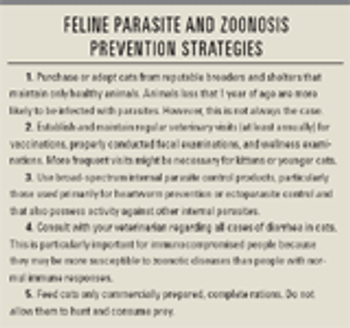
Cats are host to a variety of internal and external parasites. Despite the documented prevalence and zoonotic importance of these parasites, many pet owners and some veterinarians aren't convinced that comprehensive feline parasite control strategies are needed. This viewpoint may stem from the previous lack of safe, effective, and convenient broad-spectrum parasiticides and the difficulties in acquiring adequate fecal samples. Fortunately, newer broad-spectrum agents (Table 1), particularly those with label claims against heartworms and fleas, allow veterinarians to eliminate a higher percentage of feline parasites. Let's review some of the key feline parasites and discuss new strategies for controlling them.

i4-510569-1384680652083.jpg

We now have an arsenal of test kits and prophylactics to choose from, and it can be confusing to know which to purchase. We tend to mold ourselves to the product instead of molding the product to the individual patient. This article should help you tailor the heartworm diagnostic, therapeutic, and prophylactic options to each of your canine and feline patients.

Duluth, Ga.-According to a survey sponsored by Merial, veterinarians believe fleas will be the number one health risk for pets this spring and summer.

Understanding the life cycle of ticks offers insight on how they transmit diseases to dogs