








Part 2 of performing a neurologic examination.
Part 2 of performing a neurologic examination.
Part 3 of performing a neurologic examination.
Part 4 of performing a neurologic examination.
Laser disk ablation, a procedure for preventing thoracolumbar intervertebral disk herniation in dogs, has been developed and performed in more than 350 dogs at the Oklahoma State University Center for Veterinary Health Sciences.

To help reach a prognosis in nonambulatory animals with spinal cord disease, assess voluntary motor function or pain perception.
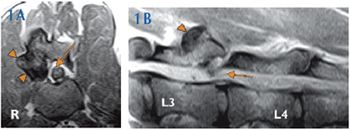
A 6-year-old castrated male Great Dane was presented to the Cornell University Hospital for Animals for evaluation of pelvic limb ataxia and intermittent fecal incontinence.
A 1-year-old 58.3-lb (26.5-kg) castrated male English bulldog presented to the Mathew J. Ryan Veterinary Hospital at the University of Pennsylvania for evaluation of progressive pain that was difficult to localize.
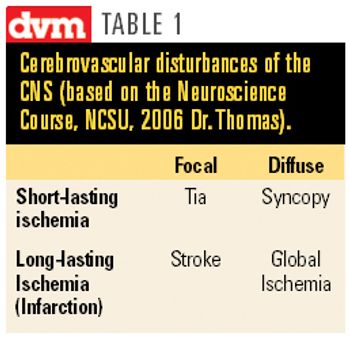
Although brain infarction is the third leading cause of death in humans, cerebrovascular accidents are rarely reported in veterinary literature.
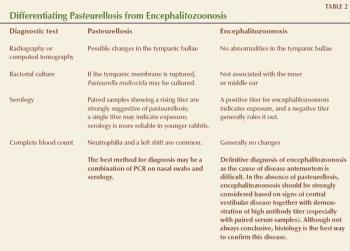
Neurologic diseases are relatively common in companion rabbits and are being identified more frequently because of owners' greater interest in providing better healthcare to their pets, better-trained veterinarians, and improved diagnostic aids.

Two or more seizures without complete recovery of consciousness between seizures, or persistent seizure activity for more than 30 minutes constitute the definition of status epilepticus (SE) in human medicine (Treatment of Convulsive Status Epilepticus. JAMA 1993; 270:854-9).
A 10-year-old 8.6-lb (3.9-kg) spayed female domestic medium-haired cat had been evaluated by the referring veterinarian because of lethargy, right pelvic limb lameness, lumbar discomfort, reluctance to jump, and tail weakness.
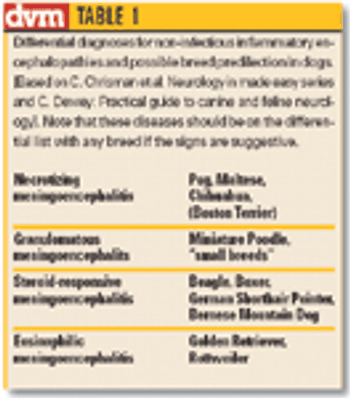
In Yorkshire Terriers, brainstem involvement has been described.
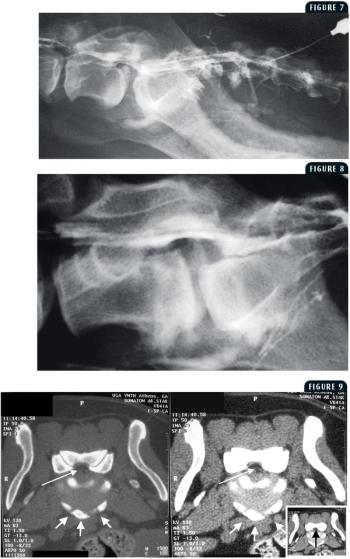
Degenerative lumbosacral stenosis is a common cause of cauda equina syndrome and a relatively frequent neurologic disorder in older dogs. If this condition is recognized early, treatment may help alleviate significant morbidity.
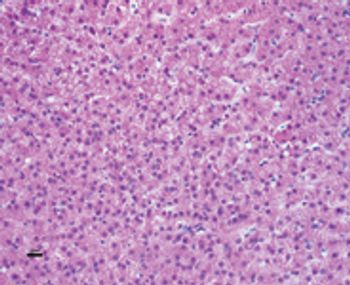
A 3-year-old 77-lb (35-kg) neutered male collie was presented to the Veterinary Teaching Hospital at the Virginia-Maryland Regional College of Veterinary Medicine for evaluation of an acute onset of progressive ataxia, tetraparesis, a single tonic-clonic seizure, vomiting, and ptyalism.
If you know of an eligible candidate, Iowa State University will be accepting dogs into the study beginning in March 2005.
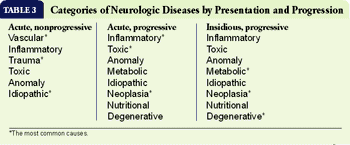
In this article, I help you correctly interpret the findings of a neurologic evaluation in order to answer the most important question when dealing with a neurologic problem: Where is the lesion?
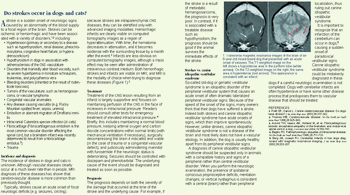
Neurodegenerative diseases in dogs and cats can result from a wide variety of pathologic processes.
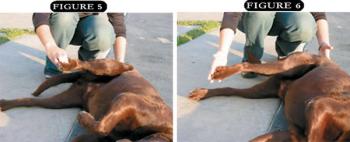
Many veterinarians are uncomfortable when facing a patient with a neurologic problem. However, by taking the time to obtain a good, detailed history and by doing a methodical and thorough neurologic examination, these cases can be both challenging and interesting.
Owners should be made aware that once therapy is initiated, in most instances it is life-long, and that it is imperative that the AED imperative that the AED regular basis at regular basis at intervals.
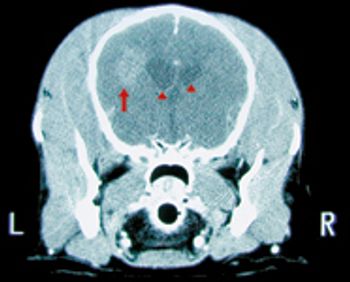
Recently, a technique has been developed that allows veterinary neurosurgeons to obtain a biopsy sample of the brain: a frameless stereotactic CT-guided needle biopsy.
MRI appears to be extremely valuable in predicting tumor type before surgical treatment.
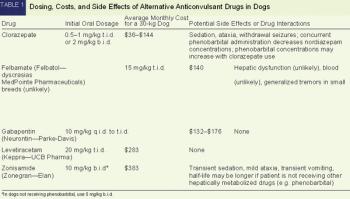
Seizure disorders represent the most frequent neurologic problem encountered in dogs.
Performing vagal maneuvers on epileptic pets can help prevent or control seizures.
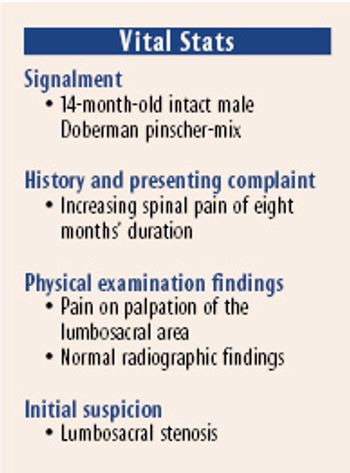
A 14-month-old intact male Doberman pinscher-mix was presented to Texas A&M University's Texas Veterinary Medical Center for evaluation of chronic spinal pain and lameness.
Cleveland -Researchers at North Carolina State University (NCSU) College of Veterinary Medicine, Virginia Tech and the University of Tennessee are looking for a better way to treat canine seizures by looking at human health treatment options.